
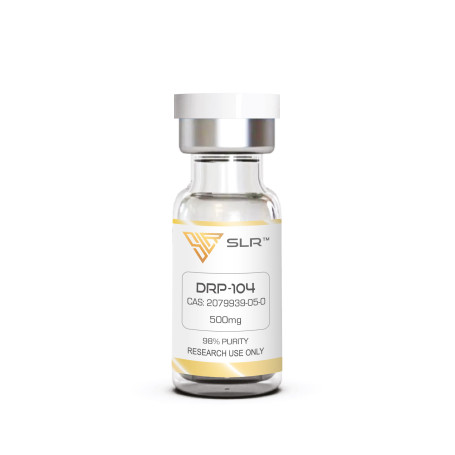
DRP-104 - 500mg
DRP-104 is an experimental compound investigated for its ability to inhibit glutaminase 1 (GLS1), a key enzyme responsible for converting glutamine into glutamate. Because glutamate supports nucleotide synthesis, amino acid production, antioxidant defense, and mitochondrial energy metabolism, GLS1 inhibition can disrupt multiple metabolic pathways essential for tumor growth.
Cancer cells frequently depend on glutamine metabolism to sustain rapid proliferation, energy generation, and redox homeostasis. By blocking GLS1, DRP-104 has been explored as a metabolic intervention that induces a state of metabolic stress in tumor cells, potentially reducing their proliferative capacity and promoting selective vulnerability.
Research has also investigated DRP-104 for its broader implications in tumor biology, including potential effects on oxidative stress balance, growth signaling pathways such as mTOR, and tumor microenvironment nutrient competition.
Description
SPECIFICATIONS
Product Code: DRP500D
Synonym: L-Norleucine, N-acetyl-L-tryptophyl-6-diazo-5-oxo-, 1-methylethyl ester
Molecular Formula: C22H27N5O5
Molecular Weight: 441.48 g/mol
CAS: 2079939-05-0
Purity: Technical / Research Grade ≥98%
Other details: No TFA Salt
Form: Lyophilized powder
Color: White
Storage temperature: -20°C
Source: Synthetic
Safety classification: Standard handling
DESCRIPTION
DRP-104 is a small-molecule compound investigated in experimental oncology research for its ability to inhibit glutaminase 1 (GLS1), a key metabolic enzyme involved in cellular glutamine utilization. GLS1 catalyzes the conversion of glutamine into glutamate, a critical biochemical step that supports multiple downstream metabolic pathways. Glutamate serves as a precursor for the synthesis of other amino acids, supports nucleotide production, and plays an essential role in fueling mitochondrial energy metabolism through the tricarboxylic acid (TCA) cycle, also known as the citric acid cycle.
Because glutamine metabolism is a major metabolic axis in many proliferating cell types, GLS1 has become a prominent target of investigation in cancer metabolism research. In experimental settings, DRP-104 has been studied as a compound capable of interfering with glutamine-dependent pathways that tumor cells often exploit to sustain rapid growth and survival. By inhibiting GLS1, DRP-104 reduces intracellular glutamate availability, which can disrupt the synthesis of nucleotides and proteins required for high-rate cell division. This reduction in metabolic intermediates can also impair the ability of tumor cells to maintain adequate ATP production and redox balance, thereby inducing a state of metabolic vulnerability.
Glutamine Metabolism and Tumor Cell Proliferation
Glutamine is one of the most abundant amino acids in circulation and plays a central role in cellular metabolism. In addition to being a building block for protein synthesis, glutamine functions as a nitrogen donor for nucleotide biosynthesis and contributes carbon skeletons to the TCA cycle through glutaminolysis. In many tumor types, glutamine becomes a key metabolic dependency because malignant cells require continuous supplies of nucleotides, amino acids, and energy to sustain proliferation.
In rapidly dividing cancer cells, metabolic demand is substantially elevated compared with normal differentiated cells. Tumor cells often reprogram their metabolism to maximize nutrient uptake and anabolic activity, a phenomenon commonly referred to as metabolic reprogramming. Within this context, glutamine is frequently used as both a carbon and nitrogen source to support growth, making glutaminase enzymes, particularly GLS1, critical nodes in tumor metabolism.
DRP-104 has been investigated for its ability to block this pathway, thereby limiting the metabolic flexibility of tumor cells. When GLS1 is inhibited, glutamine cannot be efficiently converted into glutamate, which can lead to reduced downstream production of α-ketoglutarate (α-KG), a TCA cycle intermediate required for mitochondrial energy generation. In experimental models, this metabolic bottleneck can restrict tumor cell proliferation and compromise survival mechanisms.
Mechanistic Effects of GLS1 Inhibition
The inhibition of GLS1 by DRP-104 is associated with several key biochemical consequences in experimental systems. One of the most immediate effects is a reduction in glutamate availability. Glutamate is essential for the synthesis of multiple amino acids and is involved in transamination reactions that support anabolic metabolism. When glutamate levels decrease, cells may experience limitations in protein synthesis and impaired biosynthetic capacity.
Additionally, glutamate is a precursor for the generation of glutathione, a major intracellular antioxidant. Glutathione plays a critical role in detoxifying reactive oxygen species (ROS) and maintaining redox homeostasis. In cancer cells, which often operate under elevated oxidative stress due to rapid metabolic activity, glutathione production is essential for survival. By reducing glutamate availability, GLS1 inhibition may indirectly limit glutathione synthesis, potentially increasing oxidative stress within tumor cells.
This rise in oxidative stress can contribute to cellular damage, disruption of mitochondrial function, and activation of stress-response pathways. In experimental research, metabolic stress combined with oxidative imbalance is often associated with impaired tumor growth and increased susceptibility to apoptosis or other forms of regulated cell death.
Another important downstream effect of GLS1 inhibition is disruption of nucleotide synthesis. Tumor cells require large quantities of nucleotides for DNA replication and RNA transcription. Glutamine provides nitrogen for purine and pyrimidine biosynthesis, and glutamate-derived intermediates contribute to metabolic pathways that support nucleotide production. When glutamine utilization is restricted, nucleotide availability may decline, resulting in impaired DNA replication and slowed proliferation.
Metabolic Stress and Selective Vulnerability of Tumor Cells
Cancer cells frequently display an increased reliance on glutamine metabolism compared to normal cells. This reliance may arise because tumor cells often operate in nutrient-limited microenvironments, where glucose availability is inconsistent due to abnormal vasculature and competition among cells. Under these conditions, glutamine serves as a critical alternative energy source and anabolic substrate.
DRP-104 has been studied for its ability to exploit this tumor-specific dependency. By inducing metabolic stress through GLS1 inhibition, DRP-104 may create conditions in which tumor cells struggle to maintain energy production, biosynthesis, and antioxidant defense mechanisms. In contrast, many normal tissues are less dependent on glutamine-driven metabolic pathways and may rely more heavily on alternative nutrient sources. This difference has been proposed as a potential reason why glutaminase inhibitors may display selectivity toward tumor cells in certain experimental contexts.
In preclinical studies, metabolic inhibition strategies are often investigated not only for their direct effects on tumor proliferation, but also for their ability to alter the tumor microenvironment. Tumor metabolism strongly influences immune cell function, nutrient availability, and inflammatory signaling. Therefore, compounds such as DRP-104 may be of interest not only as direct metabolic inhibitors but also as modulators of tumor ecosystem dynamics.
Tumor Microenvironment and Immune Interactions
The tumor microenvironment is characterized by metabolic competition between tumor cells and immune cells. Tumor cells consume high levels of glucose and glutamine, which can deprive immune cells of nutrients needed for effective immune function. T cells, natural killer (NK) cells, and antigen-presenting cells require sufficient metabolic resources to support activation, proliferation, and cytokine production.
By interfering with glutamine utilization, DRP-104 has been explored as a compound that may reshape metabolic conditions within tumors. In theory, limiting glutamine-driven tumor metabolism may reduce tumor cell dominance and potentially create a more favorable environment for immune activity. This concept has contributed to interest in glutaminase inhibitors as potential adjuncts to immunotherapy research, including checkpoint inhibition strategies.
In experimental models, glutamine restriction has been associated with changes in immune signaling and alterations in the balance between suppressive and effector immune populations. While these mechanisms remain complex and context-dependent, the interaction between glutamine metabolism and immune regulation is considered an important research topic in modern oncology.
Potential Research Contexts and Cancer Types of Interest
GLS1 inhibition has been investigated in a broad range of tumor types, particularly those known to exhibit glutamine addiction. These may include cancers such as:
- Triple-negative breast cancer
- Non-small cell lung cancer
- Pancreatic ductal adenocarcinoma
- Renal cell carcinoma
- Certain leukemias and lymphomas
- Glioblastoma and other aggressive brain tumors
In these contexts, glutamine metabolism is often elevated and contributes to the anabolic requirements of malignant growth. DRP-104 has therefore been studied as a metabolic intervention that may reduce tumor viability by targeting one of the central biochemical pathways supporting tumor expansion.
Mitochondrial Energy Disruption and Anabolic Limitation
One of the key downstream consequences of GLS1 inhibition is the reduction of α-ketoglutarate production, a critical metabolite required to sustain mitochondrial respiration. α-Ketoglutarate is a major input for the TCA cycle, enabling cells to generate reducing equivalents such as NADH and FADH2 that drive oxidative phosphorylation. In tumor cells, mitochondrial metabolism remains essential even in cases where glycolysis is elevated.
By reducing TCA cycle fueling, DRP-104 has been studied for its ability to impair mitochondrial ATP production and compromise energy availability. When ATP generation is insufficient, tumor cells may enter an energy crisis that limits proliferation and activates stress-response pathways such as AMPK signaling. AMPK is a central regulator of cellular energy balance and is often activated during nutrient deprivation or mitochondrial dysfunction. Activation of AMPK can shift cellular metabolism away from growth and toward survival mode, slowing anabolic processes and halting cell division.
In experimental models, sustained metabolic stress can lead to apoptosis, necrosis, or other forms of regulated cell death depending on tumor type and microenvironment conditions.
Effects on Protein Synthesis and Cellular Growth Signals
Tumor growth depends heavily on sustained protein synthesis. Amino acid availability is essential for ribosomal activity and production of enzymes, structural proteins, and signaling molecules. Because glutamate is involved in transamination reactions that produce other amino acids, GLS1 inhibition may indirectly reduce the availability of essential substrates required for protein synthesis.
In addition, metabolic stress induced by glutamine restriction may influence growth signaling pathways such as mTOR. mTOR is a nutrient-sensitive signaling pathway that regulates protein synthesis, cell growth, and anabolic metabolism. When nutrient availability declines, mTOR signaling may be suppressed, leading to reduced protein synthesis and decreased proliferation.
This link between nutrient metabolism and growth signaling is a key reason why glutaminase inhibitors remain an area of active investigation in metabolic oncology.
Oxidative Stress and Redox Imbalance
Cancer cells often exist in a state of chronic oxidative stress due to high metabolic activity, mitochondrial dysfunction, and oncogenic signaling. To survive, tumor cells rely on antioxidant systems such as glutathione to neutralize reactive oxygen species. Glutathione synthesis requires glutamate, and therefore GLS1 inhibition may limit the production of this key antioxidant molecule.
As a result, DRP-104 has been investigated for its potential to amplify oxidative stress in tumor cells. Elevated oxidative stress can damage DNA, proteins, and lipid membranes. In tumor cells, this can lead to impaired replication, increased mutation load, and activation of stress-induced apoptosis pathways. In some experimental models, oxidative stress has been proposed as one of the mechanisms by which glutaminase inhibition may promote selective tumor cell death.
Combination Research Approaches
Modern oncology research frequently investigates metabolic inhibitors in combination with other therapeutic strategies. Tumor cells often compensate for metabolic blockade by shifting to alternative nutrient pathways. For example, if glutamine metabolism is inhibited, some tumor cells may increase glucose utilization or fatty acid oxidation. Because of this metabolic plasticity, DRP-104 and similar compounds have been explored in combination with:
- Glycolysis inhibitors
- mTOR pathway modulators
- Radiation therapy models
- DNA-damaging chemotherapy models
- Immune checkpoint blockade models
- Targeted kinase inhibitor strategies
These combination approaches are studied to determine whether blocking multiple metabolic or survival pathways can produce stronger anti-tumor effects than single-agent metabolic inhibition.
Selective Tumor Cell Impact and Normal Tissue Resilience
A central rationale for glutaminase inhibition is that normal tissues may tolerate partial glutamine pathway suppression better than malignant tissues. Normal cells often maintain metabolic flexibility and may rely on alternative substrates such as glucose, fatty acids, or amino acids derived from diet. Tumor cells, in contrast, often exhibit high dependency on specific metabolic pathways due to oncogenic rewiring.
In experimental research, DRP-104 has been described as a compound capable of inducing tumor-selective metabolic stress, potentially leading to reduced tumor viability while sparing many normal tissues. However, the degree of selectivity may depend on tumor type, tissue environment, and dosage conditions in experimental models.
REFERENCES
All information presented above is derived from in vitro experiments, animal studies, and other preclinical research models. These data are intended solely for basic scientific investigation of biological mechanisms and do not imply any therapeutic, diagnostic, preventive, or clinical use in humans or animals.
R. Rais et al., “Discovery of DRP-104, a tumor-targeted metabolic inhibitor with selective bioactivation and improved tolerability” [PMC]
Y. Yokoyama et al., “Sirpiglenastat (DRP-104) induces antitumor efficacy through metabolic remodeling and immune cell infiltration in preclinical models” [PubMed]
R. Pillai et al., “Glutamine antagonist DRP-104 suppresses KEAP1 mutant tumor growth and enhances response to checkpoint blockade” [PMC]
D. Moon et al., “Targeting glutamine dependence with DRP-104 inhibits castration-resistant prostate cancer (CRPC) growth and induces apoptosis” [PubMed]
J. Encarnación-Rosado et al., “Combinatorial treatment with DRP-104 and trametinib enhances survival in a pancreatic cancer model” [PubMed]
T. A. Yap et al., “Phase 1 and phase 2a first-in-human biomarker-driven study of DRP-104 in adult patients with advanced solid tumors” [ASCO]
DISCLAIMER
This product is intended for lab research and development use only. These studies are performed outside of the body. This product is not medicines or drugs and has not been approved by the FDA or EMA to prevent, treat or cure any medical condition, ailment or disease. Bodily introduction of any kind into humans or animals is strictly forbidden by law. This product should only be handled by licensed, qualified professionals.
All product information provided on this website is for informational and educational purposes only.
Data sheet
| Image | Ref. | Unit price | Weight | Avail. | Buy |
|---|---|---|---|---|---|
 | DRP500D | €1,970.00 Discount by quantity 10+ €1,576.00 –20% 20+ €1,438.10 –27% 50+ €1,280.50 –35% 100+ €1,142.60 –42% 200+ €1,024.40 –48% | 0.000000 kg |  | |
| Total: 0,0 All prices with tax included. | |||||
Product is available Product is no longer in stock
 Product is no in stock, but is allowed to be back-ordered