Developed Compounds

This section presents a selection of research compounds developed and synthesized by our laboratory upon specific client requests, demonstrating our capabilities in the development and synthesis of experimental molecules. If the compound you are looking for is listed in this section, you may place your order directly from the product page. Alternatively, you may submit a synthesis request through the Custom Peptide Request section by providing the relevant specifications. Products listed in this category are not kept in stock; production is therefore initiated exclusively upon request. Delivery times depend on several factors, including molecular complexity, batch size and current production capacity at the time the order is confirmed. Estimated delivery times will be communicated via email after order confirmation. For a preliminary evaluation of feasibility and estimated timelines before placing an order, please contact: info@suaway.com

Active filters

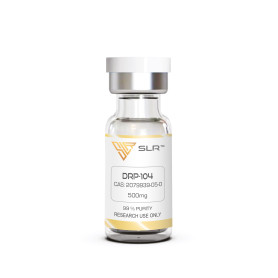
DRP-104 - 500mg
€1,970.00
Tax excluded
Made to Order Compound
favorite_border favorite
DRP-104 is an experimental compound investigated for its ability to inhibit glutaminase 1 (GLS1), a key enzyme responsible for converting glutamine into glutamate. Because glutamate supports nucleotide synthesis, amino acid production, antioxidant defense, and mitochondrial energy metabolism, GLS1 inhibition can disrupt multiple metabolic pathways essential for tumor growth. Cancer cells frequently depend on glutamine metabolism to sustain rapid proliferation, energy generation, and redox homeostasis. By blocking GLS1, DRP-104 has been explored as a metabolic intervention that induces a state of metabolic stress in tumor cells, potentially reducing their proliferative capacity and promoting selective vulnerability. Research has also investigated DRP-104 for its broader implications in tumor biology, including potential effects on oxidative stress balance, growth signaling pathways such as mTOR, and tumor microenvironment nutrient competition. 
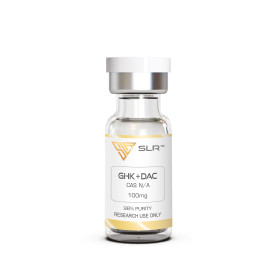
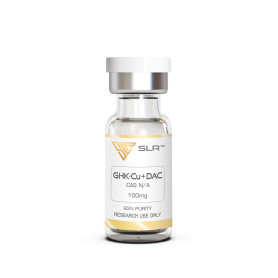
GHK +DAC - 100mg
€265.00
Tax excluded
Made to Order Compound
favorite_border favorite
GHK with DAC is a modified form of the naturally occurring tripeptide GHK that has been engineered to enhance stability and prolong its persistence in experimental systems. Like native GHK, it has been widely investigated in laboratory and preclinical research for its involvement in multiple biological processes. Scientific studies suggest that GHK is associated with the following research-observed activities: Support of tissue repair processes Modulation of fibrinogen-related pathways Activation of DNA repair–related gene networks Engagement of the ubiquitin/proteasome system Influence on insulin and insulin-like signaling pathways. The addition of DAC (Drug Affinity Complex or stabilizing moiety) is designed to enhance resistance to enzymatic degradation and extend the duration of peptide activity in experimental conditions. This modification may allow for more sustained interaction with biological systems, supporting improved observation of time-dependent and cumulative effects in research models. Collectively, these properties make GHK with DAC a molecule of interest in research areas such as tissue regeneration, aging mechanisms, metabolic regulation, and cellular homeostasis, particularly in experimental settings where prolonged peptide exposure is required.
GHK-Cu + DAC - 200mg (Price on request)
favorite_border favorite
Made to Order Compound ✦ Price available upon request. For inquiries: contactus GHK-Cu with DAC is a modified version of the well-characterized copper tripeptide Gly-His-Lys (GHK), in which the peptide is conjugated with a stabilizing Maleimide-β-Ala linker designed to influence its persistence and interaction dynamics in experimental settings. Native GHK-Cu has been extensively studied for its involvement in tissue remodeling, extracellular matrix regulation, and cellular signaling processes. The addition of a DAC-type linker is intended to enhance the stability of the peptide and extend its functional presence in biological systems, allowing for more sustained interaction with target pathways under controlled research conditions. This modification does not alter the core peptide sequence but may influence how the compound behaves in terms of degradation resistance, distribution, and temporal activity profile. In laboratory and preclinical research, GHK-Cu has been associated with modulation of gene expression related to skin structure, cellular repair, inflammatory signaling, and oxidative balance. The DAC-conjugated form is therefore investigated as an extended-activity variant, suitable for studies requiring prolonged exposure and more stable peptide dynamics. All observations related to GHK-Cu and its modified forms derive from in vitro systems, animal studies, or other experimental models and are intended exclusively for scientific research purposes.
GHK-Cu + DAC - 500mg (Price on request)
favorite_border favorite
Made to Order Compound ✦ Price available upon request. For inquiries: contactus GHK-Cu with DAC is a modified version of the well-characterized copper tripeptide Gly-His-Lys (GHK), in which the peptide is conjugated with a stabilizing Maleimide-β-Ala linker designed to influence its persistence and interaction dynamics in experimental settings. Native GHK-Cu has been extensively studied for its involvement in tissue remodeling, extracellular matrix regulation, and cellular signaling processes. The addition of a DAC-type linker is intended to enhance the stability of the peptide and extend its functional presence in biological systems, allowing for more sustained interaction with target pathways under controlled research conditions. This modification does not alter the core peptide sequence but may influence how the compound behaves in terms of degradation resistance, distribution, and temporal activity profile. In laboratory and preclinical research, GHK-Cu has been associated with modulation of gene expression related to skin structure, cellular repair, inflammatory signaling, and oxidative balance. The DAC-conjugated form is therefore investigated as an extended-activity variant, suitable for studies requiring prolonged exposure and more stable peptide dynamics. All observations related to GHK-Cu and its modified forms derive from in vitro systems, animal studies, or other experimental models and are intended exclusively for scientific research purposes.
LZ1 - 30ml/60mg (Price on request)
favorite_border favorite
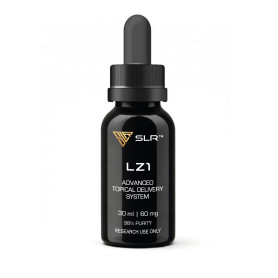
Made to Order Compound ✦ Price available upon request. For inquiries: contactus LZ1 is characterized as a 15-residue cationic antimicrobial peptide with: - Strong activity against Gram-positive skin pathogens and certain antibiotic-resistant strains - Negligible hemolytic activity and low cytotoxicity toward keratinocytes - Observed anti-inflammatory effects through modulation of TNF-α and IL-1β pathways - Documented antimalarial activity associated with inhibition of parasite energy metabolism These properties make LZ1 a relevant compound for experimental research in antimicrobial mechanisms, inflammatory signaling, and skin biology.
NGV-291 - 200mg
€895.00
Tax excluded
Made to Order Compound
favorite_border favorite
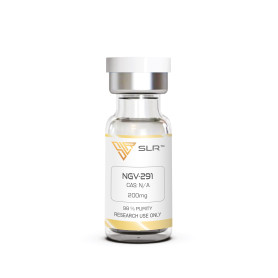
NGV-291 is a synthetic research peptide investigated for its potential interaction with pathways involved in neuronal signaling, tissue regeneration, and cellular adaptation. Experimental studies focus on its ability to modulate signaling environments that influence cell growth, structural remodeling, and communication between cells, particularly within the nervous system. By targeting mechanisms related to cellular repair and extracellular matrix dynamics, NGV-291 is explored in research contexts examining neural plasticity, tissue recovery, and response to cellular stress. Its relevance lies in its potential to influence multiple interconnected biological processes rather than a single isolated pathway.
OVAGEN - 500mg
€680.00
Tax excluded
Developed Compound ✦ Limited Stock Available
favorite_border favorite
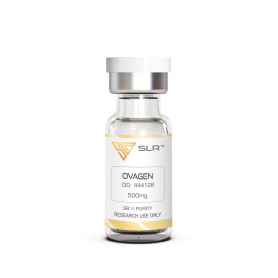
Ovagen is a bioregulatory peptide that has been studied for its role in supporting gastrointestinal mucosal integrity and maintaining normal liver tissue structure. Research suggests it may help protect the gastrointestinal mucosal layer from stressors such as antibiotics, toxins, and anti-inflammatory agents, while also being associated with reduced fibrotic processes in liver tissue. Ongoing experimental studies are further evaluating Ovagen’s interaction with mechanisms involved in HIV viral replication.
PHDP5+TAT (44-57) - 100mg
€1,780.00
Tax excluded
Developed Compound ✦ Limited Stock Available
favorite_border favorite
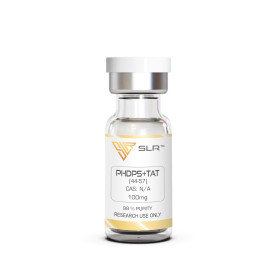
PHDP5 + TAT (44–57) is a synthetic peptide construct designed for advanced Alzheimer’s disease research, combining the PHDP5 sequence with a TAT cell-penetrating domain to enhance brain delivery and intracellular uptake. In preclinical Alzheimer’s disease models, PHDP5 has been reported to rescue learning and memory loss in Alzheimer’s disease, restoring cognitive performance to levels comparable to healthy controls. The mechanism is associated with inhibition of the pathological dynamin–microtubule interaction induced by tau, leading to recovery of synaptic vesicle endocytosis and neuronal communication. The addition of TAT (44–57) enables efficient penetration into brain tissue, including the hippocampus, following intranasal administration. While the peptide demonstrates strong effects on synaptic function and cognitive deficits in experimental Alzheimer’s models, its activity is primarily linked to tau-related dysfunction rather than direct amyloid plaque removal.
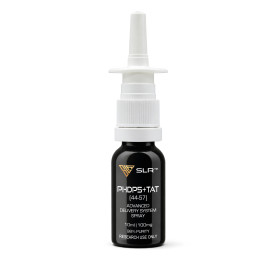
PHDP5+TAT (44-57) - 10ml/100mg - Spray
€1,860.00
Tax excluded
Developed Compound ✦ Limited Stock Available
favorite_border favorite
PHDP5 + TAT (44–57) is a synthetic peptide construct designed for advanced Alzheimer’s disease research, combining the PHDP5 sequence with a TAT cell-penetrating domain to enhance brain delivery and intracellular uptake. In preclinical Alzheimer’s disease models, PHDP5 has been reported to rescue learning and memory loss in Alzheimer’s disease, restoring cognitive performance to levels comparable to healthy controls. The mechanism is associated with inhibition of the pathological dynamin–microtubule interaction induced by tau, leading to recovery of synaptic vesicle endocytosis and neuronal communication. The addition of TAT (44–57) enables efficient penetration into brain tissue, including the hippocampus, following intranasal administration. While the peptide demonstrates strong effects on synaptic function and cognitive deficits in experimental Alzheimer’s models, its activity is primarily linked to tau-related dysfunction rather than direct amyloid plaque removal.
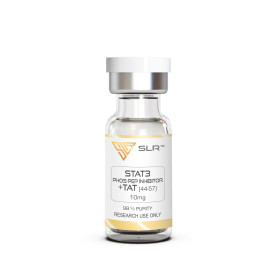
STAT3 PHOSPHOPEPTIDE INHIBITOR + TAT (44-57) - 10mg/30mg (Price on request)
favorite_border favorite
Made to Order Compound ✦ Price available upon request. For inquiries: contact us The STAT3 Inhibitor Peptide has been explored in experimental and preclinical research for its potential relevance across multiple cancer-related models, including: Multiple Myeloma Leukemia Glioblastoma Breast and Lung Cancers By selectively interacting with STAT3-associated signaling pathways, this peptide has been investigated for its ability to modulate cellular survival mechanisms and related biological processes, while being evaluated for its differential effects between transformed and non-transformed cells under controlled research conditions.
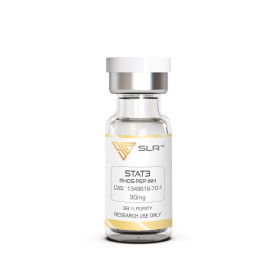
STAT3 PHOSPHOPEPTIDE INHIBITOR - 10mg/30mg
€260.00
Tax excluded
Developed Compound ✦ Limited Stock Available
favorite_border favorite
The STAT3 Inhibitor Peptide has been explored in experimental and preclinical research for its potential relevance across multiple cancer-related models, including: Multiple Myeloma Leukemia Glioblastoma Breast and Lung Cancers By selectively interacting with STAT3-associated signaling pathways, this peptide has been investigated for its ability to modulate cellular survival mechanisms and related biological processes, while being evaluated for its differential effects between transformed and non-transformed cells under controlled research conditions.
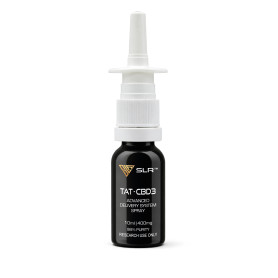
TAT-CBD3 - 10ml/400mg - Spray
€690.00
Tax excluded
Developed Compound ✦ Limited Stock Available
favorite_border favorite
TAT-CBD3 is a cell-penetrating peptide designed to modulate neuropathic pain by selectively disrupting the interaction between CRMP-2 and CaV2.2 voltage-gated calcium channels. By reducing calcium influx and excitatory neurotransmitter release, it decreases nociceptor hyperexcitability and abnormal pain signaling. Unlike conventional analgesics, TAT-CBD3 targets upstream molecular mechanisms involved in pain transmission, offering a more selective neuromodulatory approach. Preclinical studies have demonstrated its ability to reduce key features of neuropathic pain, including allodynia, hyperalgesia, and hypersensitivity.
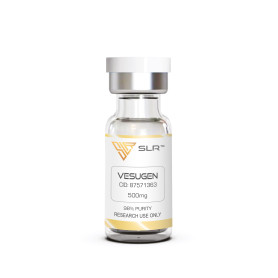
VESUGEN - 500mg
€780.00
Tax excluded
Developed Compound ✦ Limited Stock Available
favorite_border favorite
Vesugen is a short synthetic bioregulatory peptide investigated for its role in vascular and neurovascular regulation. It belongs to a class of organ-specific peptides studied for their potential capacity to modulate gene expression patterns associated with endothelial stability, metabolic regulation, and cellular stress resistance. Experimental models have explored its interaction with genes such as p16 and p21 (cell cycle regulation), as well as pathways linked to SIRT1 activity, which is widely associated with metabolic control, stress adaptation, and longevity-related signaling mechanisms. Within neurovascular research contexts, Vesugen has been examined for its potential role in maintaining microvascular integrity and supporting oxidative balance in neural tissues. Additional research has evaluated Vesugen in the context of endothelial gene expression, nitric oxide signaling balance, and vascular membrane stability. Modulation of endothelin-1 expression and reduction of oxidative vascular markers have been reported in controlled laboratory studies. Overall, Vesugen is characterized in scientific literature as a vascular bioregulatory peptide investigated for its potential epigenetic modulation of gene expression related to endothelial function, neurovascular stability, metabolic balance, and cellular aging pathways.