
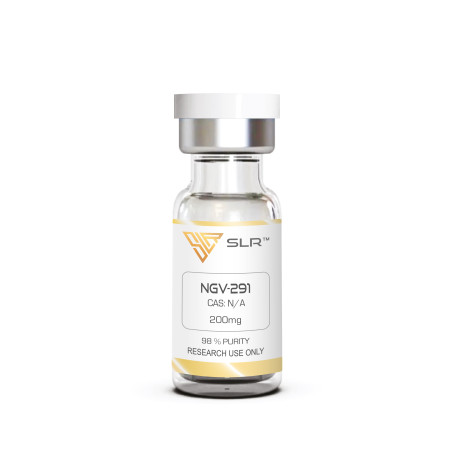
NGV-291 - 200mg
NGV-291 is a synthetic research peptide investigated for its potential interaction with pathways involved in neuronal signaling, tissue regeneration, and cellular adaptation. Experimental studies focus on its ability to modulate signaling environments that influence cell growth, structural remodeling, and communication between cells, particularly within the nervous system.
By targeting mechanisms related to cellular repair and extracellular matrix dynamics, NGV-291 is explored in research contexts examining neural plasticity, tissue recovery, and response to cellular stress. Its relevance lies in its potential to influence multiple interconnected biological processes rather than a single isolated pathway.
Description
SPECIFICATIONS
Product Code: NG2200D
Sequence: Gly-Arg-Lys-Lys-Arg-Arg-Gln-Arg-Arg-Arg-Cys-Asp-Met-Ala-Glu-His-Met-Glu-Arg-Leu-Lys-Ala-Asn-Asp-Ser-Leu-Lys-Leu-Ser-Gln-Glu-Tyr-Glu-Ser-Ile-NH₂
Molecular Formula: C176H304N66O55S2
Molecular Weight: 4288.81 Da
CAS: N/A
Purity: Technical / Research Grade ≥98%
Other details: No TFA Salt
Form: Lyophilized powder
Color: White
Storage temperature: -20°C
Source: Synthetic
Safety classification: Standard handling
DESCRIPTION
NGV-291 is a synthetic peptide currently investigated in experimental and preclinical research for its interaction with pathways involved in cellular regeneration, neuronal signaling, and extracellular matrix dynamics. The compound is designed to interact with biological systems at the molecular level, where it may influence processes related to tissue repair, cellular communication, and structural remodeling.
At the center of current scientific interest is the potential role of NGV-291 in modulating signaling pathways associated with neuronal growth and regeneration. In experimental models, certain peptides with similar structural characteristics have been studied for their ability to influence the behavior of neurons, including processes such as neurite outgrowth, synaptic plasticity, and cellular resilience under stress conditions. These mechanisms are critical in maintaining functional neural networks and supporting recovery following cellular damage.
One of the areas of investigation involves the interaction of NGV-291 with inhibitory signaling environments that can limit tissue regeneration. In many biological systems, the extracellular environment contains regulatory factors that restrict uncontrolled growth and maintain structural stability. Under experimental conditions, modulation of these pathways has been explored as a means of supporting regenerative responses, particularly in tissues where repair capacity is limited.
From a cellular perspective, NGV-291 may influence communication between cells through the regulation of signaling molecules and receptors involved in growth and repair processes. These interactions are often mediated by complex cascades of intracellular signals that control gene expression, protein synthesis, and structural adaptation. Research in this area focuses on understanding how peptides can affect these cascades and potentially alter cellular behavior over time.
The nervous system represents a key focus of NGV-291-related research. Neurons rely on a finely balanced environment that supports both stability and adaptability. Experimental studies involving related compounds have examined how modulation of inhibitory and permissive signals can influence neuronal connectivity and structural remodeling. These processes are relevant in models investigating neural injury, degenerative conditions, and general neuronal maintenance.
In addition to neuronal systems, NGV-291 may also be explored in the context of musculoskeletal and connective tissue research. Tissue repair and regeneration involve coordinated activity between cells, extracellular matrix components, and signaling molecules. By interacting with pathways that regulate cellular migration, proliferation, and structural organization, peptides such as NGV-291 are studied for their potential role in supporting these processes under controlled laboratory conditions.
Another area of interest is the relationship between cellular stress and recovery mechanisms. Cells exposed to oxidative stress, inflammatory signaling, or mechanical damage activate a range of adaptive responses aimed at restoring homeostasis. Experimental research suggests that modulation of signaling pathways involved in these responses may influence how effectively cells recover from stress and maintain functional integrity.
NGV-291 is also being investigated in relation to synaptic function and communication between neurons. Synapses are dynamic structures that adapt continuously in response to environmental and internal signals. The regulation of synaptic plasticity is essential for processes such as learning, memory, and overall neural adaptability. Peptides that influence these pathways are of interest in research focused on understanding the molecular basis of cognitive and neurological function.
From a broader perspective, NGV-291 can be considered part of a class of research compounds aimed at exploring how targeted modulation of specific biological pathways may influence complex physiological systems. Its relevance lies not in a single isolated effect, but in its potential to interact with multiple interconnected mechanisms involved in cellular structure, signaling, and adaptation.
It is important to emphasize that the current understanding of NGV-291 is based on experimental and preclinical research. Observations are derived from in vitro systems, animal models, or theoretical frameworks designed to explore molecular interactions. These findings do not establish clinical applications or outcomes in humans. Overall, NGV-291 represents a research-focused peptide of interest for studying the interplay between neuronal signaling, tissue regeneration, and cellular adaptation. Its investigation contributes to a broader effort to understand how biological systems regulate growth, repair, and structural organization at the molecular level.
DISCLAIMER
This product is intended for lab research and development use only. These studies are performed outside of the body. This product is not medicines or drugs and has not been approved by the FDA or EMA to prevent, treat or cure any medical condition, ailment or disease. Bodily introduction of any kind into humans or animals is strictly forbidden by law. This product should only be handled by licensed, qualified professionals.
All product information provided on this website is for informational and educational purposes only.
Data sheet
| Image | Ref. | Unit price | Weight | Avail. | Buy |
|---|---|---|---|---|---|
 | NG2200D | €895.00 Discount by quantity 10+ €716.00 –20% 20+ €653.35 –27% 50+ €581.75 –35% 100+ €519.10 –42% 200+ €465.40 –48% | 0.000000 kg |  | |
| Total: 0,0 All prices with tax included. | |||||
Product is available Product is no longer in stock
 Product is no in stock, but is allowed to be back-ordered