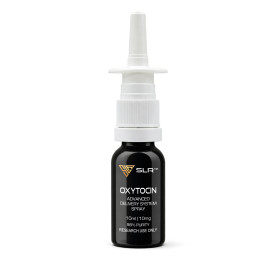
OXYTOCIN - 10ml/10mg - Spray
€79.00

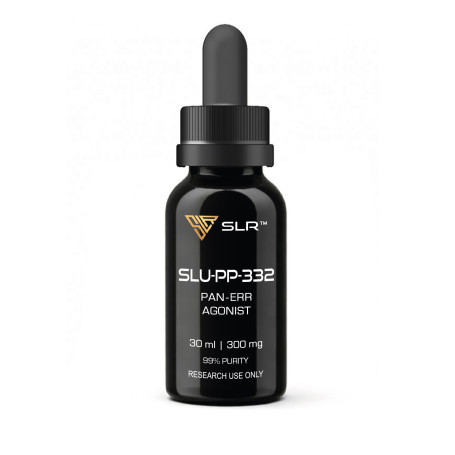

SLU-PP-332 is a synthetic small-molecule research compound best known as a pan-agonist of ERRα, ERRβ, and ERRγ, a family of nuclear receptors involved in mitochondrial function, oxidative metabolism, and cellular energy regulation. Its main interest lies in its ability to shift tissues toward a more oxidative metabolic state. Rather than acting like a stimulant, it appears to influence upstream transcriptional programs that regulate how cells produce and use energy. This includes effects on mitochondrial biogenesis, fatty acid oxidation, oxidative phosphorylation, and overall fuel preference.
In preclinical studies, SLU-PP-332 has been associated with increased mitochondrial respiration, enhanced oxidative muscle remodeling, greater reliance on fat oxidation, higher energy expenditure, and improved endurance-related parameters in animal models. It has also shown activity in experimental settings involving metabolic dysfunction, liver fat accumulation, cardiac energy impairment, and age-related mitochondrial decline. Overall, SLU-PP-332 is best described as a preclinical metabolic reprogramming compound with exercise-mimetic and oxidative metabolic activity. It is relevant for research into mitochondrial biology, fuel utilization, and ERR-driven transcriptional regulation.
SPECIFICATIONS
Product Code: SP3300S
Molecular Formula: C18H14N2O2
Molecular Weight: 290.3 g/mol
CAS: 303760-60-3
Purity: Technical / Research Grade ≥99%
Form: Liquid Solution
Color: Clear / Slightly opalescent
Total Content: 30 mL / 300 mg
Concentration: 10 mg/mL
Vehicle / Carrier System: Proprietary carrier system
Storage Temperature: 4°C (Do not freeze)
Source: Synthetic
Safety classification: Standard handling
DESCRIPTION
SLU-PP-332 is a synthetic small-molecule research compound. It is best known as a pan-agonist of the estrogen-related receptor family. Its primary molecular targets are ERRα, ERRβ, and ERRγ. These receptors are orphan nuclear receptors involved in energy regulation rather than classical estrogen signaling. This makes SLU-PP-332 especially relevant in the study of mitochondrial biology, oxidative metabolism, and transcriptional control of fuel use. Unlike a simple stimulant, SLU-PP-332 does not appear to act by transiently forcing a short-lived increase in cellular output. Instead, it influences upstream transcriptional programs. In practical terms, this means it changes how cells are instructed to produce, distribute, and consume energy. That broader regulatory action is one of its most distinctive features. It is often discussed as a metabolic reprogramming tool rather than a direct excitatory agent.
ERR receptors play a central role in the control of genes linked to mitochondrial biogenesis.
Because of this biology, SLU-PP-332 has attracted attention as an “exercise mimetic” research compound. One of the most important reported effects of SLU-PP-332 is its ability to increase mitochondrial function in skeletal muscle-related models. In cultured muscle cells, the compound increased cellular respiration. This suggests a stronger reliance on aerobic ATP production. It also supports the idea that the compound does more than alter gene expression on paper. Its action appears to translate into measurable functional changes in energy metabolism.
A rise in mitochondrial respiration usually reflects a greater oxidative phenotype. An oxidative phenotype means that a tissue is better configured to generate energy through mitochondrial pathways rather than depending mainly on glycolysis. This is especially relevant in endurance-oriented muscle biology. It is also relevant in tissues where efficient long-duration energy production is important. That is part of why SLU-PP-332 is studied beyond skeletal muscle alone.
Animal studies reported that SLU-PP-332 increased type IIa oxidative skeletal muscle fibers. Type IIa fibers are more fatigue-resistant than highly glycolytic fast fibers. They are often associated with better aerobic efficiency. This reported fiber-type shift fits well with the broader concept of oxidative adaptation. It also reinforces the exercise-mimetic framing used in the literature. The compound also induced an ERRα-dependent acute aerobic exercise gene program in mice. That is a major mechanistic point. It suggests that ERRα is not merely one of several receptor targets with similar importance. Instead, ERRα seems especially relevant to the endurance-like transcriptional signature observed after exposure. This gives SLU-PP-332 real value as a pathway-mapping tool.
Published work highlighted genes such as Ddit4 and Slc25a25 in this response pattern. These genes were described as part of the exercise-like transcriptional adaptation triggered by the compound. That overlap does not prove full equivalence to physiological training. However, it strongly supports meaningful convergence between pharmacologic ERR activation and aerobic adaptation pathways. This is one of the most interesting aspects of the compound’s profile. DDIT4 is particularly notable in this context. It has been linked to adaptive stress-response signaling in muscle. The literature described it as a direct ERRα target in the setting of SLU-PP-332 exposure. That strengthens the mechanistic case for ERRα-driven transcriptional remodeling. It also helps explain why improvements in endurance were observed in mice.
Another defining characteristic of SLU-PP-332 is its effect on whole-body fuel selection. One of the clearest reported findings was a reduction in respiratory exchange ratio, or RER. A lower RER generally indicates greater reliance on fat oxidation and reduced reliance on carbohydrate oxidation. This shift appeared rapidly after dosing in mouse studies. It was also maintained with repeated administration in certain models. In chow-fed mice, SLU-PP-332 increased calculated fatty acid oxidation. At the same time, carbohydrate utilization decreased. Energy expenditure increased as well. Importantly, locomotor activity did not significantly increase in the same report. Food intake also did not significantly decrease in that model.
This pattern is scientifically important. It suggests that the metabolic effects were not simply caused by the animals moving more. It also suggests the effects were not merely a consequence of reduced caloric intake. Instead, the findings support a direct effect on metabolic programming. That makes the compound more interesting mechanistically than a nonspecific appetite-suppressing or activating agent.
In skeletal muscle, SLU-PP-332 increased pyruvate content. It decreased glycogen content. It also increased in vivo muscle glucose uptake in quadriceps in the reported experiments. Taken together, these findings are consistent with altered substrate turnover and a more active oxidative metabolic state. They fit with the broader exercise-like phenotype described in the literature.
The obesity-related data are among the most discussed. In diet-induced obese mice, SLU-PP-332 produced progressive weight loss over the treatment period. The reported reduction after 28 days was meaningful relative to control animals. Fat mass gain was reduced markedly. Lean mass was not significantly changed in that dataset. Again, food intake was not significantly lowered in that model. That point is crucial. It suggests that the anti-adiposity effect was not primarily driven by appetite suppression in the measured system. Instead, the results favored increased energy expenditure and altered fuel use. That is a more specific and scientifically interesting mechanism.
In the same obesity-related work, fasting glucose and fasting insulin were reduced. Glucose tolerance improved. Insulin tolerance did not show equally strong changes across all endpoints. This means the metabolic story is promising but nuanced. The liver-related findings were also notable. Plasma triglycerides decreased in obese mice. Total cholesterol decreased as well. Hepatic triglyceride content fell. Histological analysis suggested reduced steatosis in the liver. These liver findings make mechanistic sense in the context of increased fat oxidation. If tissues are shifted toward greater use of fatty acids as fuel, ectopic lipid accumulation may decline in susceptible models. That interpretation is also consistent with the lower respiratory exchange ratio described in the same work. It helps connect the molecular and whole-body findings into one coherent metabolic profile. This coherence is one reason SLU-PP-332 has drawn sustained attention in metabolism research.
A useful scientific summary is that SLU-PP-332 does not simply “burn fat.” A more accurate statement is that it activates nuclear receptor pathways that reprogram tissues toward oxidative metabolism. That reprogramming then favors fatty acid oxidation, mitochondrial activity, and endurance-like adaptation in preclinical systems.
The cardiovascular literature adds another layer to its profile. In a pressure-overload model of heart failure, SLU-PP-332 improved ejection fraction. It also improved stroke volume and cardiac output in the reported study. Fibrosis was reduced. Survival improved as well. Mechanistically, the heart study emphasized restoration of metabolic gene programs. These included genes related to fatty acid metabolism. They also included genes linked to mitochondrial function. This is highly consistent with the broader ERR biology already seen in muscle and whole-body metabolism studies. It suggests that the energetic effects of ERR agonism may be relevant in multiple oxidative tissues.
This is important because the heart is an organ with exceptionally high mitochondrial demand. When mitochondrial function is impaired, cardiac efficiency can decline. By restoring a more oxidative transcriptional profile, ERR agonism may support cardiac energetic competence in preclinical settings. That was the conceptual logic of the heart-failure work. The reported functional improvements support that interpretation.
The kidney-aging literature further broadens interest in the compound. In aged mice, ERR expression in the kidney was reduced. Caloric restriction preserved ERR expression. SLU-PP-332 was then used as a pharmacologic pan-ERR agonist in that context. The findings suggested that ERR activation could reverse part of the age-related mitochondrial dysfunction seen in kidney tissue. More specifically, the study reported improvement in albuminuria. It also reported reversal of podocyte loss. Mitochondrial dysfunction markers improved. Inflammatory signaling was reduced.
This is mechanistically interesting because mitochondrial dysfunction and inflammation often reinforce one another in aging tissues. Damaged mitochondria can contribute to inflammatory signaling. Inflammation can in turn worsen mitochondrial performance. ERR agonism may interrupt part of that cycle in preclinical systems. That is one reason SLU-PP-332 is sometimes discussed in the broader context of age-related metabolic decline.
SLU-PP-332 appears most compelling where energy handling is impaired or metabolically stressed. Obesity, energetic overload, heart dysfunction, and aging-related mitochondrial decline all involve disrupted oxidative metabolism. ERR activation appears to push these systems back toward a more oxidative transcriptional state. That is the unifying concept behind much of the current interest. Another strength of SLU-PP-332 is its value as a mechanistic probe. It helped demonstrate that pharmacologic activation of ERRs is feasible in vivo. It also clarified that ERRα is especially important in the acute aerobic exercise-response signature. This means the compound is valuable even beyond its possible translational implications.
From a research perspective, one practical way to describe SLU-PP-332 is as a regulator of fuel preference. It tends to shift the organism toward greater use of fatty acids. It supports mitochondrial transcriptional programs. These two properties together explain much of the observed physiology. This makes it more than a generic “metabolic booster.” A second practical description is that it promotes oxidative adaptation. Oxidative adaptation means that tissues become better configured for sustained aerobic energy production. This can manifest as more oxidative muscle fibers. It can manifest as improved endurance in mice. It can also manifest as higher energy expenditure and improved lipid handling.
Overall, SLU-PP-332 stands out because it links several high-interest research themes in one scaffold.
Its most distinctive identity is therefore not “fat burner.” Its most distinctive identity is “preclinical pan-ERR agonist with exercise-mimetic and oxidative metabolic activity.” That phrase captures the receptor biology. It captures the mechanism. And it captures the current level of evidence.
In summary, SLU-PP-332 is best viewed as a high-interest experimental modulator of cellular energy programming.
Potential key characteristics of SLU-PP-332 include:
Additional reported features include:
From a mechanism-of-action standpoint, the compound appears to work by activating ERR-controlled gene networks. These gene networks help determine mitochondrial number and function. They influence how tissues oxidize fatty acids. They also shape how oxidative tissues adapt to energetic demand. This mechanism is central to the published interpretation of SLU-PP-332’s activity.
From an organism-level perspective, the most relevant reported effects include:
Additional preclinical observations include:
REFERENCES
All information presented above is derived from in vitro experiments, animal studies, and other preclinical research models. These data are intended solely for basic scientific investigation of biological mechanisms and do not imply any therapeutic, diagnostic, preventive, or clinical use in humans or animals.
C. Billon et al., "A Synthetic ERR Agonist Alleviates Metabolic Syndrome" [PubMed]
W. Xu et al., "Novel Pan-ERR Agonists Ameliorate Heart Failure Through Enhancing Cardiac Fatty Acid Metabolism and Mitochondrial Function" [PubMed]
C. Billon et al., "An orally active estrogen receptor-related receptor agonist, SLU-PP-915, enhances aerobic exercise capacity" [PubMed]
CT. Moller et al., "In Vitro Metabolism and Analytical Characterization of SLU-PP-332 and SLU-PP-915: Novel Pan-ERR Agonists With Doping Potential" [PubMed]
H.E. Okda et al., "Chemical optimization of the exercise mimetic SLU-PP-332 enables insight into estrogen-related receptor signaling" [PubMed]
C. Billon et al., "Synthetic ERRα/β/γ Agonist Induces an ERRα-Dependent Acute Aerobic Exercise Response and Enhances Exercise Capacity" [PubMed]
R. Bonanni et al., "Targeting ERRs to counteract age-related muscle atrophy associated with physical inactivity: a pilot study" [PMC]
X.X. Wang et al., "Estrogen-Related Receptor Agonism Reverses Mitochondrial Dysfunction and Inflammation in the Aging Kidney" [PubMed]
W. Xu et al., "Abstract 9682: The Cardiac Protective Effects of Novel Synthetic Pan-Estrogen Related Receptor Agonists Slu-pp-332 and Slu-pp-915" [AHAIASA Journal]
H. Nasri "New hopes on “SLU-PP-332” as an effective agent for weight loss with indirect kidney protection efficacy; a nephrology point of view" [Journal of Renal Endocrinology]
DISCLAIMER
This product is intendend for lab research and development use only. These studies are performed outside of the body. This product is not medicines or drugs and has not been approved by the FDA or EMA to prevent, treat or cure any medical condition, ailment or disease. Bodily introduction of any kind into humans or animals is strictly forbidden by law. This product should only be handled by licensed, qualified professionals.
All product information provided on this website is for informational and educational purposes only.
| Image | Ref. | Unit price | Weight | Avail. | Buy |
|---|---|---|---|---|---|
| SP3300S | €125.00 Discount by quantity 10+ €106.25 –15% 20+ €90.00 –28% 50+ €75.00 –40% 100+ €65.00 –48% 200+ €56.25 –55% | 0.000000 kg |  | |
| Total: 0,0 All prices with tax included. | |||||
Product is available Product is no longer in stock
 Product is no in stock, but is allowed to be back-ordered