Powder Compounds

Active filters

5-AMINO-1MQ - 3g
€145.00
Tax excluded
Temporarily unavailable
favorite_border favorite
5-amino-1MQ is a synthetic small-molecule compound investigated for its ability to modulate the activity of nicotinamide N-methyltransferase (NNMT), an enzyme involved in cellular metabolic regulation and energy balance. NNMT plays a role in nicotinamide metabolism and influences the availability of nicotinamide adenine dinucleotide (NAD⁺), a central cofactor in mitochondrial function and cellular energy production. By inhibiting NNMT activity in experimental models, 5-amino-1MQ has been associated with increased NAD⁺ availability and modulation of metabolic signaling pathways, including those linked to sirtuin-1 (SIRT1). Preclinical research has explored its effects on energy utilization, adipose tissue metabolism, and metabolic efficiency without changes in caloric intake. This compound is primarily used as a research tool to investigate NNMT-related pathways and their role in metabolic regulation.

DIHEXA - 0,5g, 1g
€129.00
Tax excluded
IN-STOCK
favorite_border favorite
Dihexa is a synthetic, small-molecule angiotensin IV analog engineered for advanced neurological and cell signaling research. In preclinical and laboratory environments, investigation focuses on the following mechanisms:Synaptic Integrity Support: Studied for its high potency in promoting dendritic spine formation, spinogenesis, and the creation of new functional synapses between neurons. Neurotrophic Signaling Activation: Investigated for its capacity to bind to hepatocyte growth factor (HGF) and augment its activity, supporting cellular pathways relevant to synaptic plasticity and learning paradigms. Neurodegenerative Stress Adaptation: Observed in experimental models of neural stress to evaluate microarchitecture resilience and cognitive encoding mechanisms.This product is supplied as a high-purity compound strictly for laboratory research and advanced scientific evaluation. Not for human consumption or therapeutic use.
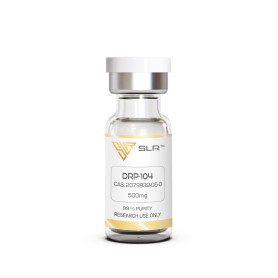
DRP-104 - 100mg, 500mg
€498.00
Tax excluded
Custom Synthesis ✦ Production Time: 3+ Weeks
favorite_border favorite
DRP-104 is an experimental compound investigated for its ability to inhibit glutaminase 1 (GLS1), a key enzyme responsible for converting glutamine into glutamate. Because glutamate supports nucleotide synthesis, amino acid production, antioxidant defense, and mitochondrial energy metabolism, GLS1 inhibition can disrupt multiple metabolic pathways essential for tumor growth. Cancer cells frequently depend on glutamine metabolism to sustain rapid proliferation, energy generation, and redox homeostasis. By blocking GLS1, DRP-104 has been explored as a metabolic intervention that induces a state of metabolic stress in tumor cells, potentially reducing their proliferative capacity and promoting selective vulnerability. Research has also investigated DRP-104 for its broader implications in tumor biology, including potential effects on oxidative stress balance, growth signaling pathways such as mTOR, and tumor microenvironment nutrient competition. 
GERMANIUM SESQUIOXIDE GE-132 - 99,99% - 50g
€189.00
Tax excluded
IN-STOCK
favorite_border favorite
Organic Germanium GE-132 (carboxyethylgermanium sesquioxide) is a water-soluble organogermanium compound investigated for its effects on immune signaling, chemokine regulation, and oxidative stress pathways. Research consistently highlights modulation of the CCL2–CCR2 chemokine axis, which influences monocyte recruitment and macrophage trafficking, as well as induction of interferon-associated pathways with activation of NK cells and macrophages in experimental models. GE-132 has also been shown to suppress NF-κB and MAPK signaling and reduce inflammatory mediators under controlled conditions. Another key feature is redox modulation. Several studies report protection against hydrogen peroxide–induced oxidative stress, increased intracellular glutathione, reduced LDL oxidation, elevated α-tocopherol levels, and improved antioxidant enzyme activity. In vitro data also indicate increased cellular ATP levels and potential support of mitochondrial bioenergetics. Preclinical oncology research describes effects on tumor microenvironment regulation, macrophage M1 gene polarization, inhibition of the CCL2 pathway, and reduction of tumor progression. Additional experimental contexts include vascular inflammation, myocardial remodeling, neuroinflammatory paradigms, hepatic oxidative injury, antiviral immune signaling, and wound healing biology.
ITPP (MYO-INOSITOL TRISPYROPHOSPHATE) - 1gr/5gr
€40.00
Tax excluded
IN-STOCK
favorite_border favorite
Myo-Inositol Trispyrophosphate Hexasodium Salt (ITPP) is a compound studied for its ability to influence oxygen delivery dynamics by modulating hemoglobin’s affinity for oxygen. This mechanism has been associated, in experimental settings, with changes in tissue oxygen availability and cellular metabolic processes. In preclinical and laboratory research, ITPP has been explored for its potential impact on metabolic efficiency, oxidative balance, and inflammatory pathways. Its interaction with oxygen-dependent systems has generated scientific interest in areas related to cellular energy metabolism, mitochondrial function, and tissue-level physiology. Additionally, ongoing research has investigated the broader implications of oxygen modulation in contexts such as aging processes, cellular stress response, and complex biological environments including those associated with neurodegenerative and proliferative conditions.
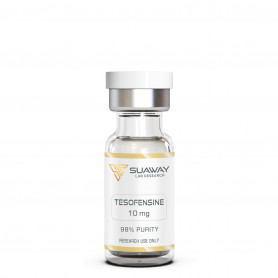
TESOFENSINE 10mg
€70.00
Tax excluded
IN-STOCK
favorite_border favorite
Tesofensine is a synthetic monoamine reuptake inhibitor investigated in preclinical models for its complex interaction with central metabolic and neuroendocrine signaling networks. In laboratory environments, research focuses on the following mechanisms:Neurotransmitter Modulation: Studied for its triple inhibition profile on serotonin, noradrenaline, and dopamine reuptake dynamics. Energy Homeostasis: Evaluated in metabolic research paradigms to observe changes in resting energy expenditure and upstream transcriptional programs regulating lipid oxidation. Satiety Signaling networks: Investigated for its influence on central pathways governing appetite regulation and neuroendocrine responses.This product is supplied as a high-purity research chemical intended exclusively for laboratory analysis and in vitro or in vivo evaluation. Not for human use.