
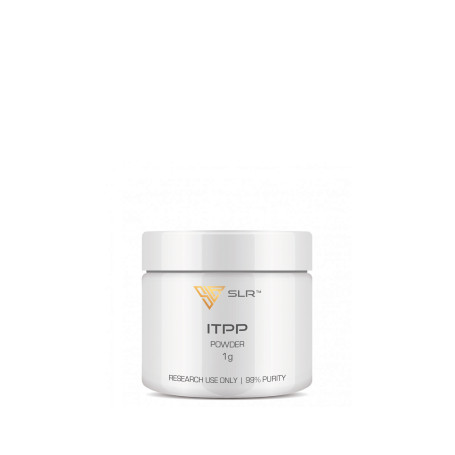


ITPP (MYO-INOSITOL TRISPYROPHOSPHATE) - 1gr/5gr
Myo-Inositol Trispyrophosphate Hexasodium Salt (ITPP) is a compound studied for its ability to influence oxygen delivery dynamics by modulating hemoglobin’s affinity for oxygen. This mechanism has been associated, in experimental settings, with changes in tissue oxygen availability and cellular metabolic processes.
In preclinical and laboratory research, ITPP has been explored for its potential impact on metabolic efficiency, oxidative balance, and inflammatory pathways. Its interaction with oxygen-dependent systems has generated scientific interest in areas related to cellular energy metabolism, mitochondrial function, and tissue-level physiology.
Additionally, ongoing research has investigated the broader implications of oxygen modulation in contexts such as aging processes, cellular stress response, and complex biological environments including those associated with neurodegenerative and proliferative conditions.
Description
SPECIFICATIONS
Product Code: ITP015P
ITPP (Myo-Inositol Trispyrophosphate Hexasodium Salt)
Molecular Formula: C6H6Na6O21P6
Molecular Weight: 737.88 g/mol
CAS: 23103-35-7
Form: Solid powder
Color: White
Storage Temperature: -20°C
Source: Synthetic
Safety Classification: Standard handling
DESCRIPTION
Myo-Inositol Trispyrophosphate Hexasodium Salt, commonly referred to as ITPP, is a synthetic derivative of myo-inositol that has attracted significant scientific interest due to its interaction with oxygen transport dynamics and cellular metabolism. Structurally, ITPP is obtained by modifying the inositol ring through the introduction of three pyrophosphate groups, resulting in a highly charged molecule capable of interacting with hemoglobin and influencing its oxygen-binding behavior.
At a biochemical level, the relevance of ITPP lies in its ability to modulate the relationship between hemoglobin and oxygen. Hemoglobin, the oxygen-carrying protein in red blood cells, binds oxygen in the lungs and releases it into tissues according to physiological gradients and regulatory mechanisms. The affinity of hemoglobin for oxygen is a tightly controlled parameter, as excessive affinity can limit oxygen release to tissues, while insufficient affinity can impair oxygen loading in the lungs. ITPP has been studied for its capacity to shift this balance by promoting oxygen release under specific conditions, thereby influencing tissue oxygen availability.
The concept of tissue oxygenation is central to understanding the biological relevance of ITPP. Oxygen is required for aerobic metabolism, which is the primary mechanism by which cells generate energy in the form of ATP through oxidative phosphorylation within mitochondria. When oxygen delivery is limited, cells rely more heavily on anaerobic pathways, leading to less efficient energy production and increased generation of metabolic byproducts such as lactate. By influencing oxygen release from hemoglobin, ITPP has been investigated as a tool to support more efficient oxygen utilization at the cellular level.
From a metabolic perspective, enhanced oxygen availability can impact multiple pathways simultaneously. Cells with adequate oxygen supply are better able to sustain aerobic respiration, maintain redox balance, and optimize energy production. In experimental settings, improved oxygen dynamics have been associated with shifts in substrate utilization, reduced reliance on anaerobic glycolysis, and improved metabolic efficiency. These processes are particularly relevant in tissues with high energy demand, such as skeletal muscle, cardiac tissue, and neural tissue.
The cardiovascular system represents another key area of interest in ITPP-related research. The heart relies heavily on continuous oxygen supply to sustain its contractile function. Variations in oxygen delivery can influence myocardial performance, vascular tone, and overall circulatory efficiency. By modulating oxygen release at the hemoglobin level, ITPP has been explored in preclinical models as a compound that may influence oxygen distribution across tissues, potentially affecting how oxygen is delivered to areas with higher metabolic demand. Additionally, research has examined whether changes in oxygen dynamics may indirectly influence vascular behavior, including microcirculatory flow and tissue perfusion.
Beyond its effects on oxygen transport, ITPP has also been studied in the context of oxidative balance. Reactive oxygen species (ROS) are natural byproducts of cellular metabolism, particularly within mitochondria. While physiological levels of ROS play important signaling roles, excessive accumulation can lead to oxidative stress, which is associated with cellular damage and impaired function. By supporting more efficient aerobic metabolism and reducing reliance on anaerobic pathways, ITPP may indirectly influence the generation of reactive oxygen species, contributing to a more balanced redox environment in experimental systems.
Mitochondrial function is closely tied to oxygen availability, and as such, it represents a central component in understanding the broader implications of ITPP. Mitochondria require oxygen to drive the electron transport chain, which is responsible for the majority of ATP production in cells. When oxygen supply is optimized, mitochondrial efficiency can improve, leading to enhanced energy output and more stable cellular function. In research settings, modulation of oxygen delivery has been associated with changes in mitochondrial respiration, ATP synthesis, and overall cellular energy status.
The nervous system, particularly the brain, is highly dependent on continuous oxygen supply. Neurons have limited capacity for anaerobic metabolism and are especially sensitive to fluctuations in oxygen availability. As a result, compounds that influence oxygen delivery have been explored in the context of neuronal metabolism and brain energy homeostasis. Although research is still ongoing, the ability of ITPP to modulate oxygen release has led to interest in its potential impact on neuronal efficiency, synaptic function, and broader aspects of cognitive performance under experimental conditions.
In addition to metabolic and neurological aspects, ITPP has also been investigated in relation to immune system dynamics. Immune cells, including macrophages and lymphocytes, require substantial energy to carry out their functions, particularly during activation and response phases. Oxygen availability can influence immune cell metabolism, cytokine production, and cellular signaling pathways. By modulating oxygen delivery, ITPP may indirectly support the energetic demands of immune cells, although these interactions remain an area of active research.
Inflammation represents another complex biological process that is closely linked to both metabolism and oxidative stress. Chronic inflammatory states are often associated with altered oxygen dynamics, impaired tissue perfusion, and increased oxidative burden. In experimental models, modulation of oxygen delivery has been explored as a factor that may influence inflammatory signaling pathways, cellular stress responses, and tissue-level adaptations. ITPP, through its interaction with oxygen transport mechanisms, has therefore been considered in broader investigations related to inflammatory processes.
The concept of cellular aging is also connected to mitochondrial efficiency, oxidative stress, and metabolic regulation. Over time, cumulative cellular damage and declining energy production contribute to age-related functional decline. By supporting oxygen-dependent metabolic pathways and potentially influencing mitochondrial performance, ITPP has been examined in the context of cellular resilience and long-term metabolic stability. These areas remain exploratory but are of significant interest within the field of longevity research.
Another area of investigation involves tissue environments characterized by reduced oxygen availability, commonly referred to as hypoxic conditions. Hypoxia can occur in a variety of contexts, including intense metabolic demand, impaired circulation, or localized tissue changes. Cells adapt to hypoxia through a range of mechanisms, including activation of hypoxia-inducible factors (HIFs), which regulate gene expression related to survival and adaptation. By influencing oxygen release, ITPP may interact with these adaptive pathways, potentially altering how cells respond to variations in oxygen supply.
In oncology-related research, tumor microenvironments are often characterized by regions of hypoxia, which can influence tumor behavior and response to therapies. Hypoxic conditions within tumors can contribute to resistance mechanisms and altered cellular metabolism. The modulation of oxygen delivery has therefore been explored as a potential factor in influencing tumor microenvironment dynamics. While findings are still preliminary, ITPP has been included in experimental investigations aimed at understanding how oxygen availability may affect cellular behavior in these contexts.
From a physiological standpoint, oxygen delivery is also a limiting factor in physical performance and endurance. During sustained activity, tissues require increased oxygen supply to maintain aerobic metabolism. When oxygen delivery is insufficient, fatigue can develop due to increased reliance on anaerobic pathways. By influencing oxygen release, ITPP has been studied in experimental models examining energy efficiency, endurance capacity, and metabolic adaptation under conditions of increased demand.
Tissue repair and regeneration processes are also influenced by oxygen availability. Oxygen plays a role in cellular proliferation, collagen synthesis, and overall tissue remodeling. In experimental settings, enhanced oxygenation has been associated with improved cellular activity in regenerative processes. As such, compounds that affect oxygen dynamics, including ITPP, have been considered in studies related to tissue recovery and structural maintenance.
It is important to emphasize that the current understanding of ITPP is based largely on preclinical and experimental research. While the mechanisms described above provide insight into potential biological interactions, they do not establish clinical outcomes or approved applications in humans. The compound remains under investigation, and further studies are required to fully characterize its pharmacological profile, safety considerations, and long-term effects.
From a research perspective, ITPP represents a unique tool for exploring how modulation of oxygen transport at the molecular level can influence a wide range of biological systems. Its interaction with hemoglobin places it at a critical junction between oxygen delivery and cellular metabolism, making it relevant to studies involving energy production, mitochondrial function, oxidative balance, and tissue-level physiology.
REFERENCES
M. Okninska et al. "New potential treatment for cardiovascular disease through modulation of hemoglobin oxygen binding curve: Myo-inositol trispyrophosphate (ITPP), from cancer to cardiovascular disease" [ScienceDirect]
A. Biolo et al. "Enhanced exercise capacity in mice with severe heart failure treated with an allosteric effector of hemoglobin, myo-inositol trispyrophosphate" [PubMed]
C. Kieda et al. "Suppression of hypoxia-induced HIF-1α and of angiogenesis in endothelial cells by myo-inositol trispyrophosphate-treated erythrocytes" [PubMed]
G. Sihn et al. "Anti-angiogenic properties of myo-inositol trispyrophosphate in ovo and growth reduction of implanted glioma" [FebsPress]
Ly-Binh-An Tran et al. "Impact of myo-inositol trispyrophosphate (ITPP) on tumour oxygenation and response to irradiation in rodent tumour models" [PubMed]
K.C. Fylaktakidou et al. "Inositol tripyrophosphate: a new membrane permeant allosteric effector of haemoglobin" [PubMed]
M. Bazzano et al. "Respiratory metabolites in bronchoalveolar lavage fluid (BALF) and exhaled breath condensate (EBC) can differentiate horses affected by severe equine asthma from healthy horses" [PubMed]
DISCLAIMER
This product is intendend for lab research and development use only. These studies are performed outside of the body. This product is not medicines or drugs and has not been approved by the FDA or EMA to prevent, treat or cure any medical condition, ailment or disease. Bodily introduction of any kind into humans or animals is strictly forbidden by law. This product should only be handled by licensed, qualified professionals.
All product information provided on this website is for informational and educational purposes only.
Data sheet
Customers who bought this product also bought:
TIRZ - 10mg

MIF-1 - 100mg

OREXIN A+B - 10ml/5+5mg - Spray
BPC-157 - 5mg, 10mg
VIALOX - 30ml/200mg
DNSP-11 - 5mg

DIHEXA - 0,5g, 1g

SLU-PP-332 - 30ml/300mg
Choose product attributes:
| Image | Ref. | Grams | Unit price | Weight | Avail. | Buy |
|---|---|---|---|---|---|---|
 | ITP015P | 1 Gram | €40.00 Discount by quantity 10+ €32.80 –18% 20+ €28.80 –28% 50+ €24.80 –38% 100+ €22.00 –45% 200+ €20.00 –50% | 49 kg |  | |
| | ITP015P | 5 Grams | €160.00 Discount by quantity 10+ €131.20 –18% 20+ €115.20 –28% 50+ €99.20 –38% 100+ €88.00 –45% 200+ €80.00 –50% | 0 kg | | |
| Total: 0,0 All prices with tax included. | ||||||
Product is available Product is no longer in stock
 Product is no in stock, but is allowed to be back-ordered