OREXIN A - 5mg
€120.00

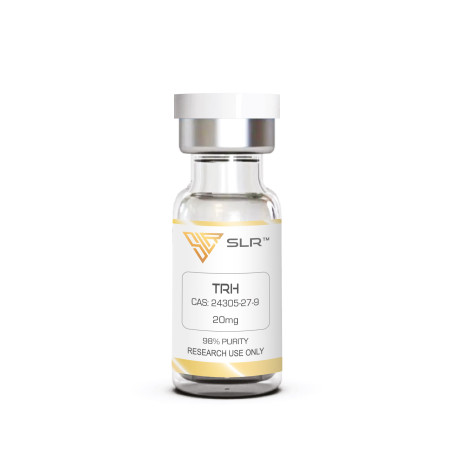

Thyrotropin-Releasing Hormone (TRH) is a naturally occurring tripeptide neurohormone best known for stimulating pituitary release of TSH and regulating thyroid hormone production. Beyond its classical endocrine role, TRH is widely distributed throughout the CNS and peripheral tissues, suggesting broader biological functions. Research indicates that TRH may influence immune development and immune homeostasis through interactions with cytokine signaling pathways, supporting its relevance in inflammatory disorders and cytokine-induced sickness behavior models. Animal studies have suggested that TRH may improve aging-related metabolic and hormonal parameters, including support for reproductive function, reduction of age-associated kidney degeneration, and modulation of fat metabolism. Additional investigations have explored TRH’s potential role in thymus-related immune resilience and pancreatic metabolic regulation.
SPECIFICATIONS
Product Code: TRH020
Sequence: (pyro)Glu-His-Pro-NH2
Molecular Formula: C16H22N6O4
Molecular Weight: 362.38367 g/mol
CAS: 24305-27-9
Purity: Technical / Research Grade 98%
Other details: No TFA Salt
Form: Solid
Color: White
Storage temperature: -20°C
Source: Synthetic
Safety classification: Standard handling
DESCRIPTION
Thyrotropin-Releasing Hormone (TRH) is a naturally occurring tripeptide neurohormone that has long been recognized as a central regulator of endocrine function, primarily through its role in stimulating thyroid-related signaling. However, beyond its classical endocrine activity, TRH has gained increasing scientific attention due to its broad distribution throughout the body and its emerging relevance in research involving immune regulation, inflammatory balance, metabolic aging, neuroendocrine function, and systemic homeostasis.
TRH is traditionally known as a hypothalamic factor involved in the regulation of the hypothalamic–pituitary–thyroid (HPT) axis, where it stimulates the pituitary gland to release thyroid-stimulating hormone (TSH), which subsequently increases thyroid hormone output. Yet, the presence of TRH receptors in multiple tissues and the detection of TRH activity outside the hypothalamus strongly suggest that this peptide plays a wider biological role, functioning not only as a hormone regulator but also as a neuroendocrine signaling molecule capable of influencing multiple organ systems.
In recent years, TRH has become particularly relevant in research fields exploring the interactions between the central nervous system (CNS), the endocrine system, and the immune system, especially in the context of inflammation-driven behavioral and metabolic changes.
TRH and the neuroendocrine–immune axis
A growing body of evidence supports the concept that TRH is involved in the regulation of immune homeostasis, both during early development and throughout adult life. Immune system function is strongly influenced by neuroendocrine signals, and TRH has been studied as one of the peptides that may participate in this multidirectional communication.
The scientific field of psychoneuroimmunology, first formally described by Ader in 1980, emphasizes that the nervous system, endocrine system, and immune system form a tightly interconnected network. These systems communicate using hormones, cytokines, neurotransmitters, and neuropeptides. TRH is increasingly viewed as one of the molecules capable of acting across these networks, contributing to systemic homeostasis.
Evidence suggests that TRH may interact with immune regulation at multiple levels, including:
These interactions support the hypothesis that TRH may play an important role in immune system coordination, particularly in conditions where inflammation becomes excessive or dysregulated.
TRH in inflammation and cytokine-driven sickness behavior
Considerable research has highlighted TRH’s potential relevance in inflammatory processes, particularly in relation to the “cytokine-induced sickness behavior” paradigm. Sickness behavior refers to the cluster of symptoms that occur during systemic inflammation, including fatigue, reduced appetite, social withdrawal, decreased motivation, altered sleep patterns, and cognitive slowing. These symptoms are largely driven by inflammatory cytokines acting on the brain and neuroendocrine circuits.
TRH has been studied as a peptide that may influence the neuroendocrine response to cytokine signaling, potentially supporting the restoration of homeostasis during inflammatory stress. Because inflammatory cytokines can disrupt endocrine signaling, appetite regulation, and energy metabolism, TRH has attracted attention as a neuropeptide potentially capable of counterbalancing inflammation-related neuroendocrine dysfunction.
These findings have supported scientific interest in TRH-based strategies for select inflammatory disorders where cytokine signaling contributes to both physical and neurobehavioral symptoms.
Distribution of TRH and systemic physiological roles
Although TRH is classically associated with hypothalamic function, it has been detected throughout multiple regions of the CNS, including the spinal cord and retina. TRH immunoreactivity has also been observed in peripheral tissues, and gene expression analyses have reported TRH-related activity in organs such as the testes and adrenal tissues.
This widespread distribution suggests that TRH may participate in local tissue regulation beyond thyroid hormone control. Its presence in diverse organs has led researchers to investigate TRH in broader contexts including:
Because TRH is biologically active across multiple systems, it has increasingly been discussed as a pleiotropic peptide with potential relevance to systemic aging and endocrine decline.
TRH and the regulation of gastrointestinal and visceral function
Two major paradigms have been proposed in the study of TRH-related neuroendocrine interactions. The first relates to immune-inflammation regulation and sickness behavior, while the second involves TRH’s role in visceral organ regulation, including gastric function.
TRH has been studied as a neuropeptide that may influence autonomic regulation of digestive processes and visceral organ activity. This is significant because gastrointestinal function is closely linked to immune signaling, stress response pathways, and systemic inflammation.
In research models, TRH has been associated with effects on metabolic hormones and appetite-related pathways, suggesting that it may influence energy balance not only through thyroid activity but also through central neuroendocrine signaling.
Aging research and endocrine restoration in animal models
A particularly notable area of TRH research involves its investigation in aging models, where TRH has been studied for its ability to influence age-associated metabolic and hormonal decline. Aging is often characterized by reductions in endocrine efficiency, increased fat accumulation, decreased tissue regeneration, immune weakening, and progressive organ dysfunction.
Experimental studies in aging mice have suggested that TRH administration, under both acute and chronic exposure conditions, may induce shifts toward more youthful metabolic and endocrine markers. In these studies, researchers observed changes in multiple aging-related parameters, supporting the hypothesis that TRH may function as a broad neuroendocrine regulator capable of influencing systemic aging pathways.
These findings have led to discussions of TRH as a peptide with potential relevance in longevity research, particularly because it may influence multiple systems simultaneously rather than acting through a single hormonal output.
Reproductive axis and testicular function research
In aging animal models, TRH has been associated with maintenance of testicular structure and reproductive function. Research has described increases in testicular weight and improved structural integrity in treated aging animals. Histological observations suggested enhanced spermatogenesis activity, including active formation and proliferation of spermatogonia.
Because reproductive decline is a common feature of aging, these findings have generated interest in TRH as a peptide potentially involved in supporting gonadal function through neuroendocrine regulation. Importantly, these observations suggest that TRH’s effects may not be explained solely by thyroid hormone modulation, but may involve broader neuroendocrine pathways.
Kidney function and tissue degeneration in aging models
Another major observation in aging research involves TRH’s potential influence on kidney tissue integrity. Aging-related kidney decline is often associated with structural degeneration of glomeruli and tubules, along with infiltration by amyloid-like or hyalin material that can impair filtration efficiency.
In certain animal studies, TRH administration was associated with reduced deposition of amyloid and hyalin infiltration in kidney structures, suggesting a protective effect on glomerular and tubular integrity. Since kidney function is strongly linked to metabolic health and systemic longevity, these findings have further expanded interest in TRH as a peptide relevant to aging biology.
Metabolic regulation, adiposity, and obesity-related research
TRH has also been investigated in metabolic aging contexts, including models involving increased adiposity. Excess fat accumulation is often associated with hormonal imbalance, leptin dysregulation, insulin resistance, chronic inflammation, and increased cardiovascular risk.
Research discussions suggest that TRH may influence metabolic pathways related to fat storage regulation and lipid mobilization. In experimental obesity models, TRH has been associated with reductions in fat accumulation and changes in circulating metabolic markers such as triglycerides and glucose. These findings suggest potential relevance in metabolic research involving aging-related adiposity and endocrine-driven weight regulation dysfunction.
The relationship between TRH signaling and leptin-associated appetite pathways has also been explored, supporting the hypothesis that TRH may participate in hormonal regulation of body weight beyond its thyroid axis activity.
Immune system effects and thymus-related research
The thymus is a critical immune organ that undergoes natural decline with age, contributing to reduced T-cell output and weakened adaptive immunity. TRH has been explored in experimental research for its potential influence on thymus maintenance and immune restoration.
Some research suggests TRH may support immune system structure and function, potentially influencing immune resilience against severe infections. This has contributed to interest in TRH-based approaches for conditions where immune function is weakened due to aging or chronic stress.
TRH and pancreatic metabolic regulation
TRH has been detected in insulin-related contexts, including within pancreatic beta-cell environments. Because insulin-producing beta cells are essential for glucose control, TRH has been explored in research investigating neuroendocrine influences on metabolic stability.
Studies in animal models have suggested that TRH may influence metabolic parameters such as blood glucose and triglyceride levels, indicating possible relevance to diabetes-related research and endocrine-metabolic regulation.
Research perspective
TRH is increasingly recognized as a multifunctional neuroendocrine peptide with relevance far beyond thyroid stimulation alone. Its distribution throughout the CNS and peripheral tissues, combined with evidence of immune and metabolic regulatory activity, has positioned TRH as a major research candidate in studies involving inflammation, immune dysfunction, metabolic aging, endocrine decline, and systemic homeostasis.
The TRH–immune system homeostatic hypothesis represents a growing area of investigation, suggesting that TRH may function as a critical mediator connecting endocrine regulation, immune balance, and CNS-driven inflammatory responses. This hypothesis has generated interest in TRH-based approaches for inflammatory disorders and neuroendocrine-related metabolic dysfunction.
REFERENCES
All information presented above is derived from in vitro experiments, animal studies, and other preclinical research models. These data are intended solely for basic scientific investigation of biological mechanisms and do not imply any therapeutic, diagnostic, preventive, or clinical use in humans or animals.
M. Yoneda et al., "Protective effect of central thyrotropin-releasing hormone analog on cerulein-induced acute pancreatitis in rats" [ScienceDirect]
J.C. Garbutt et al., "Dose-response studies with protirelin" [PubMed]
M.B. Stein et al., "Thyrotropin and prolactin responses to protirelin (TRH) prior to and during chronic imipramine treatment in patients with panic disorder" [PubMed]
G.G. Yarbrough et al., "Thyrotropin-releasing hormone (TRH) in the neuroaxis: Therapeutic effects reflect physiological functions and molecular actions" [ScienceDirect]
L. Luo et al., "Thyrotropin releasing hormone (TRH) in the hippocampus of Alzheimer patients" [PubMed]
E. Gaspar et al., "Thyrotropin releasing hormone (TRH): a new player in human hair-growth control" [PubMed]
W. Pierpaoli "Aging-reversing properties of thyrotropin-releasing hormone" [PubMed]
W. Pierpaoli et al., "Effects of long-term intraperitoneal injection of thyrotropin-releasing hormone (TRH) on aging- and obesity-related changes in body weight, lipid metabolism, and thyroid functions" [PubMed]
W. Pierpaoli "The involvement of pineal gland and melatonin in immunity and aging. I. Thymus-mediated, immunoreconstituting and antiviral activity of thyrotropin-releasing hormone" [PubMed]
V.A. Lesnikov et al., "The involvement of pineal gland and melatonin in immunity and aging: II. Thyrotropin-releasing hormone and melatonin forestall involution and promote reconstitution of the thymus in anterior hypothalamic area (AHA)-lesioned mice" [PubMed]
J.L. Charli et al., "The Thyrotropin-Releasing Hormone-Degrading Ectoenzyme, a Therapeutic Target?" [PMC]
S. Raiden et al., "TRH receptor on immune cells: In vitro and in vivo stimulation of human lymphocyte and rat splenocyte DNA synthesis by TRH" [Journal of Clinical Immunology]
V. Štrbák et al., "Pancreatic Thyrotropin Releasing Hormone and Mechanism of Insulin Secretion" [Cellular Physiology and Biochemistry]
H. Heuer et al., "Thyrotropin-releasing hormone (TRH), a signal peptide of the central nervous system" [PubMed]
DISCLAIMER
This product is intendend for lab research and development use only. These studies are performed outside of the body. This product is not medicines or drugs and has not been approved by the FDA or EMA to prevent, treat or cure any medical condition, ailment or disease. Bodily introduction of any kind into humans or animals is strictly forbidden by law. This product should only be handled by licensed, qualified professionals.
All product information provided on this website is for informational and educational purposes only.





| Image | Ref. | Unit price | Weight | Avail. | Buy |
|---|---|---|---|---|---|
| TRH020 | €80.00 Discount by quantity 10+ €64.00 –20% 20+ €56.00 –30% 50+ €49.60 –38% 100+ €44.80 –44% 200+ €40.00 –50% | 0.000000 kg |  | |
| Total: 0,0 All prices with tax included. | |||||
 Product is available
 Product is no longer in stock Product is no in stock, but is allowed to be back-ordered