KISSPEPTIN-10 - 5mg
€22.00

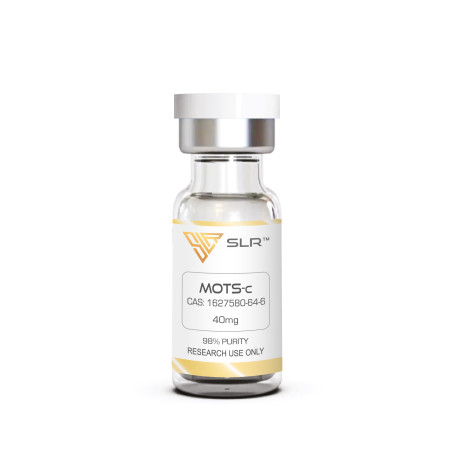

MOTS-c is a mitochondria-derived peptide that has been widely investigated in experimental and preclinical research for its role in metabolic regulation and cellular energy balance. Scientific studies have examined MOTS-c in relation to biological pathways associated with physical performance, metabolic homeostasis, age-related processes, and systemic cellular signaling. Research has primarily focused on MOTS-c in the context of the following areas:
Muscle Metabolism: Studied for its association with glucose utilization, energy handling, and metabolic adaptation in skeletal muscle.
Fat Metabolism: Investigated for its involvement in adipose tissue regulation, lipid utilization, and pathways related to energy expenditure.
Insulin Sensitivity: Examined in research models addressing early metabolic changes and glucose regulation mechanisms.
Bone Metabolism (Osteoporosis Research): Explored for its role in pathways related to osteoblast activity, collagen production, and bone integrity.
Longevity Research: Studied in relation to mitochondrial signaling, aging-associated pathways, and lifespan-related genetic variants.
Heart Health: Investigated for its association with endothelial function, vascular signaling, and cardiovascular stress responses.
SPECIFICATIONS
Product Code: MTC040
Sequence: Met-Arg-Trp-Gln-Glu-Met-Gly-Tyr-Ile-Phe-Tyr-Pro-Arg-Lys-Leu-Arg
Molecular Formula: C101H152N28O22S2
Molecular Weight: 2174.64 g/mol
CAS: 1627580-64-6
Purity: Technical / Research Grade 98%
Other details: No TFA Salt
Form: Lyophilized powder
Color: White
Storage temperature: -20°C
Source: Synthetic
Safety classification: Standard handling
DESCRIPTION
MOTS-c is a short peptide belonging to the broader family of mitochondria-derived peptides (MDPs) and is encoded within the mitochondrial genome. Recent scientific research has identified MDPs as bioactive signaling molecules involved in cellular energy regulation and communication between mitochondria and other cellular compartments. Emerging evidence has shown that several MDPs, once thought to act exclusively within mitochondria, can localize to the cell nucleus and, in some cases, enter the bloodstream to exert systemic effects.
MOTS-c is a relatively recently identified MDP that has been investigated for its involvement in biological processes related to body weight regulation, physical performance, lifespan, and pathways associated with age-related conditions, including bone metabolism. The detection of MOTS-c in both the cell nucleus and circulation supports its classification as a naturally occurring signaling peptide. Due to its broad biological relevance, MOTS-c has been the subject of growing experimental and preclinical research over the past several years.
Muscle Metabolism
Experimental studies suggest that MOTS-c may influence muscle glucose utilization by modulating age-associated insulin sensitivity. Research indicates that this effect is mediated through increased expression of glucose transporters in skeletal muscle following activation of AMP-activated protein kinase (AMPK). Importantly, this mechanism appears to operate independently of classical insulin signaling pathways, allowing enhanced glucose uptake even under conditions of reduced insulin availability. The overall outcome observed in research models is an association with improved muscle metabolic function and cellular energy handling.
Fat Metabolism
Low estrogen levels have been associated in research with increased fat accumulation and adipose tissue dysfunction, conditions often linked to metabolic imbalance. Experimental studies in animal models suggest that administration of MOTS-c is associated with improved brown adipose tissue activity and reduced accumulation of white adipose tissue. MOTS-c has also been studied for its association with reduced inflammatory signaling and dysfunction within adipose tissue, processes that commonly precede insulin resistance.
The AMPK signaling pathway appears to play a central role in MOTS-c–related metabolic effects. AMPK is activated under conditions of low cellular energy and promotes the uptake and utilization of glucose and fatty acids. Research indicates that MOTS-c influences the methionine–folate cycle, increases intracellular AICAR levels, and thereby activates AMPK signaling.
Further studies have demonstrated that MOTS-c can translocate from mitochondria to the nucleus, where it influences nuclear gene expression in response to metabolic stress. In animal models, MOTS-c has been identified as a regulator of genes involved in glucose restriction responses and antioxidant defense mechanisms. Additional evidence suggests that MOTS-c modulates sphingolipid, monoacylglycerol, and dicarboxylate metabolism, particularly in the context of obesity. Through these pathways, MOTS-c appears to be associated with reduced fat storage and enhanced beta-oxidation.
Insulin Sensitivity
Comparative studies examining MOTS-c levels in insulin-sensitive and insulin-resistant individuals have identified associations primarily in lean populations. These findings suggest that MOTS-c may be more relevant to early metabolic changes preceding insulin resistance rather than to the maintenance of established insulin resistance. Researchers have proposed that variations in MOTS-c levels could serve as an early biomarker in studies of metabolic health, particularly in lean individuals at risk of developing insulin sensitivity alterations. While animal studies have produced promising observations, further investigation is required to fully understand MOTS-c’s role in glucose regulation.
Osteoporosis
Research examining bone metabolism indicates that MOTS-c is associated with increased production of type I collagen by osteoblasts. Studies in osteoblast cell models suggest that this effect is mediated through the TGF-β/SMAD signaling pathway, which plays a central role in osteoblast survival and function. By influencing this pathway, MOTS-c has been associated with improved collagen synthesis and bone structural integrity.
Additional research has shown that MOTS-c also affects bone marrow stem cell differentiation through the same TGF-β/SMAD pathway, promoting osteogenic differentiation in experimental settings. These findings suggest that MOTS-c is involved both in supporting mature osteoblast function and in facilitating the generation of new bone-forming cells.
Longevity
Population-based studies have identified a unique MOTS-c gene variant associated with longevity in certain human groups, particularly among individuals of Northeast Asian descent. This variant involves a substitution of lysine with glutamate at position 14 of the peptide. Given the distinct biochemical properties of these amino acids, this substitution is expected to influence the structure and function of the MOTS-c peptide. While this variant has been correlated with increased lifespan in specific populations, further research is needed to clarify its functional implications.
Research led by investigators at the USC Leonard Davis School of Gerontology has emphasized the central role of mitochondrial biology in aging and age-related conditions. As mitochondria are key regulators of cellular metabolism, they are deeply implicated in aging processes. Historically, caloric restriction was considered the primary means of influencing mitochondrial function and lifespan. Recent findings suggest that mitochondria-derived peptides such as MOTS-c may provide alternative avenues for studying mitochondrial regulation in the context of aging and healthspan.
Heart Health
Clinical and experimental research has identified associations between circulating MOTS-c levels and endothelial function. In human studies involving coronary angiography, lower MOTS-c levels have been associated with increased endothelial dysfunction. Endothelial cells line blood vessels and play essential roles in regulating vascular tone, coagulation, and plaque formation.
Although MOTS-c does not appear to directly alter vascular responsiveness, animal studies suggest that it enhances endothelial sensitivity to other signaling molecules, such as acetylcholine. Experimental administration of MOTS-c in rodent models has been associated with improved endothelial function, as well as enhanced microvascular and epicardial vessel performance.
Among mitochondria-derived peptides, MOTS-c is not unique in its association with cardiovascular biology. Research indicates that multiple MDPs contribute to protecting cardiac cells from inflammatory and metabolic stress. Dysregulation of MDP signaling has been implicated in the development of cardiovascular disease, and these peptides are being actively studied for their roles in endothelial function and reperfusion injury.
REFERENCES
All observations described above originate from in vitro systems, animal studies, or other preclinical experimental models. They are intended solely to support basic research into molecular, cellular, and physiological mechanisms and do not imply therapeutic, diagnostic, or preventive applications in humans or animals.
N. Che et al., "MOTS-c improves osteoporosis by promoting the synthesis of type I collagen in osteoblasts via TGF-β/SMAD signaling pathway" [PubMed]
Q. Qin et al., "Downregulation of circulating MOTS-c levels in patients with coronary endothelial dysfunction" [PubMed]
C. Lee et al., "MOTS-c: A novel mitochondrial-derived peptide regulating muscle and fat metabolism" [PubMed]
L.R. Cataldo et al., "Plasma MOTS-c levels are associated with insulin sensitivity in lean but not in obese individuals" [PubMed]
N. Fuku et al., "The mitochondrial-derived peptide MOTS-c: a player in exceptional longevity?" [PubMed]
Y. Yang et al., "The role of mitochondria-derived peptides in cardiovascular disease: Recent updates" [PubMed]
H. Lu et al., "MOTS-c peptide regulates adipose homeostasis to prevent ovariectomy-induced metabolic dysfunction" [PubMed]
B-T- Hu et al., "MOTS-c improves osteoporosis by promoting osteogenic differentiation of bone marrow mesenchymal stem cells via TGF-β/Smad pathway" [PubMed]
DISCLAIMER
This product is intendend for lab research and development use only. These studies are performed outside of the body. This product is not medicines or drugs and has not been approved by the FDA or EMA to prevent, treat or cure any medical condition, ailment or disease. Bodily introduction of any kind into humans or animals is strictly forbidden by law. This product should only be handled by licensed, qualified professionals.
All product information provided on this website is for informational and educational purposes only.





| Image | Ref. | Unit price | Weight | Avail. | Buy |
|---|---|---|---|---|---|
| MTC040 | €139.00 Discount by quantity 10+ €111.20 –20% 20+ €97.30 –30% 50+ €86.18 –38% 100+ €77.84 –44% 200+ €69.50 –50% | 0.000000 kg |  | |
| Total: 0,0 All prices with tax included. | |||||
Product is available Product is no longer in stock
 Product is no in stock, but is allowed to be back-ordered