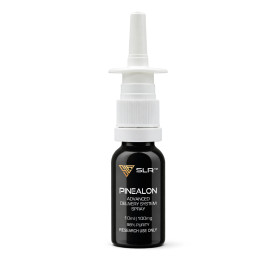
PINEALON - 10ml/100mg - Spray
€289.00

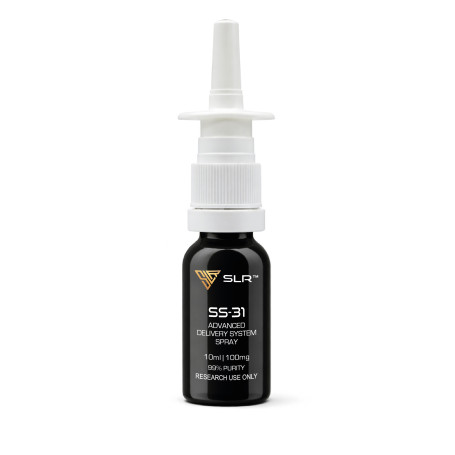

SS-31 (Elamipretide) is a mitochondria-targeting peptide studied for its ability to bind cardiolipin in the inner mitochondrial membrane, stabilize mitochondrial structure, and support cellular energy production. Research suggests that SS-31 may reduce mitochondrial oxidative stress by limiting reactive oxygen species accumulation, improving mitochondrial bioenergetics, and supporting membrane integrity. It has also been investigated for its ability to modulate the mitochondrial permeability transition pore (mPTP), potentially reducing apoptosis-related signaling under stress. Due to these mechanisms, SS-31 has attracted attention in research involving neurodegenerative diseases, cardiovascular disorders, age-related mitochondrial decline, and retinal diseases such as diabetic retinopathy and age-related macular degeneration.
FRESHLY PREPARED SOLUTION
ADVANCED DELIVERY SYSTEM - CELL PENETRATING PEPTIDE TECHNOLOGY
This product utilizes advanced delivery technology incorporating calibrated cell-penetrating peptide (CPP) systems. The formulation is engineered to support efficient and targeted intracellular delivery of active ingredients, contributing to enhanced transport performance and bioavailability.
SPECIFICATIONS
Product Code: SS3100S
Sequence: H-D-Arg-(2',6'-dimethyl-Tyr)-Lys-Phe-NH2
Molecular Formula: C32H49N9O5
Molecular Weight: 639.39 g/mol
CAS: 736992-21-5
Purity: Technical / Research Grade ≥99%
Other details: No TFA Salt
Form: Liquid Solution
Color: Clear / Slightly opalescent
Total Content: 10 mL / 100 mg
Concentration: 10 mg/mL
Approximate Sprays per Bottle: ~82
Approximate Peptide per Spray: ~1.22 mg
Vehicle / Carrier System: Proprietary carrier system
Storage Temperature: 4°C (Do not freeze)
Source: Synthetic
Safety classification: Standard handling.
DESCRIPTION
SS-31, also known as Elamipretide, is a mitochondria-targeting peptide that has attracted significant scientific attention due to its potential role in supporting mitochondrial stability and cellular energy production. Mitochondria are essential organelles responsible for ATP generation and metabolic regulation, and their dysfunction is strongly associated with a wide range of chronic and degenerative conditions. Because mitochondrial impairment is frequently linked to oxidative stress, inflammation, and progressive cellular decline, peptides capable of restoring mitochondrial integrity are considered highly relevant in modern biomedical research.
SS-31 is a short synthetic peptide specifically designed to accumulate within mitochondria and interact with the inner mitochondrial membrane. Its biological relevance is largely connected to its affinity for cardiolipin, a critical phospholipid that plays a fundamental role in maintaining mitochondrial membrane architecture and supporting efficient electron transport chain function. The ability of SS-31 to bind cardiolipin has positioned it as a peptide of interest in research related to mitochondrial bioenergetics, oxidative stress regulation, and cellular survival mechanisms.
Mitochondrial vulnerability and disease relevance
Mitochondria are central to cellular life, not only because they produce energy, but also because they regulate apoptosis, redox signaling, calcium handling, and metabolic adaptation. Under physiological conditions, mitochondria naturally generate reactive oxygen species (ROS) as byproducts of oxidative phosphorylation. While ROS play important signaling roles at controlled levels, excessive ROS production leads to oxidative stress, which can damage proteins, lipids, and DNA.
Oxidative stress is widely recognized as a contributing factor in numerous pathological conditions, including neurodegenerative disorders, cardiovascular disease, metabolic dysfunction, retinal degeneration, and aging-related decline. In many chronic diseases, mitochondrial damage becomes self-reinforcing: impaired mitochondria generate more ROS, which further damages mitochondrial components, leading to progressive decline in cellular function.
Because cardiolipin is highly vulnerable to oxidation, its degradation can destabilize the mitochondrial membrane and impair the electron transport chain, reducing energy output and increasing oxidative stress. This is one of the reasons why cardiolipin has become a major target in research focused on mitochondrial repair strategies.
Mechanism of action
The primary mechanism of action of SS-31 is linked to its ability to selectively associate with cardiolipin in the inner mitochondrial membrane. This interaction is believed to stabilize membrane structure and preserve mitochondrial organization. By binding cardiolipin, SS-31 may reduce the vulnerability of mitochondrial membranes to oxidative damage and may help maintain the functional integrity of mitochondrial respiratory complexes.
A key feature of SS-31 is its potential ability to reduce oxidative stress within mitochondria. Research suggests that SS-31 may function as a scavenger of excessive reactive oxygen species, helping neutralize free radicals and limiting oxidative injury. By reducing ROS accumulation, SS-31 may decrease damage to mitochondrial proteins and membrane lipids, contributing to improved mitochondrial performance.
In addition to its antioxidant-related activity, SS-31 has been associated with improved mitochondrial bioenergetics. Experimental findings suggest that the peptide may support electron transport chain efficiency, enhance ATP production, and improve the overall energy state of cells under stress.
SS-31 has also been studied for its influence on mitochondrial membrane stability and its ability to modulate the mitochondrial permeability transition pore (mPTP). The mPTP is a structure involved in mitochondrial stress response and can contribute to cell death when excessively activated. Dysregulated mPTP opening is associated with mitochondrial swelling, loss of membrane potential, and release of pro-apoptotic factors. By stabilizing mitochondrial membranes and influencing mPTP behavior, SS-31 has been proposed to support mitochondrial integrity and reduce pathways leading to apoptosis.
Overall, these combined effects suggest that SS-31 may function as a mitochondrial-protective peptide capable of supporting cellular survival during metabolic stress.
Neurodegenerative diseases
Neurodegenerative disorders such as Alzheimer’s disease, Parkinson’s disease, and Huntington’s disease are characterized by progressive neuronal loss and impaired synaptic function. In these conditions, mitochondrial dysfunction and oxidative stress are frequently observed as central pathological mechanisms. Neurons are particularly sensitive to mitochondrial impairment because of their high energy demand and limited regenerative capacity.
SS-31 has been studied in experimental models of neurodegeneration due to its ability to target mitochondria and reduce oxidative stress. Research in cellular and animal models suggests that SS-31 may help preserve mitochondrial function, reduce oxidative damage, and support energy production in neuronal tissues. These effects have made it a peptide of interest in research exploring neuroprotection, mitochondrial resilience, and prevention of progressive neuronal decline.
In experimental contexts, SS-31 has also been associated with improved mitochondrial dynamics and reduced apoptosis-related signaling, which may contribute to neuronal preservation under chronic degenerative stress.
Cardiovascular conditions
Cardiovascular diseases, including heart failure, myocardial infarction, and ischemia-reperfusion injury, are strongly associated with mitochondrial dysfunction. Cardiac muscle cells rely heavily on mitochondrial ATP production, and disruption of mitochondrial function can rapidly lead to impaired contractility and cell death.
In experimental studies, SS-31 has been associated with improved mitochondrial stability in cardiac tissue, reduced oxidative injury, and preservation of mitochondrial energy output. Animal model findings suggest that SS-31 may support cardiac performance under ischemic stress and may reduce damage associated with infarction-like conditions.
One of the key pathological drivers of ischemia-reperfusion injury is the sudden burst of ROS generation when oxygen supply returns to previously ischemic tissue. This oxidative surge can trigger mitochondrial collapse, membrane disruption, and apoptosis. Because SS-31 has been studied for its ability to reduce ROS accumulation and stabilize mitochondrial membranes, it has become a molecule of interest in cardiovascular research focused on limiting mitochondrial-driven tissue damage.
Age-related mitochondrial decline
Aging is associated with a gradual decline in mitochondrial efficiency and increased oxidative stress. Over time, mitochondrial DNA mutations accumulate, respiratory chain performance declines, and cellular energy output becomes less efficient. This contributes to reduced tissue repair capacity, increased inflammation, and vulnerability to degenerative disease.
SS-31 has been investigated in aging-related research due to its ability to improve mitochondrial bioenergetics and reduce oxidative injury. In experimental models, SS-31 has been associated with improved mitochondrial function in aged tissues and enhanced cellular energy production. These findings have led to interest in SS-31 as a research compound relevant to age-related decline affecting muscles, brain tissue, cardiovascular systems, and metabolic organs.
Because mitochondrial dysfunction is increasingly viewed as one of the central hallmarks of aging, compounds that stabilize mitochondrial membranes and reduce oxidative damage remain a major focus in longevity-related research.
Retinopathies and retinal protection
Retinopathies represent a group of disorders affecting the retina, the highly specialized tissue responsible for converting light into neural signals. Retinal cells have high metabolic demand and are heavily dependent on mitochondrial function. As a result, oxidative stress and mitochondrial dysfunction are strongly implicated in retinal degeneration.
Conditions such as diabetic retinopathy and age-related macular degeneration (AMD) are associated with chronic oxidative injury, inflammation, and progressive loss of retinal cell function. In experimental models, SS-31 has been studied for its ability to protect retinal mitochondria, reduce oxidative damage, and improve retinal cellular survival.
Preclinical research suggests that SS-31 may support retinal tissue integrity by reducing mitochondrial stress and limiting inflammatory signaling. This has positioned SS-31 as a peptide of interest in research related to visual system degeneration and mitochondrial-driven retinal pathology.
Research perspective
SS-31 is widely regarded as a unique peptide because it does not merely act as a general antioxidant, but instead targets mitochondria through cardiolipin binding. This allows it to influence the site where oxidative stress is often generated, potentially improving mitochondrial function at the source rather than addressing only downstream damage.
Because mitochondrial dysfunction is implicated in a broad spectrum of diseases, SS-31 has become an important research compound in fields such as neurodegeneration, cardiovascular pathology, retinal degeneration, metabolic decline, and aging biology.
REFERENCES
All information presented above is derived from in vitro experiments, animal studies, and other preclinical research models. These data are intended solely for basic scientific investigation of biological mechanisms and do not imply any therapeutic, diagnostic, preventive, or clinical use in humans or animals.
G. Pharaoh et al., "The mitochondrially targeted peptide elamipretide (SS-31) improves ADP sensitivity in aged mitochondria by increasing uptake through the adenine nucleotide translocator (ANT)" [PubMed]
J.D. Chavez et al., "Mitochondrial protein interaction landscape of SS-31" [PubMed]
L. Xiong et al., "New insight for SS-31 in treating diabetic cardiomyopathy: Activation of mitoGPX4 and alleviation of mitochondria-dependent ferroptosis" [PubMed]
W. Zhao et al., "Elamipretide (SS-31) improves mitochondrial dysfunction, synaptic and memory impairment induced by lipopolysaccharide in mice" [PubMed]
N.M. Alam et al., "Treatment of age-related visual impairment with a peptide acting on mitochondria" [PMC]
Y. Zhu et al., "SS-31, a Mitochondria-Targeting Peptide, Ameliorates Kidney Disease" [PubMed]
X. Du et al., "Application research of novel peptide mitochondrial-targeted antioxidant SS-31 in mitigating mitochondrial dysfunction" [PubMed]
L. Zhong et al., "SS-31 Improves Cognitive Function in Sepsis-Associated Encephalopathy by Inhibiting the Drp1-NLRP3 Inflammasome Activation" [PubMed]
N.T. Nhu et al., "Neuroprotective Effects of a Small Mitochondrially-Targeted Tetrapeptide Elamipretide in Neurodegeneration" [PubMed]
J.A. Grosser et al., "The effects of a mitochondrial targeted peptide (elamipretide/SS31) on BAX recruitment and activation during apoptosis" [PubMed]
M.D. Campbell et al., "Improving mitochondrial function with SS-31 reverses age-related redox stress and improves exercise tolerance in aged mice" [PubMed]
A.V. Birk et al., "The mitochondrial-targeted compound SS-31 re-energizes ischemic mitochondria by interacting with cardiolipin" [PubMed]
S. Russo et al., "Beneficial effects of SS-31 peptide on cardiac mitochondrial dysfunction in tafazzin knockdown mice" [Nature]
P. Machiraju et al., "SS-31 Peptide Reverses the Mitochondrial Fragmentation Present in Fibroblasts From Patients With DCMA, a Mitochondrial Cardiomyopathy" [PubMed]
I. Escribano-Lopez et al., "The Mitochondrial Antioxidant SS-31 Modulates Oxidative Stress, Endoplasmic Reticulum Stress, and Autophagy in Type 2 Diabetes" [PubMed]
R. Patai et al., "Aging, mitochondrial dysfunction, and cerebral microhemorrhages: a preclinical evaluation of SS-31 (elamipretide) and development of a high-throughput machine learning-driven imaging pipeline for cerebromicrovascular protection therapeutic screening" [PubMed]
S. Duan et al., "SS-31 Targets NOS2 to Enhance Osteogenic Differentiation in Aged BMSCs by Restoring Mitochondrial Function" [PMC]
J.A. Whitson et al., "SS-31 and NMN: Two paths to improve metabolism and function in aged hearts" [Aging Cell]
DISCLAIMER
This product is intendend for lab research and development use only. These studies are performed outside of the body. This product is not medicines or drugs and has not been approved by the FDA or EMA to prevent, treat or cure any medical condition, ailment or disease. Bodily introduction of any kind into humans or animals is strictly forbidden by law. This product should only be handled by licensed, qualified professionals.
All product information provided on this website is for informational and educational purposes only.
| Image | Ref. | Unit price | Weight | Avail. | Buy |
|---|---|---|---|---|---|
| SS3100S | €298.00 Discount by quantity 10+ €238.40 –20% 20+ €208.60 –30% 50+ €184.76 –38% 100+ €166.88 –44% 200+ €149.00 –50% | 0.000000 kg |  | |
| Total: 0,0 All prices with tax included. | |||||
Product is available Product is no longer in stock
 Product is no in stock, but is allowed to be back-ordered