
CARDIOGEN - 50mg
€146.00

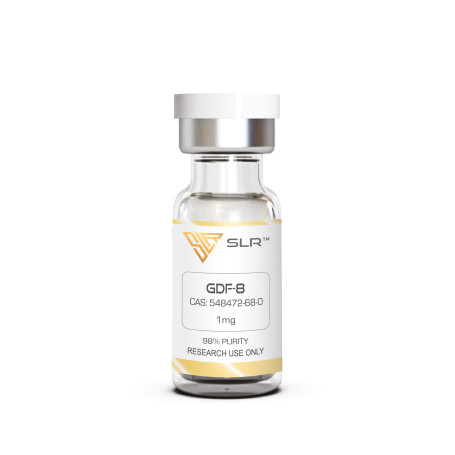

GDF-8 is involved in the regulation of myostatin activity, a key biological factor that normally limits muscle growth and regeneration. Experimental and preclinical research indicates that modulation of this pathway influences muscle and tissue dynamics associated with repair and adaptation. According to research-based observations, GDF-8 has been associated with the following effects:
Enhancement of muscular regeneration and recovery processes following injury
Support of the body’s regenerative capacity at the tissue level
Increase in myofiber hypertrophy in experimental models
SPECIFICATIONS
Product Code: GD8001
Sequence: MQKLQLCVYIYLFMLIVAGPVDLNENSEQKENVEKEGLCNACTWRQNTKSSRIEAIKIQILSKLRLETAPNISKDVIRQLLPKAPPLRELIDQYDVQRDDSSDGSLEDDDYHATTETIITMPTESDFLMQVDGKPKCCFFKFSSKIQYNKVVKAQLWIYLRPVETPTTVFVQILRLIKPMKDGTRYTGIRSLKLDMNPGTGIWQSIDVKTVLQNWLKQPESNLGIEIKALDENGHDLAVTFPGPGEDGLNPFLEVKVTDTPKRSRRDFGLDCDEHSTESRCCRYPLTVDFEAFGWDWIIAPKRYKANYCSGECEFVFLQKYPHTHLVHQANPRGSAGPCCTPTKMSPINMLYFNGKEQIIYGKIPAMVVDRCGCS
Molecular Weight: 42,750 Da
CAS: 271597-12-7
Purity: Technical / Research Grade ≥98%
Other Details: No TFA Salt
Form: Lyophilized powder
Color: White
Storage Temperature: -20°C
Source: Recombinant
Safety Classification: Standard laboratory handling
DESCRIPTION
Growth Differentiation Factor 8 (GDF-8), also known as myostatin, is a member of the transforming growth factor-β (TGF-β) superfamily and is encoded by the GDF8 gene in humans. It is synthesized as a precursor protein that undergoes proteolytic processing to generate a biologically active disulfide-linked homodimer. GDF-8 is predominantly expressed in skeletal muscle tissue and plays a central regulatory role in muscle development and homeostasis under physiological conditions.
GDF-8 functions as a negative regulator of skeletal muscle growth. Myostatin signaling limits muscle cell proliferation, differentiation, and maturation, thereby acting as a physiological control mechanism for muscle mass. Natural mutations affecting myostatin activity, such as those observed in certain cattle breeds, are associated with increased muscle fiber number and reduced fat mass, highlighting the biological importance of this pathway in musculoskeletal regulation.
Mechanistically, the GDF-8 propeptide binds to myostatin and prevents its interaction with activin type II receptors. Under normal conditions, receptor binding initiates intracellular signaling cascades that suppress muscle growth. By inhibiting this interaction, the propeptide modulates downstream signaling and alters regulatory pathways involved in muscle tissue development. Experimental observations indicate that reduced myostatin signaling is associated with increases in skeletal muscle mass in both animal models and rare human cases.
In addition to muscle tissue, myostatin signaling has been linked to bone metabolism. Experimental findings suggest a coordinated regulatory interaction between muscle and bone, with modulation of myostatin activity associated with changes in bone mineral density in research models.
In preclinical models of tissue injury, modulation of myostatin signaling using recombinant GDF-8 propeptide has been associated with enhanced muscle and bone repair processes. These studies have positioned GDF-8–related pathways as important molecular targets in research exploring musculoskeletal regeneration and age-associated muscle decline.
Further laboratory investigations have demonstrated that inhibition of myostatin signaling through genetic overexpression or administration of myostatin propeptides can result in pronounced muscle hypertrophy in animal models. Importantly, muscle tissue formed under reduced myostatin signaling has been shown to retain functional contractile properties in experimental systems.
In well-characterized injury models involving musculoskeletal damage, systemic modulation of myostatin activity using recombinant GDF-8 propeptide has been associated with increased muscle mass, enhanced fracture callus formation, greater cartilage deposition, and reduced fibrotic tissue formation. Histological analyses in these models suggest coordinated improvements in both muscle and bone regeneration under experimental conditions.
Collectively, these findings indicate that GDF-8 and its propeptide are valuable molecular tools in the study of muscle biology, skeletal repair, aging-related degeneration, and regenerative processes following trauma. All observations described above derive from in vitro studies, animal models, or other preclinical research contexts and are intended exclusively for scientific investigation.
REFERENCES
All observations described above originate from in vitro systems, animal studies, or other preclinical experimental models. They are intended solely to support basic research into molecular, cellular, and physiological mechanisms and do not imply therapeutic, diagnostic, or preventive applications in humans or animals.
Man-Shiow Jiang et al., "Characterization and identification of the inhibitory domain of GDF-8 propeptide" [ScienceDirect]
Y. Elkina et al., "The role of myostatin in muscle wasting: an overview" [PubMed]
H. Collins-Hooper et al., "Propeptide-Mediated Inhibition of Myostatin Increases Muscle Mass Through Inhibiting Proteolytic Pathways in Aged Mice" [The Journal of Gerontology]
N. Oksbjerg et al., "In Belgian Blue and Piedmontese breeds of cattle there are various mutations in the MSTN gene that lead to the secretion of nonfunctional myostatin" [ScienceDirect]
S. Bogdanovich et al., "Myostatin propeptide-mediated amelioration of dystrophic pathophysiology" [PubMed]
M.W. Hamrick et al., "Recombinant Myostatin (GDF-8) Propeptide Enhances the Repair and Regeneration of Both Muscle and Bone in a Model of Deep Penetrant Musculoskeletal Injury" [ResearchGate]
X. Zheng et al., "Regulatory Role and Potential Importance of GDF-8 in Ovarian Reproductive Activity" [PubMed]
Se-Jin Lee, "Targeting the myostatin signaling pathway to treat muscle loss and metabolic dysfunction" [PubMed]
M.N. Elkasrawy et al., "Myostatin (GDF-8) as a key factor linking muscle mass and bone structure" [PubMed]
DISCLAIMER
This product is intended strictly for laboratory research and development use only. It is not a medicine or drug and has not been approved by the FDA, EMA, or any regulatory authority for the prevention, diagnosis, treatment, or cure of any disease or medical condition.
Bodily introduction into humans or animals is strictly prohibited. This material must be handled exclusively by qualified laboratory professionals.
All product information provided on this website is for informational and educational purposes only.


| Image | Ref. | Unit price | Weight | Avail. | Buy |
|---|---|---|---|---|---|
| GD8001 | €90.00 Discount by quantity 10+ €76.50 –15% 20+ €64.80 –28% 50+ €54.00 –40% 100+ €46.80 –48% 200+ €40.50 –55% | 0.000000 kg |  | |
| Total: 0,0 All prices with tax included. | |||||
Product is available Product is no longer in stock
 Product is no in stock, but is allowed to be back-ordered