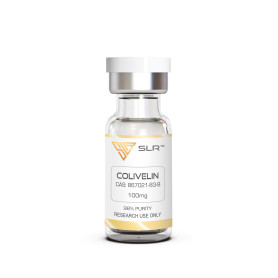
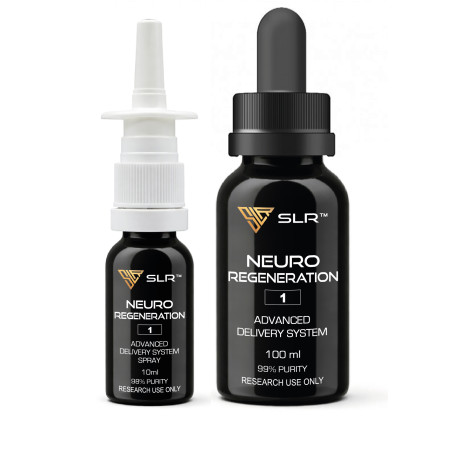
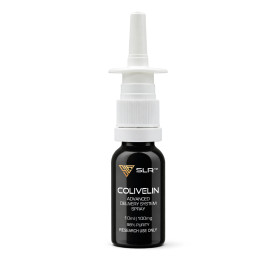
COLIVELIN - 100mg
€490.00


MITOCHONDRIAL FUNCTION / SYNAPTIC PLASTICITY / HIPPOCAMPAL NEUROGENESIS
This multi-compound research formulation combines peptide-based and small-molecule neuroactive agents investigated in preclinical systems for neuronal stress resilience, synaptic integrity, and hippocampal structural support under experimental neurodegeneration and mood-dysregulation paradigms. Colivelin has been studied for amyloid-associated stress resistance and survival-signaling pathway modulation (including JAK/STAT3-related investigations). Cortagen has been explored for neuronal functional modulation, oxidative-stress markers, and recovery-related observations in neural stress and injury contexts. Humanin G is a mitochondrial-derived micro-peptide analog investigated for cytoprotective signaling, anti-apoptotic mechanisms, and mitochondrial redox resilience across neurodegeneration- and systemic-stress models. J-147 is a small-molecule candidate studied for mitochondrial-functional modulation with downstream effects described on bioenergetics, AMPK-linked energy sensing, oxidative-stress markers, synaptic plasticity parameters. NSI-189 phosphate is a neurogenic small molecule investigated for dentate gyrus neurogenesis, hippocampal microarchitecture support, and circuit-level effects relevant to mood and cognition in preclinical research settings.
FRESHLY PREPARED SOLUTION
ADVANCED DELIVERY SYSTEM - CELL PENETRATING PEPTIDE TECHNOLOGY
This product utilizes advanced delivery technology incorporating calibrated cell-penetrating peptide (CPP) systems. The formulation is engineered to support efficient and targeted intracellular delivery of active ingredients, contributing to enhanced transport performance and bioavailability under controlled laboratory conditions.
SPECIFICATIONS
Product Code: NR1030L
COLIVELIN - 100 mg
Sequence: H-Ser-Ala-Leu-Leu-Arg-Ser-Ile-Pro-Ala-Pro-Ala-Gly-Ala-Ser-Arg-Leu-Leu-Leu-Leu-Thr-Gly-Glu-Ile-Asp-Leu-Pro-OH
Molecular Formula: C119H206N32O35
Molecular Weight: 2645.13 g/mol
CAS: 867021-83-8
Purity: Technical / Research Grade ≥98%
CORTAGEN - 100 mg
Sequence: L-Ala-L-Glu-L-Asp-L-Pro
Molecular Formula: C17H26N4O9
Molecular Weight: 430.41 g/mol
CAS: 335591-03-2
Purity: Technical / Research Grade ≥98%
HUMANIN G - 10 mg
HNG (Humanin-G) is an analog of Humanin, generated by S14G (serine-14-glycine)
Sequence: H-Met-Ala-Pro-Arg-Gly-Phe-Ser-Cys-Leu-Leu-Leu-Leu-Thr-Gly-Glu-Ile-Asp-Leu-Pro-Val-Lys-Arg-Arg-Ala-OH
Molecular Formula: C118H202N34O31S2
Molecular Weight: 2657,3 g/mol
CAS: 330936-70-4
Purity: Technical / Research Grade ≥98%
General Properties
Other details: No TFA Salt
Form: Liquid Solution
Color: Clear / Slightly opalescent
Total Content: 210 mg in 10 mL (21 mg/mL total peptide concentration)
Concentration per mL: Colivelin: 10 mg; Cortagen: 10 mg; Humanin G: 1 mg
Approximate Sprays per Bottle: ~82
Approximate Peptide per Spray: Colivelin ~ 1.22 mg + Cortagen ~ 1.22 mg + Humanin G ~ 0.12 mg per spray
Vehicle / Carrier System: Proprietary carrier system
Storage Temperature: 4°C (Do not freeze)
Source: Synthetic
Safety classification: Standard handling
J-147 - 450 mg
2,2,2-Trifluoroacetic acid 1-(2,4-Dimethylphenyl)-2-[(3-methoxyphenyl)methylene]hydrazide
Molecular Formula: C18H17F3N2O2
Molecular Weight: 350.33 g/mol
CAS: 1146963-51-0
Purity: Technical / Research Grade ≥99%
NSI-189 PHOSPHATE - 1200 mg
(2-((3-Methylbutyl)amino)-3-pyridinyl)(4-(phenylmethyl)-1-piperazinyl)-methanone phosphate
Molecolar Formula: C22H33N4O5P
Molecular Weight: 464.5 g/mol
CAS: 1270138-41-4
Purity: Technical / Research Grade ≥99%
General Properties
Form: Liquid Solution
Color: Clear / Slightly opalescent
Total Content: 1650 mg in 100 mL (16.50 mg/mL total concentration)
Concentration per mL: J-147: 4.50 mg; NSI-189 Phosphate: 12 mg
Vehicle / Carrier System: Proprietary carrier system
Storage Temperature: 4°C (Do not freeze)
Source: Synthetic
Safety classification: Standard handling
DESCRIPTION
Neuro Regeneration 1 is a structured multi-component formulation designed to support research into the coordinated biological processes involved in neuronal survival, synaptic plasticity, mitochondrial stability, and structural neural adaptation under stress conditions. Neural decline does not occur through a single isolated pathway. Whether triggered by metabolic stress, oxidative burden, protein aggregation, ischemic challenge, chronic inflammation, or age-associated mitochondrial dysfunction, neuronal compromise follows a recognizable biological cascade:
Effective neural adaptation requires coordination across multiple structural and metabolic domains simultaneously. This formulation reflects the biological reality that neuronal resilience depends on synchronized regulation of:
Rather than focusing on a single molecular mechanism, Neuro Regeneration Complex is structured to explore how these domains interact when addressed in parallel. The integrated structure focuses on:
Mitochondrial Stability and Cellular Energy Regulation
Neurons are among the most energy-dependent cells in the body. ATP production supports synaptic transmission, vesicle recycling, dendritic spine maintenance, axonal transport, and membrane potential stability. When mitochondrial function declines:
Several components in this formulation have been investigated for their interaction with mitochondrial bioenergetics, ATP synthase modulation, redox balance, and adaptive metabolic signaling. Stabilizing mitochondrial function supports:
Energy regulation is foundational to neural resilience.
Regulation of Apoptotic Signaling
Programmed cell death in neurons is tightly regulated by mitochondrial and cytosolic signaling networks involving BCL-2 family proteins, cytochrome c release, caspase activation, and JAK/STAT-associated pathways. Under proteotoxic or ischemic stress, these pathways can become amplified, leading to neuronal loss. Humanin-family peptides and related constructs have been studied for interaction with apoptosis-regulating protein networks and survival-associated gene expression. Modulation of these pathways supports:
Balanced apoptosis regulation is central to long-term neural integrity.
Synaptic Plasticity and Structural Maintenance
Cognitive performance depends on synaptic integrity. Dendritic spines, postsynaptic density proteins, receptor turnover, and cytoskeletal organization define synaptic strength and adaptability. Under stress conditions:
Components in this formulation have been associated with preservation of synaptic protein phosphorylation patterns, dendritic spine density, and restoration of LTP amplitude in experimental paradigms. Synaptic stabilization supports:
Neuroregeneration is not only cell survival, it is synaptic architecture preservation.
Neurotrophic Support and BDNF-Associated Cascades
Brain-derived neurotrophic factor (BDNF) plays a central role in neuronal survival, dendritic growth, synaptic strengthening, and neurogenesis. Activation of BDNF/TrkB signaling engages:
Several molecules in this complex have been associated with increased hippocampal BDNF expression and enhanced downstream signaling activity. Neurotrophic support contributes to:
Oxidative Stress and Redox Balance
Neural tissue is highly susceptible to oxidative stress due to elevated metabolic demand and lipid-rich membranes. Excess ROS contributes to:
Components in this formulation have been investigated for their influence on:
Redox balance supports long-term neuronal stability and synaptic preservation.
Hippocampal Neurogenesis and Structural Adaptation
The hippocampus retains the capacity for adult neurogenesis, particularly within the dentate gyrus. Chronic stress, glucocorticoid exposure, metabolic dysfunction, and inflammatory states are associated with reduced neurogenesis and hippocampal volume decline. NSI-189 and neurotrophic-associated mechanisms have been studied for:
Structural adaptation at the hippocampal level influences:
Neuroregeneration involves not only protecting existing neurons but supporting structural renewal.
Integrated Neural Resilience Framework
Neurodegenerative processes are multi-factorial. They involve metabolic disruption, mitochondrial decline, oxidative stress amplification, apoptotic activation, synaptic instability, and reduced neurogenesis occurring concurrently. Addressing only one domain leaves other destabilizing factors active. Neuro Regeneration Complex reflects a coordinated strategy exploring:
The goal is not isolated pathway modulation but integrated neural resilience.
Integrated Conclusion
Neuronal survival, synaptic plasticity, and cognitive network stability depend on synchronized regulation of mitochondrial function, oxidative balance, apoptosis control, and neurotrophic signaling. Neuro Regeneration Complex is structured to support advanced research into these coordinated mechanisms governing neuronal structural maintenance and adaptive neural remodeling under stress conditions.
Individual Component Roles
REFERENCES
M. Yamada et al., "Nasal Colivelin Treatment Ameliorates Memory Impairment Related to Alzheimer's Disease" [Nature]
M. Matsuoka et al., "Humanin and colivelin: neuronal-death-suppressing peptides for Alzheimer's disease and amyotrophic lateral sclerosis" [PubMed]
K. Oikawa et al., "P2-328: The role of colivelin, a novel neuroprotective peptide, on hippocampal synaptic plasticity" [The Journal of the Alzheimer's Association]
V. Khavinson et al., "Tetrapeptide stimulating functional activity of neurones, pharmacological agent based thereon and method of use thereof" [USP]
D.V. Kurkin et al., "Neuroprotective action of Cortexin, Cerebrolysin and Actovegin in acute or chronic brain ischemia in rats" [PubMed]
Shabanov, Vislobokov "Neuronoprotective action of cortexin and cortagen" [Reviews on Clinical Pharmacology and Drug Therapy]
M. Matsuoka "Humanin; a defender against Alzheimer's disease?" [PubMed]
P.G. Sreekumar et al., "The Mitochondrial-Derived Peptide Humanin Protects RPE Cells From Oxidative Stress, Senescence, and Mitochondrial Dysfunction" [ResearchGate]
S.C. Zàrate et al., "Humanin, a Mitochondrial-Derived Peptide Released by Astrocytes, Prevents Synapse Loss in Hippocampal Neurons" [PubMed]
A.R. White et al., "Sublethal concentrations of prion peptide PrP106-126 or the amyloid beta peptide of Alzheimer's disease activates expression of proapoptotic markers in primary cortical neurons" [PubMed]
P.A. Lapchak et al., "J-147 a Novel Hydrazide Lead Compound to Treat Neurodegeneration: CeeTox™ Safety and Genotoxicity Analysis" [PubMed]
D. Kepchia et al., "The Alzheimer's disease drug candidate J147 decreases blood plasma fatty acid levels via modulation of AMPK/ACC1 signaling in the liver" [PubMed]
M. Prior et al., "The neurotrophic compound J147 reverses cognitive impairment in aged Alzheimer's disease mice" [PubMed]
R. Jin et al., "J147 treatment protects against traumatic brain injury by inhibiting neuronal endoplasmic reticulum stress potentially via the AMPK/SREBP-1 pathway" [PubMed]
F. Qiu et al., "Current evidence for J147 as a potential therapeutic agent in nervous system disease: a narrative review" [PMC]
N. Tajiri et al., "NSI-189, a small molecule with neurogenic properties, exerts behavioral, and neurostructural benefits in stroke rats" [PubMed]
R.S. McIntyre et al., "The neurogenic compound, NSI-189 phosphate: a novel multi-domain treatment capable of pro-cognitive and antidepressant effects" [PubMed]
C.G. Jolivalt et al., "Amelioration of Both Central and Peripheral Neuropathy in Mouse Models of Type 1 and Type 2 Diabetes by the Neurogenic Molecule NSI-189" [PubMed]
DISCLAIMER
This product is intendend for lab research and development use only. These studies are performed outside of the body. This product is not medicines or drugs and has not been approved by the FDA or EMA to prevent, treat or cure any medical condition, ailment or disease. Bodily introduction of any kind into humans or animals is strictly forbidden by law. This product should only be handled by licensed, qualified professionals.
All product information provided on this website is for informational and educational purposes only.
Related compounds: N-Acetyl Selank Amidate Spray, N-Acetyl Semax Amidate Spray.
| Image | Ref. | Unit price | Weight | Avail. | Buy |
|---|---|---|---|---|---|
| NR1030L | €645.00 Discount by quantity 10+ €516.00 –20% 20+ €451.50 –30% 50+ €399.90 –38% 100+ €361.20 –44% 200+ €322.50 –50% | 0.100000 kg |  | |
| Total: 0,0 All prices with tax included. | |||||
Product is available Product is no longer in stock
 Product is no in stock, but is allowed to be back-ordered