
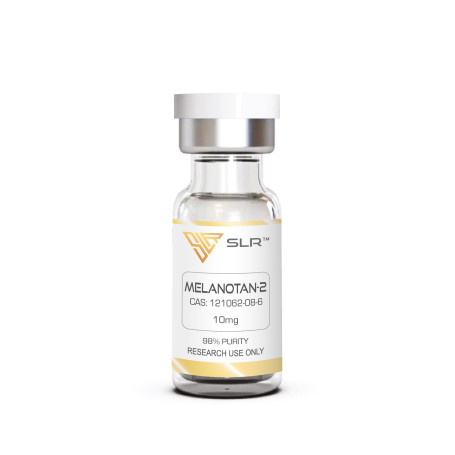
MELANOTAN 2 - 10mg
Experimental and preclinical studies suggest that Melanotan-2 is associated with several biological effects mediated through the melanocortin receptor system, including:
Regulation of skin pigmentation processes related to tanning
Modulation of neurobehavioral pathways linked to sexual arousal
Influence on appetite control and satiety signaling
Interaction with neural mechanisms involved in compulsive behavior
Modulation of metabolic pathways related to glucagon signaling
Effects explored in research models relevant to autism-associated traits
Influence on reward and reinforcement pathways studied in addiction research
Description
SPECIFICATIONS
Product Code: ML2010
Sequence: Ac-Nle-Asp(1)-His-D-Phe-Arg-Trp-Lys(1)-NH₂
Molecular Formula: C50H69N15O9
Molecular Weight: 1024.198 g/mol
CAS Number: 121062-08-6
Purity: Technical / Research Grade 98%
Other details: No TFA Salt
Form: Lyophilized powder
Color: White
Storage temperature: -20°C
Source: Synthetic
Safety classification: Standard handling
DESCRIPTION
Melanotan 2 (MT-2) is a synthetic peptide that interacts with the melanocortin receptor system to exert its biological effects. Experimental research indicates that MT-2 shows preferential binding to the melanocortin-4 receptor (MC-4R) and melanocortin-1 receptor (MC-1R), with lower affinity for the melanocortin-3 receptor (MC-3R). These receptors are part of a family of five melanocortin receptors, each associated with distinct physiological roles across multiple tissues:
- MC-1R: This receptor is primarily expressed in melanocytes. Its activation is central to the regulation of skin and hair pigmentation through stimulation of melanin synthesis.
- MC-2R: Located mainly in the adrenal glands, MC-2R activation is associated with the release of adrenal hormones, including cortisol, which play important roles in stress response and metabolic regulation.
- MC-3R: MC-3R is involved in pathways related to appetite regulation and energy balance. Although its precise function is less well characterized than other melanocortin receptors, it is considered relevant in metabolic and feeding-related signaling.
- MC-4R: Activation of MC-4R has been shown to influence eating behavior, sexual behavior, energy homeostasis, and pathways related to male erectile physiology. This receptor is widely studied in neuroendocrine and behavioral research.
- MC-5R: MC-5R is expressed primarily in exocrine tissues such as sweat glands and pancreatic islet cells, indicating that MT-2’s biological activity extends beyond pigmentation and central nervous system signaling.
Melanotan 2 has emerged as a peptide of significant interest in scientific research due to its broad interaction with melanocortin receptors and its wide-ranging biological effects observed in experimental models. Originally synthesized as an analog of the naturally occurring alpha-melanocyte-stimulating hormone (α-MSH), MT-2 was initially investigated for its effects on skin pigmentation. Subsequent research has demonstrated that MT-2 influences multiple physiological systems, including neurobehavioral signaling, metabolism, endocrine function, and immune-related pathways. These findings have expanded interest in MT-2 across several research domains.
Sexual Arousal and Neurobehavioral Effects
MT-2 has been investigated for its influence on sexual function and arousal-related pathways. Experimental studies suggest that these effects are mediated primarily through activation of MC-4R in the central nervous system. In research settings, MT-2 has been associated with increased sexual motivation and arousal-related signaling, highlighting the role of melanocortin pathways in regulating sexual behavior.
Skin Pigmentation and Melanogenesis
One of the most extensively studied effects of MT-2 is its role in stimulating melanogenesis. By activating MC-1R on melanocytes, MT-2 promotes the production of melanin, resulting in increased skin pigmentation. This process mimics aspects of the natural tanning response and has been studied in experimental contexts as a means of enhancing pigmentation without direct ultraviolet exposure. Research has also explored the potential protective role of increased melanin against UV-induced skin damage.
Compulsive Behavior and Reward-Related Pathways
MT-2’s interaction with the melanocortin system has implications for neural circuits involved in reward processing and compulsive behavior. Preliminary experimental studies suggest that MT-2 may influence pathways associated with reinforcement and pleasure, which has generated interest in its role in research related to compulsive behaviors and addiction-associated mechanisms. These effects have been explored primarily in animal and preclinical models.
Appetite Regulation and Energy Balance
Another area of investigation involves MT-2’s effects on appetite and food intake. Through its interaction with melanocortin receptors involved in satiety signaling, particularly MC-4R and MC-3R, MT-2 has been shown in experimental models to influence hunger signals and energy expenditure. These findings have contributed to broader research into melanocortin pathways as regulators of body weight and metabolic balance.
Glucagon Regulation and Metabolic Signaling
In metabolic research, MT-2 has been studied for its influence on glucagon production. Glucagon is a hormone involved in glucose regulation, and experimental data suggest that modulation of melanocortin receptor activity by MT-2 may affect glucagon signaling pathways. This area of research is of interest in studies examining metabolic homeostasis and glucose regulation.
Autism Spectrum Disorder (ASD) Research
One of the more exploratory areas of MT-2 research involves its effects in animal models relevant to Autism Spectrum Disorder. Experimental findings suggest that MT-2 may influence behaviors such as social interaction and repetitive actions, potentially through indirect modulation of oxytocin and related neurochemical pathways. While these observations are preliminary and limited to research models, they have opened new avenues for studying the neurobiology of ASD.
Conclusion
Melanotan 2 is a multifunctional synthetic peptide whose biological activity extends well beyond its original investigation as a skin-tanning agent. Through its interaction with multiple melanocortin receptors, MT-2 has been shown in experimental and preclinical research to influence pigmentation, neurobehavioral signaling, appetite regulation, metabolic pathways, endocrine function, and immune-related processes. As research continues, MT-2 remains a valuable molecule for studying melanocortin system biology and its broad physiological implications.
REFERENCES
All observations described above originate from in vitro systems, animal studies, or other preclinical experimental models. They are intended solely to support basic research into molecular, cellular, and physiological mechanisms and do not imply therapeutic, diagnostic, or preventive applications in humans or animals.
E. Gilhooley et al., "Melanotan II User Experience: A Qualitative Study of Online Discussion Forums" [PubMed]
R.T. Dorr et al., "Evaluation of melanotan-II, a superpotent cyclic melanotropic peptide in a pilot phase-I clinical study" [PubMed]
H. Wessells et al., "Synthetic melanotropic peptide initiates erections in men with psychogenic erectile dysfunction: double-blind, placebo controlled crossover study" [PubMed]
E. Minakova et al., "Melanotan-II reverses autistic features in a maternal immune activation mouse model of autism" [PubMed]
P. Werkwejt et al., "Melanotan-II reverses memory impairment induced by a short-term HF diet" [PubMed]
H. Wessells et al., "Melanocortin receptor agonists, penile erection, and sexual motivation: human studies with Melanotan II" [PubMed]
N.L. Eliason et al., "Melanocortin receptor agonist melanotan-II microinjected in the nucleus accumbens decreases appetitive and consumptive responding for food" [PubMed]
DISCLAIMER
This product is intendend for lab research and development use only. These studies are performed outside of the body. This product is not medicines or drugs and has not been approved by the FDA or EMA to prevent, treat or cure any medical condition, ailment or disease. Bodily introduction of any kind into humans or animals is strictly forbidden by law. This product should only be handled by licensed, qualified professionals.
All product information provided on this website is for informational and educational purposes only.
Data sheet
Customers who bought this product also bought:
BPC-157 - 5mg, 10mg
IGF-1 LR3 - 1mg
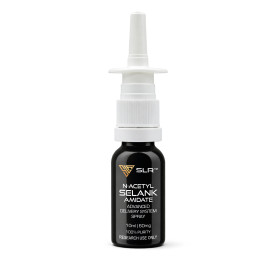
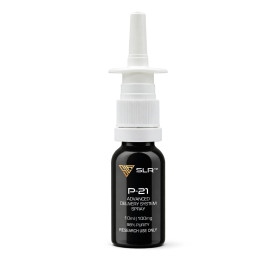
P-21 - 10ml/100mg - Spray
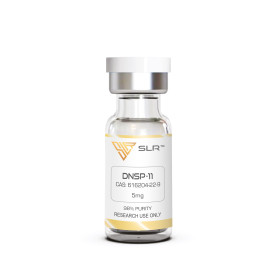
DNSP-11 - 5mg
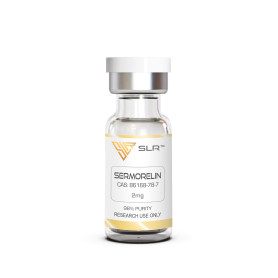
SERMORELIN - 2mg
IPAMORELIN - 5mg
PINEALON - 100mg
| Image | Ref. | Unit price | Weight | Avail. | Buy |
|---|---|---|---|---|---|
 | ML2010 | €28.00 Discount by quantity 10+ €23.80 –15% 20+ €20.16 –28% 50+ €16.80 –40% 100+ €14.56 –48% 200+ €12.60 –55% | 0.000000 kg |  | |
| Total: 0,0 All prices with tax included. | |||||
Product is available Product is no longer in stock
 Product is no in stock, but is allowed to be back-ordered