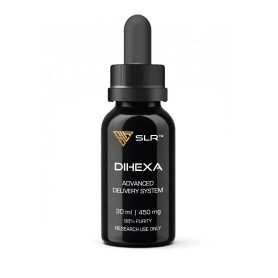
DIHEXA - 30ml/450mg
€165.00

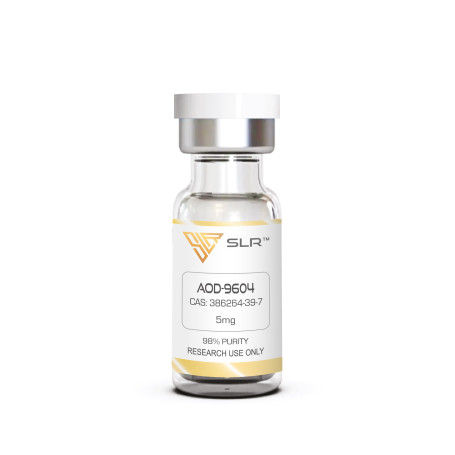

AOD9604 is a synthetic peptide derived from the C-terminal fragment (176–191) of human growth hormone (hGH), incorporating a disulfide bridge for structural stability. It is used in preclinical research models to investigate lipid metabolism, adipose tissue regulation, and related metabolic pathways, including experimental effects on lipolysis and lipogenesis.
In animal and in vitro studies, AOD9604 has also been explored in research contexts involving metabolic, cardiometabolic, and musculoskeletal biology, including experimental models of bone and cartilage tissue remodeling, alone or in combination with other research peptides.
SPECIFICATIONS
Product Code: AO9005
Sequence: Tyr-Leu-Arg-Ile-Val-Gln-Cys-Arg-Ser-Val-Glu-Gly-Ser-Cys-Gly-Phe Disulfide bridge Cys7-Cys15
Molecular Formula: C78H123N23O23S2
MW: 1815.1 g/mol
CAS: 386264-39-7
Purity: Technical / Research Grade 98%
Other details: No TFA Salt
Form: Lyophilized powder
Color: White
Storage temperature: -20°C
Source: Synthetic
Safety classification: Standard handling
DESCRIPTION
All observations described above originate from in vitro systems, animal studies, or other preclinical experimental models. They are intended solely to support basic research into molecular, cellular, and physiological mechanisms and do not imply therapeutic, diagnostic, or preventive applications in humans or animals.
AOD9604 is a synthetic peptide derived from the C-terminal fragment (176–191) of human growth hormone (HGH) and has been extensively used in preclinical research models to investigate molecular pathways involved in lipid metabolism and adipose tissue regulation. Its design allows the study of specific metabolic signaling mechanisms associated with this HGH fragment while excluding other endocrine effects typically attributed to the full-length hormone.
Lipid metabolism and adipose tissue research (preclinical)
In in vitro systems and animal models, AOD9604 has been investigated for its ability to modulate lipolytic pathways in white adipose tissue. Experimental observations in these models have indicated changes in fat mass and lipid handling that appear to occur without measurable alterations in IGF-1 or insulin-related signaling markers, making the compound useful for studying fat-specific metabolic mechanisms under controlled laboratory conditions.
Preclinical immunogenicity assessments have further suggested that, due to its structural similarity to endogenous HGH fragments, AOD9604 does not readily elicit detectable immune responses in experimental systems. These findings are derived exclusively from laboratory-based evaluations.
Experimental obesity and metabolic models (preclinical)
AOD9604 has been evaluated in animal models predisposed to obesity to explore its effects on energy balance and adipose tissue dynamics. Early mechanistic hypotheses focused on interactions with β3-adrenergic receptor–associated pathways in white fat, which are known to influence the balance between energy storage and utilization. Subsequent experimental findings demonstrated that weight-related changes could also be observed in models lacking functional β3-adrenergic receptors, suggesting the involvement of additional, receptor-independent mechanisms.
Based on these observations, AOD9604 has been used in preclinical research to investigate alternative pathways potentially involved in adipocyte turnover, including indirect effects on programmed cell death (apoptosis) in white adipose tissue, as well as broader metabolic signaling networks.
Joint and cartilage biology research (preclinical)
In rodent models of joint degeneration, AOD9604 has been investigated as part of experimental studies focused on cartilage structure, joint integrity, and musculoskeletal tissue remodeling. In these controlled settings, administration of AOD9604—alone or in combination with other experimental interventions—has been associated with changes in functional and structural markers of joint tissue, including observations at both the macroscopic and microscopic levels.
These studies are used to explore cartilage biology and repair mechanisms in laboratory models of osteoarthritis-like conditions and do not imply therapeutic application.
Cardiometabolic research contexts (preclinical)
Beyond adipose tissue regulation, AOD9604 has also been examined in preclinical cardiometabolic research models to investigate potential links between lipid load, metabolic stress, and cardiac-related biomarkers. Experimental data suggest that some metabolic effects observed with AOD9604 may not be solely attributable to fat mass reduction but could involve direct modulation of metabolic pathways independent of adiposity changes.
In this context, AOD9604 has been compared experimentally with other research compounds known to influence metabolic parameters without directly altering body weight, providing a framework for studying secondary metabolic mechanisms associated with lipid handling and energy homeostasis.
REFERENCES
All information presented above is derived from in vitro experiments, animal studies, and other preclinical research models. These data are intended solely for basic scientific investigation of biological mechanisms and do not imply any therapeutic, diagnostic, preventive, or clinical use in humans or animals.
H. Stier et al., “Safety and Tolerability of the Hexadecapeptide AOD9604 in Humans” [Journal of Endocrinology & Metabolism]
J. Sun et al., “Metabolic studies of a synthetic lipolytic domain (AOD9604) of human growth hormone” [PubMed]
M. Heffernan et al., “The Effects of Human GH and Its Lipolytic Fragment (AOD9604) on Lipid Metabolism Following Chronic Treatment in Obese Mice andβ3-AR Knock-Out Mice” [Endocrinology]
"Obesity drug codenamed AOD9604 highly successful in trials" [News Medical Life Sciences]
DISCLAIMER
This product is intendend for lab research and development use only. These studies are performed outside of the body. This product is not medicines or drugs and has not been approved by the FDA or EMA to prevent, treat or cure any medical condition, ailment or disease. Bodily introduction of any kind into humans or animals is strictly forbidden by law. This product should only be handled by licensed, qualified professionals.
All product information provided on this website is for informational and educational purposes only.
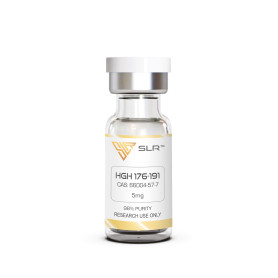
| Image | Ref. | Unit price | Weight | Avail. | Buy |
|---|---|---|---|---|---|
| AO9005 | €34.00 Discount by quantity 10+ €28.90 –15% 20+ €24.48 –28% 50+ €20.40 –40% 100+ €17.68 –48% 200+ €15.30 –55% | 0.000000 kg |  | |
| Total: 0,0 All prices with tax included. | |||||
Product is available Product is no longer in stock
 Product is no in stock, but is allowed to be back-ordered