Antimicrobial

Active filters

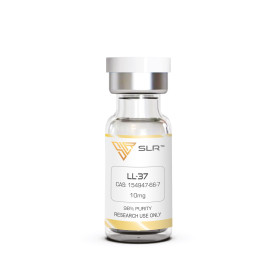
LL-37-10mg
€138.00
Tax excluded
IN-STOCK
favorite_border favorite
LL-37 is the only known human member of the cathelicidin family, a broad class of proteins commonly referred to as antimicrobial peptides (AMPs). These peptides are primarily expressed in macrophages and polymorphonuclear leukocytes, where they contribute to innate immune defense against microbial threats. Beyond their antimicrobial role, experimental research has demonstrated that LL-37 is involved in a wide range of biological processes related to immune regulation, inflammation, tissue repair, and cellular signaling. For this reason, LL-37 has been extensively studied in research models relevant to cancer biology, autoimmune mechanisms, inflammatory conditions, and wound-related processes. According to experimental research, LL-37 has been investigated in relation to: Inflammatory processes associated with rheumatoid arthritis Immune dysregulation studied in lupus models Chronic and acute inflammatory conditions Vascular inflammation relevant to atherosclerosis research Skin inflammation examined in psoriasis models Intestinal inflammation studied in colitis research Gastrointestinal inflammatory signaling in Crohn’s disease models Tissue injury and repair processes associated with ulcers Impaired wound-healing environments such as diabetic foot models Cellular and immune mechanisms explored in cancer research Broad antimicrobial activity within innate immune defense systems
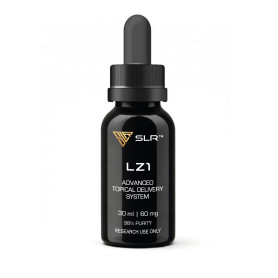
LZ1 - 30ml/60mg (Price on request)
favorite_border favorite
Made to Order Compound ✦ Price available upon request. For inquiries: contactus LZ1 is characterized as a 15-residue cationic antimicrobial peptide with: - Strong activity against Gram-positive skin pathogens and certain antibiotic-resistant strains - Negligible hemolytic activity and low cytotoxicity toward keratinocytes - Observed anti-inflammatory effects through modulation of TNF-α and IL-1β pathways - Documented antimalarial activity associated with inhibition of parasite energy metabolism These properties make LZ1 a relevant compound for experimental research in antimicrobial mechanisms, inflammatory signaling, and skin biology.
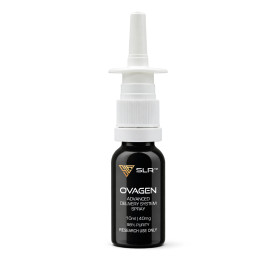
OVAGEN - 10ml/40mg - Spray
€129.00
Tax excluded
IN-STOCK
favorite_border favorite
Ovagen is a bioregulatory peptide that has been studied for its role in supporting gastrointestinal mucosal integrity and maintaining normal liver tissue structure. Research suggests it may help protect the gastrointestinal mucosal layer from stressors such as antibiotics, toxins, and anti-inflammatory agents, while also being associated with reduced fibrotic processes in liver tissue. Ongoing experimental studies are further evaluating Ovagen’s interaction with mechanisms involved in HIV viral replication. FRESHLY PREPARED SOLUTION 
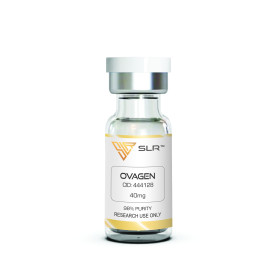
OVAGEN - 40mg
€98.00
Tax excluded
IN-STOCK
favorite_border favorite
Ovagen is a bioregulatory peptide that has been studied for its role in supporting gastrointestinal mucosal integrity and maintaining normal liver tissue structure. Research suggests it may help protect the gastrointestinal mucosal layer from stressors such as antibiotics, toxins, and anti-inflammatory agents, while also being associated with reduced fibrotic processes in liver tissue. Ongoing experimental studies are further evaluating Ovagen’s interaction with mechanisms involved in HIV viral replication.
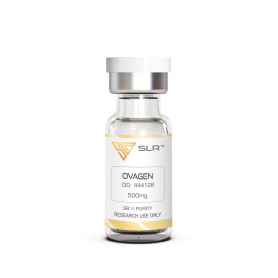
OVAGEN - 500mg
€680.00
Tax excluded
Developed Compound ✦ Limited Stock Available
favorite_border favorite
Ovagen is a bioregulatory peptide that has been studied for its role in supporting gastrointestinal mucosal integrity and maintaining normal liver tissue structure. Research suggests it may help protect the gastrointestinal mucosal layer from stressors such as antibiotics, toxins, and anti-inflammatory agents, while also being associated with reduced fibrotic processes in liver tissue. Ongoing experimental studies are further evaluating Ovagen’s interaction with mechanisms involved in HIV viral replication.
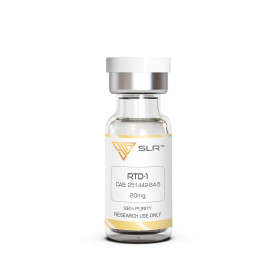
RTD-1 - 20mg
€550.00
Tax excluded
IN-STOCK
favorite_border favorite
RTD-1 is a macrocyclic θ-defensin peptide expressed in Old World monkeys and studied for its broad-spectrum antibacterial, antifungal, and antiviral activity. Research indicates it may function by interacting with microbial membranes while also exerting significant immunomodulatory effects. Notably, experimental studies in a rodent model of rheumatoid arthritis showed that RTD-1 rapidly suppressed and reversed autoimmune joint disease, improving mobility and preserving joint structure. Mechanistically, RTD-1 reduced joint IL-1β levels, inhibited IL-6 production, suppressed fibroblast-like synoviocyte invasiveness, and inhibited destructive proteases such as ADAM17/ADAM10, metalloproteases, and cathepsin K. These properties have positioned RTD-1 as a promising research peptide of interest in antimicrobial defense and inflammation-related disease models.