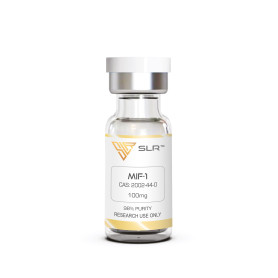
MIF-1 - 100mg
€168.00

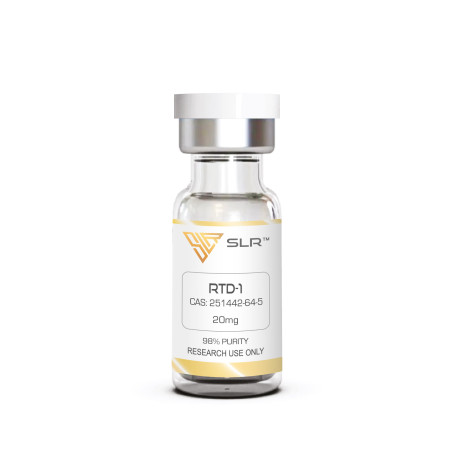

RTD-1 is a macrocyclic θ-defensin peptide expressed in Old World monkeys and studied for its broad-spectrum antibacterial, antifungal, and antiviral activity. Research indicates it may function by interacting with microbial membranes while also exerting significant immunomodulatory effects. Notably, experimental studies in a rodent model of rheumatoid arthritis showed that RTD-1 rapidly suppressed and reversed autoimmune joint disease, improving mobility and preserving joint structure. Mechanistically, RTD-1 reduced joint IL-1β levels, inhibited IL-6 production, suppressed fibroblast-like synoviocyte invasiveness, and inhibited destructive proteases such as ADAM17/ADAM10, metalloproteases, and cathepsin K. These properties have positioned RTD-1 as a promising research peptide of interest in antimicrobial defense and inflammation-related disease models.
SPECIFICATIONS
Product Code: RTD120
Sequence: cyclo)-GFC(1)RC(2)LC(3)RRGVC(3)RC(2)IC(1)TR-(cyclo)
Molecular Formula: C82H137N33O19S6
Molecular Weight: 2081.6 g/mol
CAS: 251442-64-5
Purity: Technical / Research Grade 98%
Other details: No TFA Salt
Form: Lyophilized powder
Color: White
Storage temperature: -20°C
Source: Synthetic
Safety classification: Standard handling
DESCRIPTION
RTD-1 (Rhesus Theta-Defensin-1) is a naturally occurring antimicrobial peptide belonging to the family of theta-defensins, a unique class of small cyclic peptides originally identified in primates. Antimicrobial peptides represent one of the most ancient and fundamental defense systems of the innate immune response, acting as rapid biological protectors against external pathogens. RTD-1 has attracted significant scientific interest due to its broad-spectrum activity and its potential role in supporting host defense mechanisms under conditions where microbial infections or inflammatory imbalance may occur.
Microbial infections remain one of the major challenges in both clinical and research settings. Bacterial resistance, chronic infections, and the emergence of multi-drug resistant organisms have increased the interest in alternative antimicrobial strategies. In this context, RTD-1 has been studied for its ability to act against a wide range of microorganisms, including gram-positive bacteria, gram-negative bacteria, and certain fungal and viral agents. Unlike conventional antibiotics, antimicrobial peptides such as RTD-1 are believed to operate through mechanisms that are more difficult for pathogens to evade, making them a subject of growing attention in biomedical research.
One of the key characteristics of RTD-1 is its cyclic structure, which contributes to its stability and resistance to enzymatic degradation. This structural feature may allow the peptide to maintain activity in environments where linear peptides may be rapidly broken down. RTD-1 has been described as highly active in hostile biological conditions, suggesting a potential role in immune defense systems where rapid antimicrobial activity is required.
Antimicrobial spectrum and biological role
Research indicates that RTD-1 demonstrates broad antimicrobial activity. Studies suggest that it may be effective against a variety of bacteria, including both gram-positive organisms (often responsible for skin and soft tissue infections) and gram-negative organisms (commonly associated with gastrointestinal, respiratory, and systemic infections). In addition, RTD-1 has also been evaluated for potential antifungal effects, as fungal infections may be particularly problematic in immunocompromised environments.
In some studies, RTD-1 has also been described as having antiviral potential, indicating that its biological role may extend beyond purely antibacterial defense. This broad antimicrobial profile has contributed to interest in RTD-1 as a peptide involved in innate immunity, especially in contexts where microbial exposure triggers inflammatory stress.
Mechanism of action
The antimicrobial activity of RTD-1 is believed to be related to its ability to interact with microbial membranes. Many pathogens rely on membrane integrity for survival, and peptides such as RTD-1 may bind to and disrupt these membranes due to their physicochemical properties. This can potentially lead to loss of membrane function, disruption of cellular homeostasis, and microbial inactivation.
In addition to direct antimicrobial effects, RTD-1 has been discussed as a peptide that may influence immune regulation. Some studies suggest that antimicrobial peptides can also act as signaling molecules, supporting the coordination of immune defense responses. This includes potential modulation of inflammatory pathways, which is relevant because excessive inflammation may contribute to tissue damage in chronic infections.
RTD-1 has also been studied for its potential to reduce pathogen-driven inflammation while still supporting antimicrobial defense. This dual behavior—direct microbial inhibition combined with possible immunomodulatory effects—has made RTD-1 an interesting candidate in research fields related to infection control, inflammation biology, and immune resilience.
Conditions of research interest
RTD-1 has been explored in experimental models relevant to a variety of infection-related and inflammatory conditions. Microbial infections may affect multiple organ systems and may contribute to acute illness or chronic inflammatory states. For this reason, peptides with broad antimicrobial potential may be considered relevant in research involving:
Because antimicrobial peptides may act rapidly and broadly, they are being studied as potential alternatives or complements to classical antimicrobial strategies. This is particularly relevant in the context of antibiotic resistance, where standard treatments may lose effectiveness.
Inflammation and immune balance
One of the most important features emerging from RTD-1 research is its apparent ability to reduce excessive inflammation while preserving functional immune defense. Chronic inflammatory states, including autoimmune diseases, often involve an overactivation of cytokines and destructive proteases, leading to tissue breakdown and progressive damage.
The ability of RTD-1 to suppress inflammatory cytokines such as IL-1β and IL-6, inhibit FLS invasiveness, and reduce destructive protease activity suggests that it may operate as a peptide capable of restoring immune balance rather than simply blocking microbial growth. This may represent a significant advantage compared to conventional strategies that focus only on pathogen elimination or only on cytokine suppression.
Autoimmune arthritis and immunomodulatory effects (research findings)
In addition to antimicrobial research, RTD-1 has been investigated for its effects in autoimmune inflammatory disease models. A key study titled “Suppression and resolution of autoimmune arthritis by rhesus θ-defensin-1, an immunomodulatory macrocyclic peptide” reported highly significant findings in a rodent model of rheumatoid arthritis (RA).
In this research, RTD-1 was tested in DA/OlaHsd rats with established pristane-induced arthritis (PIA), a well-recognized experimental model resembling rheumatoid arthritis pathology. Parenteral administration of RTD-1 was shown to rapidly suppress progression of joint disease and, notably, to reverse key pathological features. Treated animals demonstrated improved limb mobility and preservation of normal joint architecture compared to controls.
Biochemical and mechanistic observations in the study indicated that RTD-1 significantly reduced levels of IL-1β within joints, a cytokine strongly implicated in inflammatory joint destruction. RTD-1 also dose-dependently inhibited the invasiveness of fibroblast-like synoviocytes (FLS), which are known to contribute to cartilage damage and progressive joint degeneration in rheumatoid arthritis. In addition, RTD-1 reduced IL-6 production by FLS, another key inflammatory mediator involved in autoimmune arthritis.
The study further demonstrated that RTD-1 inhibited multiple proteolytic enzymes associated with joint destruction and inflammatory progression. RTD-1 was reported as a potent inhibitor of arthritogenic proteases including ADAM17 and ADAM10, enzymes involved in the activation of TNFα, a central cytokine in rheumatoid arthritis pathology. RTD-1 was also shown to inhibit matrix metalloproteases (MMPs) and cathepsin K, both strongly linked to cartilage degradation and bone erosion.
Importantly, the research described RTD-1 as non-toxic and non-immunogenic in the experimental model, and it was effective even when administered as infrequently as once every five days, suggesting a potentially long-lasting regulatory effect.
These findings have led researchers to propose θ-defensins as potential “retroevolutionary biologics”, meaning molecules absent in humans but present in primate evolution, which may offer unique therapeutic potential through immune system modulation.
Research perspective
In recent years, interest in RTD-1 has increased as part of the broader exploration of antimicrobial peptides as a new class of bioactive molecules. Due to its cyclic structure, stability, and broad antimicrobial activity, RTD-1 has been studied as a promising candidate in laboratory research focused on infection defense, immune modulation, and inflammatory resilience.
REFERENCES
All information presented above is derived from in vitro experiments, animal studies, and other preclinical research models. These data are intended solely for basic scientific investigation of biological mechanisms and do not imply any therapeutic, diagnostic, preventive, or clinical use in humans or animals.
P. Tongaonkar et al., "The macrocyclic peptide rhesus theta defensin 1 activates interferon and antiviral pathways in human monocytes" [PubMed]
P. Tongaonkar et al., "RTD-1 therapeutically normalizes synovial gene signatures in rat autoimmune arthritis and suppresses proinflammatory mediators in RA synovial fibroblasts" [PubMed]
T.M. Weiss et al., "Two states of cyclic antimicrobial peptide RTD-1 in lipid bilayers" [PubMed]
M.E. Selsted "Theta-defensins: cyclic antimicrobial peptides produced by binary ligation of truncated alpha-defensins" [PubMed]
Yilong Li et al., "Full sequence amino acid scanning of θ-defensin RTD-1 yields a potent anthrax lethal factor protease inhibitor" [PubMed]
A. Gould et al., "Recombinant production of rhesus θ-defensin-1 (RTD-1) using a bacterial expression system" [PubMed]
D. Tran et al., "Homodimeric theta-defensins from rhesus macaque leukocytes: isolation, synthesis, antimicrobial activities, and bacterial binding properties of the cyclic peptides" [PubMed]
V. Basso et al., "Rhesus Theta Defensin 1 Promotes Long Term Survival in Systemic Candidiasis by Host Directed Mechanisms" [PubMed]
M. Trabi et al., "Three-dimensional structure of RTD-1, a cyclic antimicrobial defensin from Rhesus macaque leukocytes" [PubMed]
P.M. Abuja "The cyclic antimicrobial peptide RTD-1 induces stabilized lipid-peptide domains more efficiently than its open-chain analogue" [PubMed]
A.Y.J. Park et al., "Preclinical Pharmacokinetics and Safety of Intravenous RTD-1" [ASM Journal]
M.A. Dughbaj et al., "Anti-Inflammatory Effects of RTD-1 in a Murine Model of Chronic Pseudomonas aeruginosa Lung Infection: Inhibition of NF-κB, Inflammasome Gene Expression, and Pro-IL-1β Biosynthesis" [MDPI]
J.B. Schaal et al., "Suppression and resolution of autoimmune arthritis by rhesus θ-defensin-1, an immunomodulatory macrocyclic peptide" [PubMed]
DISCLAIMER
This product is intendend for lab research and development use only. These studies are performed outside of the body. This product is not medicines or drugs and has not been approved by the FDA or EMA to prevent, treat or cure any medical condition, ailment or disease. Bodily introduction of any kind into humans or animals is strictly forbidden by law. This product should only be handled by licensed, qualified professionals.
All product information provided on this website is for informational and educational purposes only.
| Image | Ref. | Unit price | Weight | Avail. | Buy |
|---|---|---|---|---|---|
| RTD120 | €498.00 Discount by quantity 10+ €398.40 –20% 20+ €348.60 –30% 50+ €308.76 –38% 100+ €278.88 –44% 200+ €249.00 –50% | 0.000000 kg |  | |
| Total: 0,0 All prices with tax included. | |||||
Product is available Product is no longer in stock
 Product is no in stock, but is allowed to be back-ordered