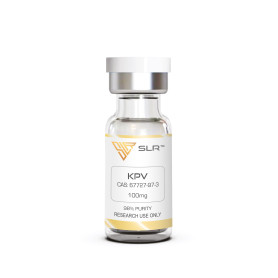
KPV - 100mg
€240.00

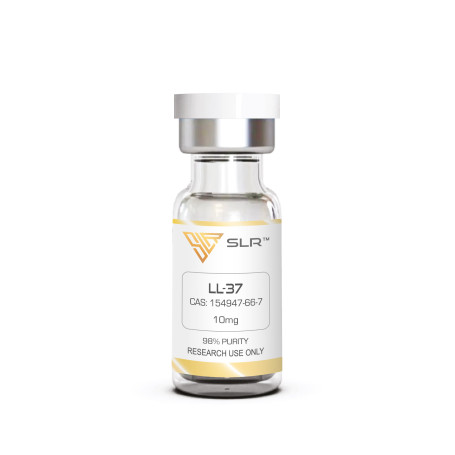

LL-37 is the only known human member of the cathelicidin family, a broad class of proteins commonly referred to as antimicrobial peptides (AMPs). These peptides are primarily expressed in macrophages and polymorphonuclear leukocytes, where they contribute to innate immune defense against microbial threats. Beyond their antimicrobial role, experimental research has demonstrated that LL-37 is involved in a wide range of biological processes related to immune regulation, inflammation, tissue repair, and cellular signaling. For this reason, LL-37 has been extensively studied in research models relevant to cancer biology, autoimmune mechanisms, inflammatory conditions, and wound-related processes. According to experimental research, LL-37 has been investigated in relation to:
Inflammatory processes associated with rheumatoid arthritis
Immune dysregulation studied in lupus models
Chronic and acute inflammatory conditions
Vascular inflammation relevant to atherosclerosis research
Skin inflammation examined in psoriasis models
Intestinal inflammation studied in colitis research
Gastrointestinal inflammatory signaling in Crohn’s disease models
Tissue injury and repair processes associated with ulcers
Impaired wound-healing environments such as diabetic foot models
Cellular and immune mechanisms explored in cancer research
Broad antimicrobial activity within innate immune defense systems
SPECIFICATIONS
Product Code: LL3010
Sequence: Leu-Leu-Gly-Asp-Phe-Phe-Arg-Lys-Ser-Lys-Glu-Lys-Ile-Gly-Lys-Glu-Phe-Lys-Arg-Ile-Val-Gln-Arg-Ile-Lys-Asp-Phe-Leu-Arg-Asn-Leu-Val-Pro-Arg-Thr-Glu-Ser
Molecular Formula: C205H340N60O53
Molecular Weight: 4493,342 g/mol
CAS Number: 154947-66-7
Purity: Technical / Research Grade 98%
Other details: No TFA Salt
Form: Solid
Color: White
Storage temperature: -20°C
Source: Synthetic
Safety classification: Standard handling
DESCRIPTION
LL-37 is the only known human member of the cathelicidin family, a large group of proteins characterized by diverse biological activities. Cathelicidins are primarily expressed in macrophages and polymorphonuclear leukocytes, both of which are essential components of the innate immune system. While these peptides are best known for their role in host defense against microorganisms, extensive research has demonstrated that they exert a broad range of additional biological effects. This class of molecules is commonly referred to as antimicrobial peptides (AMPs). In experimental and preclinical research, LL-37 has been studied in contexts related to immune regulation, tissue repair, cellular signaling, and biological processes relevant to cancer research, autoimmune mechanisms, and wound healing.
Antimicrobial Effect
As part of the innate immune response, LL-37 is among the earliest molecular mediators activated following microbial exposure. Studies of skin and epithelial tissues show that LL-37 is present at low baseline levels under normal conditions but rapidly increases in response to pathogenic challenge. Experimental evidence indicates that LL-37 works synergistically with other antimicrobial proteins, including human beta-defensin-2, to enhance host defense.
One of the primary antimicrobial mechanisms of LL-37 involves binding to bacterial lipopolysaccharide (LPS), a key structural component of the outer membrane of gram-negative bacteria. LPS is essential for maintaining bacterial membrane integrity. By interacting with and disrupting LPS, LL-37 compromises membrane stability in experimental systems, making it particularly effective against certain bacterial species. These properties have positioned LL-37 as a molecule of interest in research exploring novel strategies for managing severe bacterial infections.
Although LL-37 has pronounced effects on gram-negative bacteria, it also demonstrates activity against gram-positive organisms. In vitro studies show that LL-37 enhances the antibacterial effects of lysozyme, an enzyme involved in the degradation of gram-positive bacterial cell walls, including those of Staphylococcus aureus. These findings highlight the broad antimicrobial spectrum of LL-37 observed in laboratory models.
Inflammatory Diseases
In addition to its antimicrobial activity, LL-37 has been investigated for its involvement in a range of inflammatory conditions, including psoriasis, systemic lupus erythematosus, rheumatoid arthritis, and atherosclerosis. Research indicates that LL-37 exhibits context-dependent immunomodulatory effects, with outcomes influenced by the local inflammatory environment and the specific immune cell populations involved.
Importantly, LL-37 does not exert uniform effects on immune cells. Cell-culture studies demonstrate that immune cell activation state determines responsiveness to LL-37. For example, non-activated T cells may display increased inflammatory signaling in response to LL-37, whereas activated T cells may exhibit reduced inflammatory responses. These observations suggest that LL-37 plays a homeostatic role, modulating immune activity to prevent excessive or uncontrolled inflammation. More recent evidence indicates that elevated LL-37 levels observed in autoimmune conditions may represent a compensatory or protective response rather than a direct cause of autoimmune pathology.
Arthritis
Animal studies have identified elevated LL-37 levels in joints affected by rheumatoid arthritis. While LL-37 is closely associated with inflammatory pathology in these tissues, it remains unclear whether it contributes directly to disease progression or reflects an endogenous attempt to regulate inflammation.
Notably, deficiency of LL-37 or other cathelicidins does not alter disease outcomes in animal models of arthritis or lupus, suggesting that these peptides are unlikely to be primary drivers of inflammatory disease. These findings support the hypothesis that LL-37 overexpression in inflamed tissues represents an epiphenomenon associated with generalized inflammatory activation.
Further research in murine arthritis models has shown that LL-37-derived peptides reduce collagen degradation, a hallmark of inflammatory joint disease. Administration of these peptides has been associated with reduced disease severity and lower circulating levels of antibodies targeting type II collagen. Additionally, LL-37 and its derivatives modulate inflammation driven by interleukin-32, a cytokine strongly linked to arthritis severity. Together, these findings support a protective or regulatory role for LL-37 in inflammatory arthritis models.
Intestine
Cell-culture and animal studies demonstrate that LL-37 influences gastrointestinal physiology through multiple mechanisms. LL-37 promotes epithelial cell migration, which is essential for maintaining and restoring the intestinal barrier, and reduces apoptosis under conditions of intestinal irritation.
These effects have positioned LL-37 as a molecule of interest in experimental research related to inflammatory bowel diseases, post-surgical intestinal recovery, and acute gastrointestinal infections. LL-37 has also been explored as an adjunct factor in antibiotic-related studies, with the goal of mitigating gastrointestinal side effects commonly associated with oral antimicrobial therapy.
Within the intestinal environment, LL-37 again acts synergistically with human beta-defensin-2, supporting epithelial maintenance and repair. In vitro studies indicate that these peptides cooperate to reduce TNF-related cell death while preserving epithelial integrity.
Intestinal Cancer
Research examining LL-37 in cancer biology has produced variable results depending on tissue type. However, experimental evidence suggests that LL-37 may exert regulatory or protective effects in certain gastrointestinal malignancies, including gastric and intestinal cancers, as well as oral squamous cell carcinoma associated with tobacco exposure. These effects appear to involve vitamin-D-dependent mechanisms, consistent with observations linking vitamin D status to reduced gastrointestinal cancer risk. Experimental findings suggest that vitamin D may enhance tumor-associated macrophage activity through pathways involving LL-37.
Lung Disease
Lipopolysaccharide is not limited to bacterial cell walls and can become airborne in environments contaminated with mold or fungi. Inhalation of LPS triggers immune responses in lung tissue that may be insufficient to prevent chronic respiratory conditions such as asthma, chronic obstructive pulmonary disease (COPD), or toxic dust syndrome. Ongoing research has explored LL-37 as a candidate molecule for inhalation-based experimental approaches in respiratory inflammation models.
Studies investigating LL-37 in lung tissue reveal its ability to promote epithelial cell proliferation and tissue repair. LL-37 recruits airway epithelial cells to sites of injury and supports wound healing and angiogenesis required for tissue regeneration, suggesting a homeostatic regulatory role within the respiratory system.
Blood Vessel Growth
In endothelial cells, LL-37 stimulates the production of prostaglandin E2 (PGE2), a signaling molecule involved in vascular dilation and inflammatory responses. In endothelial tissue, PGE2 contributes to angiogenesis, the formation of new blood vessels.
Angiogenesis is a critical process in wound healing, cardiovascular disease, stroke recovery, and tumor biology. Because LL-37 influences angiogenic pathways, it serves as a valuable experimental model for studying how blood vessel growth may be promoted or limited depending on physiological context.
REFERENCES
All observations described above originate from in vitro systems, animal studies, or other preclinical experimental models. They are intended solely to support basic research into molecular, cellular, and physiological mechanisms and do not imply therapeutic, diagnostic, or preventive applications in humans or animals.
R. Shaykhiev et al., "Human endogenous antibiotic LL-37 stimulates airway epithelial cell proliferation and wound closure" [PubMed]
K.L. Brown et al., "Host defense peptide LL-37 selectively reduces proinflammatory macrophage responses" [PubMed]
P.Y. Ong et al., "Endogenous antimicrobial peptides and skin infections in atopic dermatitis" [PubMed]
D. Kienhofer et al., "No evidence of pathogenic involvement of cathelicidins in patient cohorts and mouse models of lupus and arthritis" [PubMed]
M.D. Salvado et al., "Cathelicidin LL-37 induces angiogenesis via PGE2-EP3 signaling in endothelial cells, in vivo inhibition by aspirin" [PubMed]
J.M. Kahlenberg et al., "Little peptide, big effects: the role of LL-37 in inflammation and autoimmune disease" [PubMed]
M. Golec "Cathelicidin LL-37: LPS-neutralizing, pleiotropic peptide" [PubMed]
Ka-Yee G. Choi et al., "Human cathelicidin LL-37 and its derivative IG-19 regulate interleukin-32-induced inflammation" [PMC]
Xi Chen et al., "Roles and Mechanisms of Human Cathelicidin LL-37 in Cancer" [PubMed]
C.D. Ciornei et al., "Antimicrobial and chemoattractant activity, lipopolysaccharide neutralization, cytotoxicity, and inhibition by serum of analogs of human cathelicidin LL-37" [PubMed]
L.N. Chow et al., "Human cathelicidin LL-37-derived peptide IG-19 confers protection in a murine model of collagen-induced arthritis" [PubMed]
D.S. Alexandre-Ramos et al., "LL-37 treatment on human peripheral blood mononuclear cells modulates immune response and promotes regulatory T-cells generation" [PubMed]
Jan-Michel Otte et al., "Effects of the cathelicidin LL-37 on intestinal epithelial barrier integrity" [PubMed]
M.H. Hoffman et al., "The cathelicidins LL-37 and rCRAMP are associated with pathogenic events of arthritis in humans and rats" [PubMed]
Jan-Michel Otte et al., "Human beta defensin 2 promotes intestinal wound healing in vitro" [PubMed]
X. Chen et al., "Synergistic effect of antibacterial agents human beta-defensins, cathelicidin LL-37 and lysozyme against Staphylococcus aureus and Escherichia coli" [PubMed]
D. Xhindoli et al., "The human cathelicidin LL-37--A pore-forming antibacterial peptide and host-cell modulator" [PubMed]
Wenhua Zhu et al., "Arthritis is associated with T-cell-induced upregulation of Toll-like receptor 3 on synovial fibroblasts" [PubMed]
DISCLAIMER
This product is intendend for lab research and development use only. These studies are performed outside of the body. This product is not medicines or drugs and has not been approved by the FDA or EMA to prevent, treat or cure any medical condition, ailment or disease. Bodily introduction of any kind into humans or animals is strictly forbidden by law. This product should only be handled by licensed, qualified professionals.
All product information provided on this website is for informational and educational purposes only.
| Image | Ref. | Unit price | Weight | Avail. | Buy |
|---|---|---|---|---|---|
| LL3010 | €79.90 Discount by quantity 10+ €65.52 –18% 20+ €57.53 –28% 50+ €49.54 –38% 100+ €43.95 –45% 200+ €39.95 –50% | 0.020000 kg |  | |
| Total: 0,0 All prices with tax included. | |||||
Product is available Product is no longer in stock
 Product is no in stock, but is allowed to be back-ordered