Active filters

THYMOSIN B-4 FRAG - 10ml/60mg - Spray
€146.00
Tax excluded
IN-STOCK
favorite_border favorite
Thymosin Beta-4 Fragment is a short peptide derived from the active region of Thymosin Beta-4, commonly employed in preclinical research to investigate actin-regulated cell migration, angiogenesis, inflammatory modulation, and tissue remodeling mechanisms. In experimental models, it has been studied for its involvement in wound-related cellular dynamics, oxidative stress responses, and regeneration-associated signaling pathways. FRESHLY PREPARED SOLUTION 
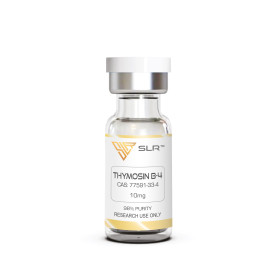
THYMOSIN BETA-4 (43aa) - 10mg
€79.00
Tax excluded
IN-STOCK
favorite_border favorite
INDEPENDENTLY TESTED • VERIFIED QUALITY ✓ Purity — HPLC analysis ✓ Identity — Mass spectrometry ✓ Net content  VERIFY COA AT FREEDOM DIAGNOSTICS → Enter search code: Suaw2605040574Thymosin Beta-4 (Tβ4), often associated with the peptide fragment TB-500 in research contexts, is a naturally occurring peptide involved in tissue repair, immune regulation, and cellular regeneration. Its primary mechanism is linked to actin-binding activity, supporting cytoskeletal remodeling and promoting cell migration essential for wound healing. Research suggests Tβ4 may stimulate angiogenesis, enhance collagen deposition, support keratinocyte and endothelial migration, and reduce inflammatory cytokine signaling through modulation of pathways such as NF-κB. It has been studied in experimental models of skin repair, corneal injury, dry eye conditions, cardiovascular remodeling after ischemic injury, systemic inflammation including sepsis models, neurological injury, autoimmune neuroinflammation, and musculoskeletal recovery. These properties make Tβ4 a major peptide of interest in regenerative biology and inflammation-related research.
TISSUE REPAIR - 30ml
€329.00
Tax excluded
IN-STOCK
favorite_border favorite
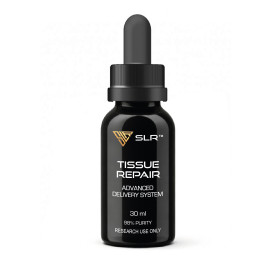
Tissue Repair is a structured multi-peptide research formulation developed to explore coordinated biological processes involved in connective tissue restoration and structural integrity. The combination of BPC-157 Arginate, Cardiogen, KPV, GHK, and Thymosin Beta-4 Fragment allows integrated investigation of mechanisms related to: Muscle, tendon, ligament, and bone repair dynamics Cellular growth and angiogenesis Collagen synthesis and extracellular matrix organization Fibroblast activation and directed migration Anti-inflammatory and antioxidant activity Wound healing and epithelial regeneration Ocular tissue repair research Maintenance of connective tissue flexibility Regulation of joint-associated inflammatory responses In addition, individual components within the complex have been examined in broader research contexts involving inflammatory skin conditions, acne-related models (including cystic presentations), oxidative stress–related tissue imbalance, immune-modulated inflammatory states, and experimental models associated with systemic inflammatory conditions. Research literature has also explored mechanistic pathways related to neuroinflammatory environments and immune-associated disorders, including experimental contexts relevant to conditions such as allergic airway inflammation and autoimmune-associated tissue stress.  Rather than acting on a single biological target, Tissue Repair reflects the multi-step nature of tissue remodeling, where cellular migration, structural protein synthesis, vascular support, inflammatory regulation, and oxidative balance operate in synchrony.  FRESHLY PREPARED SOLUTION
TP508 - 1mg
€170.00
Tax excluded
IN-STOCK
favorite_border favorite
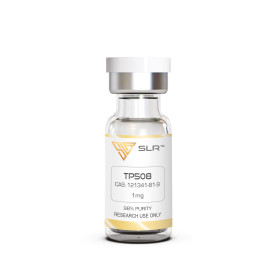
TP508 is a 23–amino acid investigational regenerative peptide derived from amino acids 508–530 of human prothrombin. It has been studied for its ability to stimulate tissue repair by reversing endothelial dysfunction, promoting angiogenesis and revascularization, attenuating inflammation, and reducing apoptosis. Human studies have reported improved healing of diabetic foot ulcers and distal radius fractures, while animal studies suggest TP508 may stimulate bone regeneration in critical-size defects. Emerging evidence indicates that TP508 may activate tissue-derived stem/progenitor cells, which may contribute to its broad regenerative effects. Additional research has explored TP508 in cardiovascular ischemia models, where it increased perfusion and restored nitric oxide signaling through eNOS activation. TP508 has also been investigated as a potential countermeasure for radiation-induced gastrointestinal injury due to its potential role in supporting intestinal stem cell regeneration.