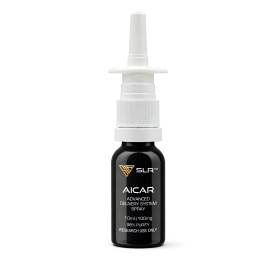
AICAR - 10ml/100mg - Spray
€99.00

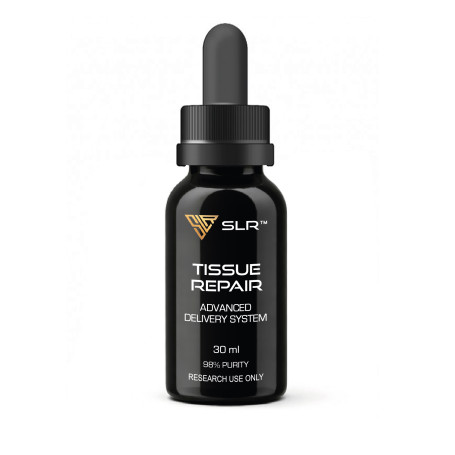

Tissue Repair is a structured multi-peptide research formulation developed to explore coordinated biological processes involved in connective tissue restoration and structural integrity. The combination of BPC-157 Arginate, Cardiogen, KPV, GHK, and Thymosin Beta-4 Fragment allows integrated investigation of mechanisms related to:
Muscle, tendon, ligament, and bone repair dynamics
Cellular growth and angiogenesis
Collagen synthesis and extracellular matrix organization
Fibroblast activation and directed migration
Anti-inflammatory and antioxidant activity
Wound healing and epithelial regeneration
Ocular tissue repair research
Maintenance of connective tissue flexibility
Regulation of joint-associated inflammatory responses
In addition, individual components within the complex have been examined in broader research contexts involving inflammatory skin conditions, acne-related models (including cystic presentations), oxidative stress–related tissue imbalance, immune-modulated inflammatory states, and experimental models associated with systemic inflammatory conditions. Research literature has also explored mechanistic pathways related to neuroinflammatory environments and immune-associated disorders, including experimental contexts relevant to conditions such as allergic airway inflammation and autoimmune-associated tissue stress.
Rather than acting on a single biological target, Tissue Repair reflects the multi-step nature of tissue remodeling, where cellular migration, structural protein synthesis, vascular support, inflammatory regulation, and oxidative balance operate in synchrony.
FRESHLY PREPARED SOLUTION
ADVANCED DELIVERY SYSTEM - CELL PENETRATING PEPTIDE TECHNOLOGY
This product utilizes advanced delivery technology incorporating calibrated cell-penetrating peptide (CPP) systems. The formulation is engineered to support efficient and targeted intracellular delivery of active ingredients, contributing to enhanced transport performance and bioavailability under controlled laboratory conditions.
SPECIFICATIONS
Product Code: TSR030L
BPC-157 ARGINATE FORM - 100 mg
Sequence: Gly-Glu-Pro-Pro-Pro-Gly-Lys-Pro-Ala-Asp-Asp-Ala-Gly-Leu-Val × 2 × L-Arg
Molecular Formula: C62H98N16O22
Molecular Weight (peptide): 1418.70 g/mol
CAS: 137525-51-0
Purity: Technical / Research Grade ≥98%
CARDIOGEN - 50 mg
Sequence: H-Ala-Glu-Asp-Arg-OH
Molecular Formula: C18H31N7O9
Molecular Weight: 489.5 g/mol
PubChem CID: 11583989
Purity: Technical / Research Grade ≥98%
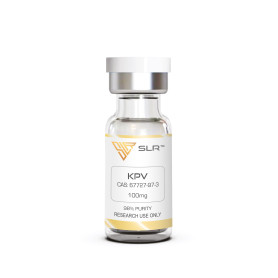
KPV - 100 mg
Sequence: Lys-Pro-Val
Molecular Formula: C16H30N4O4
Molecular Weight: 342.43 g/mol
CAS: 67727-97-3
Purity: Technical / Research Grade ≥98%
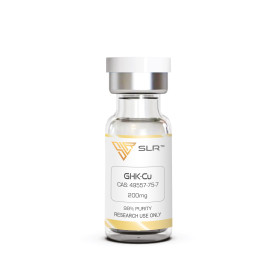
GHK - 50 mg
Sequence: Gly-His-Lys
Molecular Formula: C14H24N6O4
Molecular Weight: 340.384 g/mol
CAS: 49557-75-7
Purity: Technical / Research Grade ≥98%
THYMOSIN B4 FRAGMENT - 100 mg
Sequence: Ac-Leu-Lys-Lys-Thr-Glu-Thr-Gln
Molecular Formula: C38H68N10O14
Molecular Weight: 889.018 g/mol
CAS number: 885340-08-9
Purity: Technical / Research Grade ≥98%
General Properties
Other details: No TFA Salt
Form: Liquid Solution
Color: Clear / Slightly opalescent
Total Content: 400 mg in 30 mL (13.33 mg/mL total peptide concentration)
Concentration per mL: BPC-157 Arginate: 3.33 mg; Cardiogen: 1.66 mg; KPV: 3.33 mg; GHK: 1.66 mg; Thymosin Beta-4 Fragment: 3.33 mg
Vehicle / Carrier System: Proprietary carrier system
Storage Temperature: 4°C (Do not freeze)
Source: Synthetic
Safety classification: Standard laboratory handling
DESCRIPTION
Tissue Repair is a structured multi-peptide formulation designed to support research into the biological processes that govern structural tissue restoration. When tissue undergoes mechanical stress, overload, inflammation, or degenerative strain, the body does not repair it randomly. A precise sequence unfolds:
The quality of repair depends not only on how fast these events occur, but on how well they are coordinated. This formulation combines peptides that influence different phases of this sequence. Rather than stimulating a single isolated mechanism, the complex reflects the biological reality that tissue repair requires synchronization between cellular movement, matrix production, vascular supply, and inflammatory control.
The integrated structure focuses on:
Fibroblast Recruitment and Activation
Fibroblasts are the central structural repair cells of connective tissue. Their presence at the injury site determines whether repair proceeds efficiently or stalls. When tissue is disrupted, fibroblasts migrate toward the damaged region and shift into an activated state, increasing production of collagen, fibronectin, and other structural proteins that form the early extracellular scaffold. Balanced recruitment supports organized repair and optimal structural quality.
Collagen Synthesis and Structural Alignment
Collagen provides tensile strength, flexibility, and mechanical stability. After activation, fibroblasts synthesize collagen fibers that must be correctly oriented and cross-linked to restore functional strength. Proper alignment enhances resistance to mechanical load and long-term structural stability.
Microvascular Development
Microvascular development enables oxygen and nutrient delivery to the repair zone. Improved capillary formation supports metabolic activity, waste removal, and stronger integration of new tissue, particularly in low-vascular structures such as tendons and ligaments.
Reduction of Oxidative Stress
Excess reactive oxygen species can damage proteins, lipids, and DNA. Moderating oxidative burden supports collagen stability, cellular viability, and structural integrity during tissue restoration.
Balanced Inflammatory Response
Inflammation initiates repair but must remain controlled. Regulated inflammatory activity supports proper fibroblast activation, organized collagen deposition, and healthy remodeling progression.
Improvement of Tissue Structural Integrity
Structural integrity reflects restored mechanical strength, elasticity, and resistance to strain. Coordinated cellular migration, matrix production, vascular support, and inflammatory balance contribute to durable tissue stability.
Individual Component Roles
Integrated Conclusion
Tissue repair is the result of coordinated interaction between cellular migration, matrix production, vascular formation, and inflammatory balance. This formulation reflects that biological complexity by addressing multiple structural domains simultaneously.
REFERENCES
All information presented above is derived from in vitro experiments, animal studies, and other preclinical research models. These data are intended solely for basic scientific investigation of biological mechanisms and do not imply any therapeutic, diagnostic, preventive, or clinical use in humans or animals.
D. Pevec et al., "Impact of pentadecapeptide BPC 157 on muscle healing impaired by systemic corticosteroid application" [PubMed]
Chung-Hsun Chang et al., "The promoting effect of pentadecapeptide BPC 157 on tendon healing involves tendon outgrowth, cell survival, and cell migration" [Journal of Applied Physiology]
B. Sebecic et al., "Osteogenic effect of a gastric pentadecapeptide, BPC-157, on the healing of segmental bone defect in rabbits" [ScienceDirect]
L. Brcic et al., "Modulatory effect of gastric pentadecapeptide BPC 157 on angiogenesis in muscle and tendon healing" [PubMed]
A.L. Goldstein et al., "Thymosin β4: a multi-functional regenerative peptide" [PubMed]
L. Begley et al., "CXCL12 overexpression and secretion by aging fibroblasts enhance human prostate epithelial proliferation in vitro" [PubMed]
N.I. Chalisova et al., "The effect of the amino acids and cardiogen on the development of myocard tissue culture from young and old rats" [PubMed]
M. E. Hiltz et al., “Antiinflammatory activity of a COOH-terminal fragment of the neuropeptide alpha-MSH” [PubMed]
T. Brzoska et al., “Alpha-melanocyte-stimulating hormone and related tripeptides: antiinflammatory and protective effects in vitro and in vivo” [PubMed]
S. J. Getting et al., “Dissection of the Anti-Inflammatory Effect of the Core and C-Terminal (KPV) -Melanocyte-Stimulating Hormone Peptides” [Journal of Pharmacology and Experimental Therapeutics]
B. Xiao et al., “Orally Targeted Delivery of Tripeptide KPV via Hyaluronic Acid-Functionalized Nanoparticles Efficiently Alleviates Ulcerative Colitis” [PubMed]
K. Kannengiesser et al., “Melanocortin-derived tripeptide KPV has anti-inflammatory potential in murine models of inflammatory bowel disease” [Inflammatory Bowel Diseases]
T. A. Luger et al., “alpha-MSH related peptides: a new class of anti-inflammatory and immunomodulating drugs” [PubMed]
L. Pickart et al., "GHK Peptide as a Natural Modulator of Multiple Cellular Pathways in Skin Regeneration" [PubMed]
Y. Dou et al., "The potential of GHK as an anti-aging peptide" [PubMed]
L. Pickart, "The human tri-peptide GHK and tissue remodeling" [PubMed]
E.G. Yarmola et al., "Thymosin beta4: actin regulation and more" [PubMed]
J.D. Young et al., "Thymosin beta 4 sulfoxide is an anti-inflammatory agent generated by monocytes in the presence of glucocorticoids" [PubMed]
M.R. Bubb "Thymosin beta 4 interactions" [PubMed]
Y. Xing et al., "Progress on the Function and Application of Thymosin β4" [PubMed]
DISCLAIMER
This product is intended for laboratory research and development use only. It is not a medicine or drug and has not been approved by the FDA or EMA to prevent, treat, or cure any medical condition. Bodily introduction into humans or animals is strictly prohibited. This product must be handled by qualified professionals.
All information provided is for educational and informational purposes only.
Related formulations: Intestinal Permeability & Inflammation.
| Image | Ref. | Unit price | Weight | Avail. | Buy |
|---|---|---|---|---|---|
| TSR030L | €329.00 Discount by quantity 10+ €263.20 –20% 20+ €240.17 –27% 50+ €213.85 –35% 100+ €190.82 –42% 200+ €171.08 –48% | 0.100000 kg |  | |
| Total: 0,0 All prices with tax included. | |||||
Product is available Product is no longer in stock
 Product is no in stock, but is allowed to be back-ordered