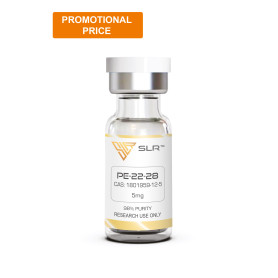
PE-22-28 - 5mg
€29.00

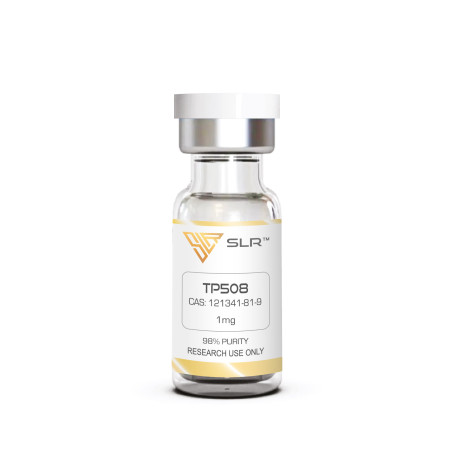


TP508 is a 23–amino acid investigational regenerative peptide derived from amino acids 508–530 of human prothrombin. It has been studied for its ability to stimulate tissue repair by reversing endothelial dysfunction, promoting angiogenesis and revascularization, attenuating inflammation, and reducing apoptosis. Human studies have reported improved healing of diabetic foot ulcers and distal radius fractures, while animal studies suggest TP508 may stimulate bone regeneration in critical-size defects. Emerging evidence indicates that TP508 may activate tissue-derived stem/progenitor cells, which may contribute to its broad regenerative effects. Additional research has explored TP508 in cardiovascular ischemia models, where it increased perfusion and restored nitric oxide signaling through eNOS activation. TP508 has also been investigated as a potential countermeasure for radiation-induced gastrointestinal injury due to its potential role in supporting intestinal stem cell regeneration.
SPECIFICATIONS
Product Code: TP5001
Sequence: H-Ala-Gly-Tyr-Lys-Pro-Asp-Glu-Gly-Lys-Arg-Gly-Asp-Ala-Cys-Glu-Gly-Asp-Ser-Gly-Gly-Pro-Phe-Val-NH2
Molecular Formula: C97H146N28O36S
Molecular Weight: 2311.4 g/mol
CAS: 121341-81-9
Purity: Technical / Research Grade 98%
Other details: No TFA Salt
Form: Solid
Color: White
Storage temperature: -20°C
Source: Synthetic
Safety classification: Standard handling
DESCRIPTION
TP508 is an investigational regenerative peptide that has attracted growing scientific interest due to its potential role in supporting tissue repair processes across multiple biological systems. Originally developed for research involving the repair of dermal and musculoskeletal tissues, TP508 is a short bioactive peptide derived from the human prothrombin sequence and has been studied for its ability to stimulate regeneration, vascular recovery, and cellular survival mechanisms after injury.
TP508 is a 23–amino acid peptide corresponding to amino acids 508–530 of human prothrombin. It was identified as a high-affinity binding region associated with thrombin’s interaction with specific cellular receptors, particularly those found on fibroblasts and other repair-related cell populations. Because thrombin signaling plays a role in wound healing and tissue remodeling, TP508 has been investigated as a targeted peptide capable of initiating tissue repair responses without acting as a clotting factor itself.
Due to its effects on vascular function, inflammation, and tissue regeneration, TP508 has become a peptide of significant interest in regenerative medicine research, especially in models involving impaired healing, ischemic injury, and cellular damage caused by metabolic or environmental stress.
Biological role and regenerative relevance
Tissue injury triggers a complex cascade involving inflammation, immune signaling, vascular remodeling, extracellular matrix restructuring, and activation of resident repair cells. In many chronic conditions, this healing cascade becomes impaired, resulting in slow or incomplete tissue regeneration. Examples include diabetic wounds, ischemic vascular disease, bone fractures with delayed healing, and radiation-induced tissue damage.
TP508 has been studied as a peptide capable of supporting multiple components of the repair process simultaneously. Unlike compounds that target only inflammation or only blood vessel growth, TP508 has been described as having a broader regenerative profile, potentially influencing endothelial recovery, angiogenesis, and cellular survival pathways.
Because the peptide originates from prothrombin-related biology, it has also been studied for its interaction with tissue repair pathways associated with thrombin signaling, particularly in fibroblast-mediated regeneration processes.
Mechanism of action
TP508 is believed to initiate tissue repair by interacting with a subset of thrombin-associated receptors on the surface of cells involved in regeneration, including fibroblasts and endothelial-related cell types. This receptor interaction is thought to activate intracellular signaling pathways that promote tissue restoration and functional recovery.
Research suggests that TP508 supports regeneration through multiple mechanisms, including:
These combined mechanisms are significant because tissue regeneration is rarely dependent on a single pathway. Effective recovery often requires coordinated restoration of blood flow, suppression of excessive inflammation, and stimulation of local cell proliferation.
Skin repair and diabetic wound healing research
One of the most important areas of TP508 investigation involves impaired dermal healing, particularly in diabetic conditions. Diabetic wounds are characterized by reduced vascular perfusion, impaired immune response, excessive inflammation, and poor extracellular matrix remodeling. These factors contribute to chronic ulcers and delayed closure.
In human clinical research settings, TP508 has been reported to significantly improve healing of diabetic foot ulcers, suggesting that it may enhance tissue repair processes even in conditions of compromised regeneration capacity. Because diabetic wounds represent one of the most challenging clinical healing environments, these findings have supported interest in TP508 as a regenerative peptide relevant to chronic wound models.
Musculoskeletal regeneration and fracture repair
TP508 has also been investigated for its effects on musculoskeletal repair, including bone healing and fracture recovery. Bone regeneration requires a coordinated interaction between osteogenic cells, vascular growth, and extracellular matrix remodeling. In cases of impaired bone healing, fracture recovery can be slow and incomplete.
In clinical trial settings, TP508 has been associated with improved healing of distal radius fractures. In animal studies, TP508 has also been reported to stimulate bone regeneration in critical-size defects, where spontaneous bone repair would normally not occur without intervention. These findings suggest that TP508 may influence osteogenic recovery pathways and enhance tissue regeneration capacity in skeletal structures. Because bone repair is highly dependent on vascularization, TP508’s angiogenic properties may contribute significantly to its musculoskeletal effects.
Stem/progenitor cell activation and regenerative signaling
A particularly important discovery in TP508 research is its reported ability to influence stem and progenitor cell populations. Recent studies have suggested that TP508 may target tissue-derived progenitor cells and stimulate their proliferation. Stem/progenitor cells are essential for tissue renewal because they serve as a reservoir for regeneration, replacing damaged cells and supporting long-term tissue restoration. If TP508 enhances activation or expansion of these cell populations, this could explain many of its broad regenerative effects across multiple tissue types.
This mechanism is significant because regenerative medicine increasingly focuses on activating endogenous repair capacity rather than simply reducing inflammation or supporting symptom relief.
Cardiovascular ischemia and endothelial dysfunction research
TP508 has been described as an angiogenic tissue repair peptide and has been investigated for potential cardiovascular applications, particularly in models of chronic myocardial ischemia. Ischemic tissue damage is strongly associated with reduced blood flow, impaired oxygen delivery, endothelial dysfunction, and progressive loss of functional tissue integrity.
In porcine models of chronic myocardial ischemia, TP508 has been reported to significantly increase perfusion in ischemic regions and improve functional measures such as myocardial wall thickening. These findings suggest that TP508 may enhance revascularization and improve functional recovery in tissues suffering from chronic blood flow impairment.
A major aspect of ischemic pathology is endothelial dysfunction, which involves reduced nitric oxide signaling, impaired vasodilation, and increased vascular inflammation. Nitric oxide (NO) is a critical signaling molecule required for vascular relaxation, microcirculation regulation, and endothelial homeostasis. Research suggests that TP508 may reverse ischemia-related endothelial dysfunction by restoring NO-mediated vasodilation and increasing nitric oxide synthase activity. In experimental models, TP508 has been associated with increased expression of endothelial nitric oxide synthase (eNOS), increased NO production, and improved vascular responsiveness.
Cellular studies: eNOS activation and nitric oxide signaling
In cultured human endothelial cells, TP508 has been reported to stimulate eNOS activation, increase NO production, and prevent hypoxia-induced downregulation of eNOS. These findings suggest that TP508 may function as a vascular-support peptide capable of preserving endothelial signaling even under low oxygen stress.
Because endothelial dysfunction contributes to many cardiovascular and metabolic disorders—including hypertension-related vascular disease, ischemic heart conditions, and microvascular complications—TP508 has become a peptide of interest in broader vascular regeneration research.
Radiation-induced gastrointestinal injury research
Another significant research direction involves the potential role of TP508 in radiation exposure models. Radiation injury can severely damage rapidly dividing tissues, particularly the gastrointestinal tract. The intestinal crypts contain stem cell populations responsible for continuous renewal of intestinal epithelium, and radiation-induced crypt destruction can lead to fatal gastrointestinal syndrome.
Because TP508 has been associated with stimulation of progenitor/stem cell proliferation, it has been hypothesized that TP508 may support regeneration of intestinal crypt structures after radiation injury. This may help reduce mortality and mitigate severe gastrointestinal damage following high-dose radiation exposure.
For this reason, TP508 has been discussed as a potential post-exposure medical countermeasure in research exploring radiation-related tissue injury, including scenarios involving nuclear incidents.
Inflammation reduction and apoptosis control
In multiple models, TP508 has been associated with attenuation of inflammatory signaling and reduction of apoptosis. Excess inflammation can impair healing by damaging surrounding tissues and preventing proper regeneration. Similarly, apoptosis contributes to loss of functional cells, accelerating degeneration.
By reducing inflammatory burden and limiting apoptosis, TP508 may help preserve tissue structure during injury and create a more favorable environment for regeneration. These mechanisms are considered relevant in a broad range of conditions, including diabetic tissue injury, ischemic disease, chronic wounds, and radiation-related cellular damage.
Research perspective
TP508 is widely regarded as a promising regenerative peptide because it appears to influence multiple components of the healing cascade, including vascular restoration, inflammation control, apoptosis reduction, and activation of stem/progenitor cells. Its origin as a prothrombin-derived peptide fragment gives it a unique biological relevance in tissue repair signaling.
Research across dermal healing, bone regeneration, ischemic cardiovascular recovery, and radiation injury models suggests that TP508 may function as a systemic tissue repair peptide capable of restoring regenerative capacity in environments where healing is normally compromised.
REFERENCES
All information presented above is derived from in vitro experiments, animal studies, and other preclinical research models. These data are intended solely for basic scientific investigation of biological mechanisms and do not imply any therapeutic, diagnostic, preventive, or clinical use in humans or animals.
S. Freyberg et al., "Thrombin peptide (TP508) promotes adipose tissue-derived stem cell proliferation via PI3 kinase/Akt pathway" [PubMed]
J.T. Ryaby et al., "Thrombin peptide TP508 stimulates cellular events leading to angiogenesis, revascularization, and repair of dermal and musculoskeletal tissues" [PubMed]
H. Wang et al., "Thrombin peptide (TP508) promotes fracture repair by up-regulating inflammatory mediators, early growth factors, and increasing angiogenesis" [PubMed]
A. Naldini et al., "The thrombin peptide, TP508, enhances cytokine release and activates signaling events" [PubMed]
L.E. Sower et al., "Thrombin peptide, TP508, induces differential gene expression in fibroblasts through a nonproteolytic activation pathway" [PubMed]
A.M. Norfleet et al., "Thrombin peptide, TP508, stimulates angiogenic responses in animal models of dermal wound healing, in chick chorioallantoic membranes, and in cultured human aortic and microvascular endothelial cells" [PubMed]
A.M. Norfleet et al., "Thrombin peptide TP508 accelerates closure of dermal excisions in animal tissue with surgically induced ischemia" [PubMed]
T.W. Fossum et al., "TP508 (Chrysalin) reverses endothelial dysfunction and increases perfusion and myocardial function in hearts with chronic ischemia" [PubMed]
B.O.Pazdrak et al., "Thrombin peptide TP508 stimulates rapid nitric oxide production in human endothelial cells" [PubMed]
C. Kantara et al., "Novel regenerative peptide TP508 mitigates radiation-induced gastrointestinal damage by activating stem cells and preserving crypt integrity" [PubMed]
DISCLAIMER
This product is intendend for lab research and development use only. These studies are performed outside of the body. This product is not medicines or drugs and has not been approved by the FDA or EMA to prevent, treat or cure any medical condition, ailment or disease. Bodily introduction of any kind into humans or animals is strictly forbidden by law. This product should only be handled by licensed, qualified professionals.
All product information provided on this website is for informational and educational purposes only.
| Image | Ref. | Unit price | Weight | Avail. | Buy |
|---|---|---|---|---|---|
| TP5001 | €170.00 Discount by quantity 10+ €139.40 –18% 20+ €122.40 –28% 50+ €105.40 –38% 100+ €93.50 –45% 200+ €85.00 –50% | 0.000000 kg |  | |
| Total: 0,0 All prices with tax included. | |||||
Product is available Product is no longer in stock
 Product is no in stock, but is allowed to be back-ordered