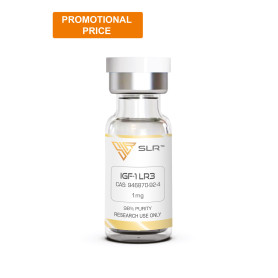
IGF-1 LR3 - 1mg
€57.00

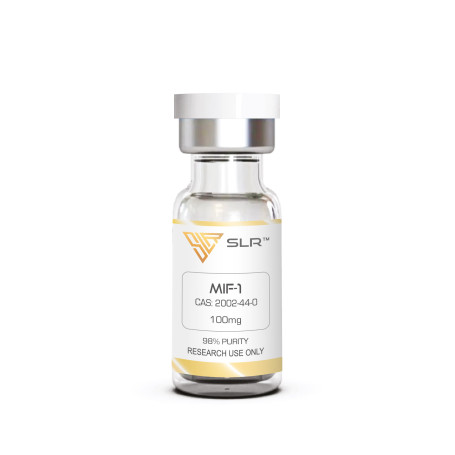

MIF-1 (Melanocyte-Inhibiting Factor 1) has been investigated for its role in central nervous system signaling and neuronal regulation. Scientific studies have examined MIF-1 in relation to multiple biological processes associated with brain function, neurochemical balance, and cellular resilience. Research has primarily focused on MIF-1 in the context of the following areas:
Neurotransmitter Modulation: Associated with the regulation of dopamine and serotonin signaling pathways involved in motor function and mood-related processes.
Neuroplasticity: Linked to mechanisms that support synaptic plasticity relevant to learning and memory in experimental research.
Neuroprotective Activity: Studied for its involvement in cellular pathways that help protect neurons from oxidative and inflammatory stress.
Neuroregenerative Processes: Investigated for its role in mechanisms related to neuronal repair and cellular renewal in research models of neural injury.
Mood-Related Signaling: Explored for its influence on neurochemical pathways associated with emotional regulation and stress responses.
Cognitive Function: Associated in experimental settings with processes relevant to memory, attention, and higher-order cognitive performance.
Neurodegenerative Research: Examined in studies focused on biological pathways involved in neurodegenerative conditions and age-related neural changes.
SPECIFICATIONS
Product Code: MI1100
Sequence: Pro-Leu-Gly
Molecular Formula: C13H24N4O3
Molecular weight: 284,36 g/mol
CAS: 2002-44-0
Purity: Technical / Research Grade ≥98%
Other details: No TFA Salt
Form: Lyophilized powder
Color: White
Storage temperature: -20°C
Source: Synthetic
Safety classification: Standard handling
DESCRIPTION
Melanocyte-Inhibiting Factor 1 (MIF-1) is a short peptide that has been extensively studied in experimental and preclinical research due to its relevance in central nervous system biology. MIF-1 is a tripeptide composed of the amino acids L-proline, L-leucine, and L-glycine, arranged in the sequence Pro-Leu-Gly. It was originally identified for its ability to inhibit melanocyte-stimulating hormone activity; however, subsequent research has revealed that MIF-1 is involved in a broader range of physiological and neurobiological processes. Experimental findings have associated MIF-1 with modulation of mood-related pathways, cognitive function, and neuronal protection, making it a peptide of interest in neurological and neuropsychiatric research.
Effects on the Nervous System
MIF-1 has been shown in research models to exert notable effects on the nervous system, particularly through its interaction with neurotransmitter signaling pathways. Experimental evidence indicates that MIF-1 can influence both dopaminergic and serotonergic systems. By interacting with dopamine receptors, MIF-1 appears to modulate dopaminergic signaling, a process relevant to motor coordination, motivation, and emotional regulation. In addition, its interaction with serotonin-related pathways has been explored in studies examining mood regulation. Together, these modulatory effects suggest a role for MIF-1 in maintaining neurochemical balance within the central nervous system under experimental conditions.
Effects on the Brain
Within the brain, MIF-1 has demonstrated relevance in studies focused on neuroplasticity and neuronal integrity. Research suggests that MIF-1 is capable of crossing the blood–brain barrier, allowing it to interact directly with neural tissue. Experimental observations have associated MIF-1 with enhanced synaptic plasticity, a fundamental process underlying learning, memory formation, and adaptive brain function. In addition, MIF-1 has been studied for its potential neuroprotective properties, including its association with reduced neuronal damage in models involving oxidative stress and neuroinflammatory challenges. These findings have positioned MIF-1 as a molecule of interest in research related to brain resilience and long-term neural maintenance.
Other Effects on Neuroregeneration, Mood Regulation, and Cognitive Function
MIF-1 has also been investigated for its involvement in neuroregenerative processes. Experimental studies suggest that it may support mechanisms related to neuronal repair and cellular renewal, which are relevant in models of neural injury and age-related neurological decline. In the context of mood regulation, MIF-1’s interaction with dopaminergic and serotonergic pathways has been examined in research models addressing emotional balance and stress-related behaviors.
Cognitive function is another area of active investigation. By influencing neuroplasticity and supporting neuronal integrity, MIF-1 has been associated in experimental settings with processes related to memory, attention, and information processing. These combined effects have contributed to scientific interest in MIF-1 as a modulator of higher-order brain functions.
Research Relevance in Degenerative Conditions
The diverse biological activities associated with MIF-1 have made it a peptide of interest in research exploring neurodegenerative conditions. In experimental models related to Parkinson’s disease, MIF-1’s interaction with dopaminergic signaling and neuronal protection pathways has been examined in relation to motor and neural function. In Alzheimer’s disease research models, MIF-1 has been studied for its association with neuroregenerative and anti-inflammatory mechanisms relevant to cognitive decline. Additionally, its effects on mood-related pathways have been explored in studies addressing the psychological and behavioral aspects often associated with neurodegenerative disorders.
Conclusion
MIF-1 is a small peptide with broad relevance in neuroscience research. Its documented interactions with neurotransmitter systems, association with neuroplasticity, involvement in neuroregenerative processes, and relationship to neuronal protection have positioned it as a valuable molecule for experimental investigation. Ongoing research continues to explore the mechanisms through which MIF-1 influences central nervous system function and its potential relevance in studies of neurodegeneration, mood regulation, and cognitive processes.
REFERENCES
All observations described above originate from in vitro systems, animal studies, or other preclinical experimental models. They are intended solely to support basic research into molecular, cellular, and physiological mechanisms and do not imply therapeutic, diagnostic, or preventive applications in humans or animals.
R.S. Khan et al., "Brain Activation by Peptide Pro-Leu-Gly-NH(2) (MIF-1)" [PubMed]
J.M. Lee et al., "Cyclo(Leu-Gly) has opposite effects on D-2 dopamine receptors in different brain areas" [PubMed]
M. Gonce et al., "Physiological trials with MIF-I in Parkinson's disease" [PubMed]
A. Carolei et al., "MIF (melanocyte-stimulating hormone release-inhibiting factor) and Parkinson's disease" [PubMed]
L.G. Miller et al., "MIF-1 and Tyr-MIF-1 augment GABA-stimulated benzodiazepine receptor binding" [PubMed]
DISCLAIMER
This product is intendend for lab research and development use only. These studies are performed outside of the body. This product is not medicines or drugs and has not been approved by the FDA or EMA to prevent, treat or cure any medical condition, ailment or disease. Bodily introduction of any kind into humans or animals is strictly forbidden by law. This product should only be handled by licensed, qualified professionals.
All product information provided on this website is for informational and educational purposes only.
| Image | Ref. | Unit price | Weight | Avail. | Buy |
|---|---|---|---|---|---|
| MI1100 | €168.00 Discount by quantity 10+ €134.40 –20% 20+ €117.60 –30% 50+ €104.16 –38% 100+ €94.08 –44% 200+ €84.00 –50% | 0.000000 kg |  | |
| Total: 0,0 All prices with tax included. | |||||
Product is available Product is no longer in stock
 Product is no in stock, but is allowed to be back-ordered