FOLLISTATIN-344 - 1mg
€120.00

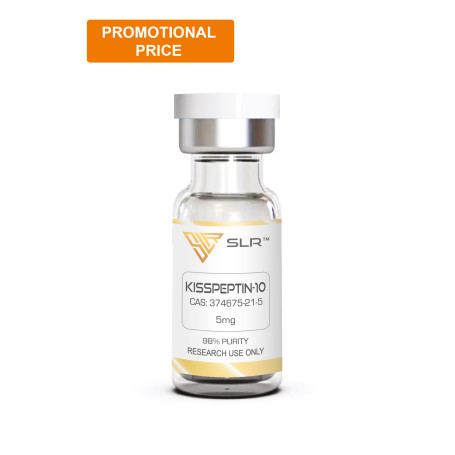

Kisspeptin is a naturally occurring peptide in humans that has been extensively studied for its role in hormonal signaling associated with puberty and reproductive function. In research settings, it has also been linked to regulatory processes involving renal function, angiogenesis, testosterone modulation, and mood- and behavior-related neural pathways. The peptide has been identified in the brain and has been investigated for its association with mechanisms that limit tumor development and metastatic progression in experimental models. Of particular scientific interest is kisspeptin’s ability to influence gonadotropin-releasing hormone (GnRH) signaling, positioning it as a key regulator within the neuroendocrine system. Additional research suggests that kisspeptin may be involved in biological processes relevant to aging and age-associated functional changes.
SPECIFICATIONS
Product Code: KI1005
Sequence: YNWNSFGLRF (Modifications: Phe-10 = C-terminal amide)
Molecular Formula: C63H83N17O14
Molecular Weight: 1302.4 g/mol
CAS: 374675-21-5
Purity: Technical / Research Grade 98%
Other details: No TFA Salt
Form: Lyophilized powder
Color: White
Storage temperature: -20°C
Source: Synthetic
Safety classification: Standard handling
DESCRIPTION
Kisspeptin is a peptide that plays a central role in the regulation of hormone secretion related to human reproduction, primarily—but not exclusively—through mechanisms located in the brain. Scientific interest has focused on understanding how kisspeptin influences sex-related behaviors, including motivation and sexual drive, as well as its relationship with testosterone regulation, within physiological and neuroendocrine research models.
It has long been recognized in experimental literature that kisspeptin may influence processes related to the growth and dissemination of malignant cells. The peptide’s involvement in vascular development and vascular function has been proposed as a possible mechanism underlying its observed effects on metastatic behavior in cellular and animal models.
Kisspeptin has been shown to influence circulating testosterone levels indirectly through modulation of luteinizing hormone (LH) and follicle-stimulating hormone (FSH). These effects appear to be sex-specific. In research settings, kisspeptin has been associated with increased testosterone levels in males, while exhibiting minimal effects on testosterone levels in females. In one study, six male participants received an intravenous administration of a kisspeptin derivative, resulting in a marked increase in plasma testosterone levels within 90 minutes. Additional studies have shown that certain kisspeptin analogs can modify LH pulse frequency in males, suggesting a role in fine-tuning the normal pulsatile release of sex hormones. Administration of kisspeptin-10 in healthy males produced a rapid, dose-dependent increase in circulating LH levels, accompanied by a corresponding rise in testosterone. These effects have been attributed to kisspeptin-10–mediated enhancement of LH pulsatility. At higher experimental dosages, continuous LH secretion has been observed, likely due to rapid pulsatile activity that obscures discrete pulses. These findings have positioned kisspeptin and its analogs as molecules of interest in research exploring reproductive physiology and hormone regulation.
It has also been well established that kisspeptin neurons are sensitive to an individual’s energy status. Both significant undernutrition and overnutrition have been shown to impair the ability of kisspeptin neurons to stimulate gonadotropin-releasing hormone (GnRH) production. Research suggests that abrupt alterations in energy balance may lead to fertility impairments in both males and females through mechanisms involving kisspeptin signaling.
While the sensitivity of kisspeptin synthesis and release to energy balance has been known for some time, emerging evidence indicates that kisspeptin itself may also participate in the regulation of energy homeostasis. This conclusion is supported by studies in mice with genetic deletion of the kisspeptin receptor (Kiss1r), which displayed increased adiposity and reduced energy expenditure. Further investigation revealed the presence of kisspeptin receptors in both brown adipose tissue and white adipose tissue, supporting a bidirectional relationship between kisspeptin signaling and metabolic regulation.
Approximately two decades ago, research demonstrated that kisspeptin could markedly reduce melanoma cell dissemination in experimental models, with reductions in metastatic spread reported to be as high as 95%. This effect has been attributed to inhibition of cancer cell migration. Subsequent studies have observed altered—often reduced—kisspeptin expression levels in various metastatic cancer types, including breast, bladder, gastrointestinal, prostate, pancreatic, ovarian, skin, and thyroid cancers, suggesting a broader association between kisspeptin signaling and disease progression.
The wide functional diversity of kisspeptin has contributed to growing research interest in its role within oncology-focused studies. According to scientific commentary, including work referenced by Dr. Floriana Morgillo, kisspeptin has been proposed as a molecule that may influence metastatic processes across multiple organs, potentially reducing disease burden and interacting with existing therapeutic strategies in experimental contexts.
In early 2020, an additional line of investigation identified a potential association between kisspeptin, melatonin, and cancer-related processes. In this study, mice exposed to differing light-dark cycles exhibited significant differences in melatonin and kisspeptin levels. Animals exposed to light displayed elevated kisspeptin levels and reduced melatonin, whereas animals kept in darkness showed the opposite pattern. Following injection of melanoma cells, tumor growth rates and tumor volumes were higher in the light-exposed group. Metastatic outcomes were not evaluated. Although the precise relationship between melatonin and kisspeptin in tumor-related processes remains unclear, the findings suggest an interaction between these signaling systems.
Certain kisspeptin analogs have also been shown to influence brain regions involved in memory consolidation. Experimental evidence indicates that kisspeptin signaling may contribute to neuronal mechanisms underlying information storage. This has generated interest in kisspeptin and its analogs as tools for studying learning processes and cognitive impairments associated with hereditary or chronic conditions.
Because reproduction and emotional regulation are closely linked—much like energy status and reproduction—researchers have examined how kisspeptin influences mood and behavior. In one study, kisspeptin was administered to 29 healthy heterosexual males and compared with placebo. Functional imaging revealed increased limbic brain activity in participants receiving kisspeptin, accompanied by enhanced indicators of desire, reward-seeking behavior, and overall mood. These findings suggest that kisspeptin may play a role in integrating emotional, motivational, and reproductive neural circuits.
Although the precise role of kisspeptin in renal physiology is not fully understood, research suggests it may be connected to the peptide’s broader involvement in vascular development and tissue response to injury. Animal studies in cardiovascular research indicate that kisspeptin may exert differential effects across vascular beds, contributing to regulation of vasoconstriction and, in some contexts, cardiac output. Its influence on angiogenesis and vascular function may link renal and cardiovascular effects with its observed role in limiting tumor cell dissemination.
REFERENCES
All observations described above originate from in vitro systems, animal studies, or other preclinical experimental models. They are intended solely to support basic research into molecular, cellular, and physiological mechanisms and do not imply therapeutic, diagnostic, or preventive applications in humans or animals.
T. Ly et al., "KISS1 in metastatic cancer research and treatment: potential and paradoxes" [PubMed]
V. Ciaramella et al., "Antitumor efficacy of Kisspeptin in human malignant mesothelioma cells" [PMC]
Campbell J.L. Harter et al., "The role of kisspeptin neurons in reproduction and metabolism" [PubMed]
E. Gibula-Tarlowska et al., "Kissorphin improves spatial memory and cognitive flexibility impairment induced by ethanol treatment in the Barnes maze task in rats" [PubMed]
J.T. George et al., "Kisspeptin-10 is a potent stimulator of LH and increases pulse frequency in men" [PubMed]
E.J. Mead et al., "Kisspeptins: a multifunctional peptide system with a role in reproduction, cancer and the cardiovascular system" [PubMed]
A.N. Comnicos et al., "Kisspeptin modulates sexual and emotional brain processing in humans" [PubMed]
W.S. Dhillo et al., "Kisspeptin-54 Stimulates the Hypothalamic-Pituitary Gonadal Axis in Human Males" [The Journal of Clinical Endocrinology & Metabolism]
P. Pazarci et al., "The effects of daylight exposure on melatonin levels, Kiss1 expression, and melanoma formation in mice" [PubMed]
M. Bhattacharya et al., "Kisspeptin: beyond the brain" [PubMed]
DISCLAIMER
This product is intendend for lab research and development use only. These studies are performed outside of the body. This product is not medicines or drugs and has not been approved by the FDA or EMA to prevent, treat or cure any medical condition, ailment or disease. Bodily introduction of any kind into humans or animals is strictly forbidden by law. This product should only be handled by licensed, qualified professionals.
All product information provided on this website is for informational and educational purposes only.

| Image | Ref. | Unit price | Weight | Avail. | Buy |
|---|---|---|---|---|---|
| KI1005 | €22.00 Discount by quantity 10+ €18.70 –15% 20+ €15.84 –28% 50+ €13.20 –40% 100+ €11.44 –48% 200+ €9.90 –55% | 0.050000 kg |  | |
| Total: 0,0 All prices with tax included. | |||||
Product is available Product is no longer in stock
 Product is no in stock, but is allowed to be back-ordered