
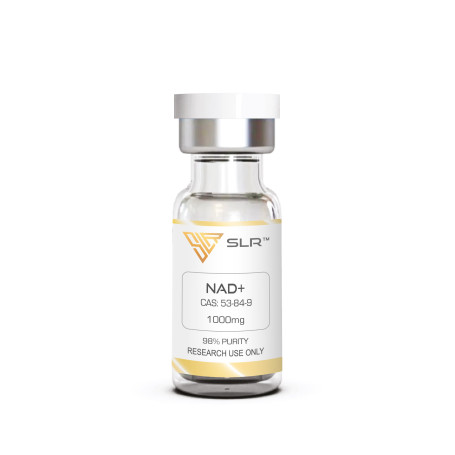
NAD+ - 1000mg
NAD⁺ (Nicotinamide Adenine Dinucleotide) is a central cellular coenzyme essential for mitochondrial energy production and redox balance. It plays a critical role in oxidative phosphorylation, ATP synthesis, and metabolic regulation. NAD⁺ also functions as a substrate for sirtuins and PARP enzymes, contributing to DNA repair, cellular stress resistance, and longevity-associated pathways. Due to its involvement in bioenergetics and cellular resilience, NAD⁺ is widely studied in mitochondrial function, metabolic regulation, and age-related biological processes
Description
SPECIFICATION
Product Code: NA1000
NAD+ (lyophilized)
Molecular Formula: C21H27N7O14P2
Molecular Weight: 663.43 g/mol
CAS: 53-84-9
Purity: Technical / Research Grade 98%
Other details: N/A
Form: Lyophilized powder
Color: White
Storage temperature: -20°C
Source: Synthetic
Safety classification: Standard handling
DESCRIPTION
NAD+, short for nicotinamide adenine dinucleotide, represents the oxidized form of NADH and functions as a fundamental intracellular support molecule. Its primary role is to shuttle electrons between biochemical reactions, thereby facilitating cellular energy transfer. In addition to its role in redox reactions, NAD+ participates in enzyme activation and deactivation, post-translational protein modification, and intracellular as well as extracellular signaling. As an extracellular signaling molecule, NAD+ has been observed to be released by neurons in multiple tissues, including blood vessels, the bladder, the large intestine, and specific neuronal populations within the brain.
NAD+ is involved in a wide range of cellular processes related to metabolism and signaling, and research has demonstrated its importance in energy conversion, DNA repair mechanisms, immune-related pathways, and circadian rhythm regulation. However, NAD+ levels are sensitive to both disease states and age-related decline. The following biological activities associated with NAD+ have been shown to decrease as a consequence of natural aging-related reductions in NAD+ availability:
- NAD+ activates sirtuins and poly(ADP-ribose) polymerases (PARPs), enzymes involved in DNA repair and inflammatory signaling. Sirtuins are also implicated in the lifespan-associated benefits observed during caloric restriction.
- NAD+ regulates the expression of the protein PGC-1α, which supports neurons and other central nervous system cells by protecting them from oxidative stress. Research in mouse models suggests this mechanism may be associated with improved memory performance, particularly in aging subjects.
- In animal studies, NAD+ contributes to the protection of blood vessels from age-related calcification and atherosclerotic plaque accumulation. Some investigations have even demonstrated partial reversal of age-related aortic dysfunction.
- Mice supplemented with NAD+ have exhibited increased metabolic rate and improved lean body mass.
- Older mice receiving NAD+ supplementation have shown enhanced muscle strength and endurance.
- NAD+ has been linked to extracellular signaling functions, particularly involving smooth muscle, and may play a role in gastrointestinal activity. This signaling role is also thought to contribute to observed blood-pressure-related effects.
One of the hallmark features of the aging process is the decline in both mitochondrial quality and activity. Mitochondria are responsible for energy production required for functions such as neuronal firing, digestion, and muscle contraction. Age-associated mitochondrial dysfunction has been linked to cellular senescence, chronic inflammation, and altered stem cell behavior, all of which impair tissue repair and recovery in later life.
According to Nuo Sun of the National Heart, Lung, and Blood Institute at the National Institutes of Health, mitochondria should not be viewed solely as bioenergetic factories. Instead, they function as intracellular signaling platforms, regulators of innate immunity, and modulators of stem cell activity. Sun explains that mitochondrial dysfunction is closely associated with senescence, inflammation, and age-related declines in tissue and organ function. Preserving mitochondrial integrity is therefore considered a foundational step in understanding how aging processes may be slowed, mitigated, or potentially reversed.
Emerging research suggests that some aspects of age-related mitochondrial decline may be reversible through NAD+ supplementation. David Sinclair of Harvard University, known for his work on aging biology, highlighted the importance of NAD+ in cellular aging research. In 2013, Sinclair reported that administration of an NAD+ precursor restored mitochondrial function in the skeletal muscle of aged mice, shifting mitochondrial performance toward a more youthful state.
Additional research published in 2013 demonstrated that reduced NAD+ levels induce a pseudohypoxic cellular state, disrupting communication between the nucleus and mitochondria. When aged mice were supplemented with NAD+, mitochondrial signaling and function were restored.
NAD+ is believed to counteract certain aging mechanisms in part by activating SIRT1 within the nucleus, thereby preventing the typical age-related decline in SIRT1 gene expression. SIRT1 encodes sirtuin-1, an enzyme that regulates proteins involved in metabolism, stress responses, longevity-associated pathways, and inflammation.
Muscle aging represents another domain in which NAD+ has been extensively studied. In mouse models, age-related muscle decline occurs in two distinct phases. Phase one involves reduced oxidative phosphorylation due to decreased expression of mitochondrial genes. Phase two involves dysfunction of oxidative phosphorylation genes in both the nucleus and mitochondria. Research indicates that phase one is reversible with NAD+ supplementation. Mice receiving NAD+ maintained mitochondrial function and did not progress to phase two. However, once phase two had developed, NAD+ intervention was no longer effective. These findings suggest that early NAD+ support may be critical for long-term mitochondrial maintenance. Notably, exercise training produces effects similar to NAD+ supplementation by preserving PGC-1α signaling and mitochondrial integrity. Exercise-induced increases in PGC-1α have been shown to protect mitochondrial DNA, oxidative proteins, and angiogenic factors throughout the lifespan.
Insights into NAD+ biology are particularly relevant to neurodegenerative conditions such as Alzheimer’s and Huntington’s diseases. A 2019 review summarized current understanding of NAD+ in central nervous system function. In mouse models of Huntington’s disease, NAD+ demonstrated neuroprotective properties by improving mitochondrial function and reducing reactive oxygen species (ROS) production, which accelerates cellular damage and aging.
Research has also explored potential synergy between NAD+ supplementation and PARP inhibitors. While PARP activation is essential for DNA repair, excessive PARP activity can deplete cellular energy reserves and trigger programmed cell death.
In mouse models of Parkinson’s disease, NAD+ supplementation has been associated with protection against motor deficits and dopaminergic neuron loss in the substantia nigra. These findings suggest that NAD+ may influence disease-related pathways rather than solely addressing symptoms.
Further research indicates that NAD+ supplementation may reduce disease risk by limiting neurotransmitter degradation and decreasing reliance on protein precursors for NAD+ synthesis. NAD+ can be synthesized via the kynurenine pathway, which degrades tryptophan—a critical amino acid required for neurotransmitter and protein synthesis. Imbalances in this pathway have been linked to neurodegenerative and psychiatric conditions. Ongoing research is evaluating whether NAD+ supplementation can mitigate kynurenine pathway dysregulation.
The anti-inflammatory role of NAD+ is influenced by NAMPT, an enzyme often overexpressed in inflammatory states and certain cancers. NAMPT activation increases inflammation as NAD+ levels decline. Researchers are exploring NAMPT inhibition alongside NAD+ supplementation as strategies for inflammation modulation.
The NAD+/NAMPT relationship is also considered a key contributor to insulin resistance associated with obesity. Chronic inflammation lowers NAD+ levels, disrupts adiponectin signaling, increases circulating fatty acids, and interferes with insulin-mediated glucose uptake, ultimately contributing to metabolic dysfunction.
The depletion of NAD+ by drugs and alcohol has been recognized for decades and is associated with nutritional deficiencies, mood changes, and cognitive impairment. Early research in the 1960s explored NAD+ supplementation to counteract these effects. More recent studies suggest that combining NAD+ with specific amino acid complexes may support addiction recovery by reducing cravings, stress, and anxiety, while improving overall well-being.
Animal studies provide strong evidence that NAD+ supplementation may mitigate mitochondrial aging; however, further human clinical research is required. The potential of NAD+ in neurodegenerative disease research, metabolic disorders, and aging biology continues to be actively investigated. Emerging data suggest that NAD+, alone or in combination with other interventions, may represent a promising avenue for future research into aging and age-associated disease mechanisms.
REFERENCES
All observations described above originate from in vitro systems, animal studies, or other preclinical experimental models. They are intended solely to support basic research into molecular, cellular, and physiological mechanisms and do not imply therapeutic, diagnostic, or preventive applications in humans or animals.
N. Braidy et al., "NAD+ therapy in age-related degenerative disorders: A benefit/risk analysis" [PubMed]
A.J. Covarrubias et al., "NAD+ metabolism and its roles in cellular processes during ageing" [PubMed]
L.E. Navas et al., "NAD+ metabolism, stemness, the immune response, and cancer" [PubMed]
J.M. Campbell, "Supplementation with NAD+ and Its Precursors to Prevent Cognitive Decline across Disease Contexts" [PubMed]
M. Abdellatif et al., "NAD+ Metabolism in Cardiac Health, Aging, and Disease" [PubMed]
N.J. Conlon, "The Role of NAD+ in Regenerative Medicine" [PubMed]
R. Zapata-Pérez et al., "NAD+ homeostasis in human health and disease" [PubMed]
DISCLAIMER
This product is intendend for lab research and development use only. These studies are performed outside of the body. This product is not medicines or drugs and has not been approved by the FDA or EMA to prevent, treat or cure any medical condition, ailment or disease. Bodily introduction of any kind into humans or animals is strictly forbidden by law. This product should only be handled by licensed, qualified professionals.
All product information provided on this website is for informational and educational purposes only.
Data sheet
Customers who bought this product also bought:
BPC-157 - 5mg, 10mg
REJUV RESEARCH 1
MELANOTAN 1 - 10mg
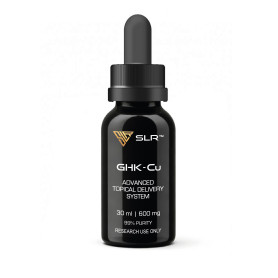
GHK-CU - 30ml/600mg
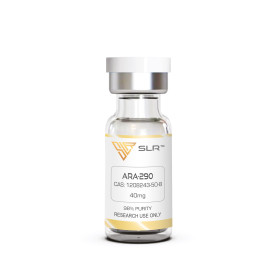
ARA-290 - 40mg
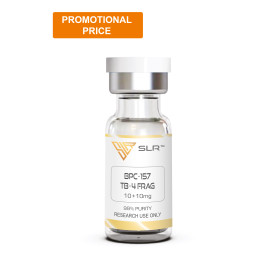
| Image | Ref. | Unit price | Weight | Avail. | Buy |
|---|---|---|---|---|---|
 | NA1000 | €64.90 Discount by quantity 10+ €57.11 –12% 20+ €49.32 –24% 50+ €41.54 –36% 100+ €36.34 –44% 200+ €32.45 –50% | 0.000000 kg |  | |
| Total: 0,0 All prices with tax included. | |||||
Product is available Product is no longer in stock
 Product is no in stock, but is allowed to be back-ordered