LL-37-10mg
€79.90

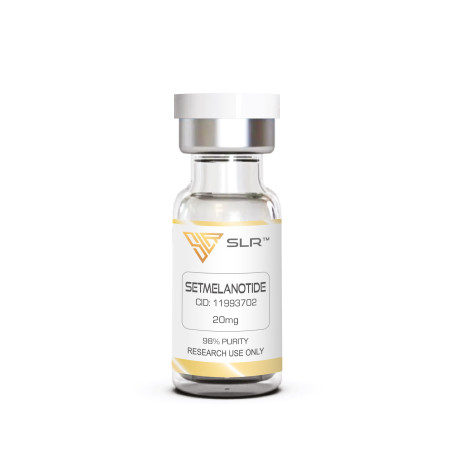

Setmelanotide is a synthetic peptide and potent melanocortin 4 receptor (MC4R) agonist studied for its ability to restore satiety signaling in rare genetic disorders such as POMC deficiency, PCSK1 deficiency, and leptin-related pathway dysfunction. It works by directly activating MC4R, bypassing upstream genetic defects that impair production of α-MSH and other satiety mediators. Research suggests that setmelanotide has significantly higher potency than endogenous α-MSH and may reduce hyperphagia and support weight loss in genetically defined obesity conditions. Its activity may be influenced by its atypical bitopic binding behavior, interacting with both orthosteric and putative allosteric receptor sites, potentially contributing to improved receptor specificity and a distinct signaling profile compared to earlier MC4R agonists.
SPECIFICATIONS
Product Code: SET020
Sequence: Ac-Arg-Cys(1)-D-Ala-His-D-Phe-Arg-Trp-Cys(1)-NH2
with Disulfide bonds into a ring as explained below: N2-acetyl-L-arginyl-L-cysteinyl-D-alanyl-L-histidyl-D-phenylalanyl-L-arginyl-L-tryptophyl-L-cysteinamide, cyclic (2-8)-disulfide
Molecular Formula: C49H68N18O9S2
Molecular Weight: 1117.31 g/mol
PubChem CID: 11993702
Purity: Technical / Research Grade 98%
Other details: No TFA Salt
Form: Lyophilized powder
Color: White
Storage temperature: -20°C
Source: Synthetic
Safety classification: Standard handling
DESCRIPTION
Setmelanotide is a synthetic peptide that has gained significant scientific attention due to its role in the regulation of appetite and energy balance through the melanocortin pathway. It is recognized in the biomedical literature as one of the first targeted therapeutic approaches developed for rare genetic disorders involving impaired satiety signaling, including deficiencies affecting pro-opiomelanocortin (POMC), proprotein convertase subtilisin/kexin type 1 (PCSK1), and leptin-related pathways. These conditions are characterized by severe dysregulation of hunger signaling, often leading to early-onset hyperphagia and significant weight gain.
The discovery and development of setmelanotide is considered an important milestone in the study of genetically driven obesity, because it addresses a specific molecular signaling defect rather than acting through generalized appetite suppression mechanisms. This peptide is therefore of major interest in research related to energy homeostasis, metabolic disorders, neuroendocrine regulation, and obesity linked to genetic dysfunction.
Biological role of the melanocortin pathway
The melanocortin system plays a central role in the regulation of appetite, satiety, and long-term energy balance. Within the hypothalamus, two major neuronal populations influence feeding behavior:
These neuronal systems respond to peripheral metabolic signals such as insulin, leptin, and gastrointestinal hunger signals, integrating information about energy status and nutrient availability.
Under normal physiological conditions, hunger signals such as ghrelin stimulate orexigenic pathways, leading to increased appetite. One of the key mediators in this pathway is agouti-related protein (AgRP), a peptide that inhibits satiety signaling by blocking melanocortin receptor activation. This inhibition reduces the feeling of fullness and promotes continued food intake.
In contrast, satiety signals such as insulin and leptin stimulate anorexigenic pathways. These pathways lead to the production of melanocortin peptides derived from POMC, particularly α-melanocyte stimulating hormone (α-MSH). α-MSH is a natural ligand that activates melanocortin receptors and contributes to appetite suppression and energy expenditure regulation.
MC4R as a key satiety receptor
A central element in this system is the melanocortin 4 receptor (MC4R), a receptor strongly associated with appetite control and metabolic regulation. MC4R is a G-protein coupled receptor (GPCR) composed of approximately 332 amino acids, expressed primarily in the central nervous system. Activation of MC4R is generally associated with increased satiety signaling, reduced hunger drive, and improved energy balance.
Because MC4R plays such a pivotal role in appetite regulation, it has long been considered an attractive target for pharmacological research. Earlier efforts to develop MC4R agonists, such as LY2112688, demonstrated that activation of this receptor could support weight loss. However, some early compounds were associated with unwanted cardiovascular effects, including increased blood pressure and heart rate, which limited their clinical potential.
Genetic deficiencies affecting satiety signaling
Certain rare genetic disorders disrupt the melanocortin pathway upstream of MC4R. In these cases, the body may be unable to produce adequate satiety signals, resulting in persistent hunger regardless of food intake.
One of the most important examples is POMC deficiency, where the precursor protein required for generating α-MSH is absent or dysfunctional. Another is PCSK1 deficiency, caused by mutations in the gene encoding proprotein convertase 1/3 (PC1/3). PC1/3 is an enzyme involved in processing and activating multiple peptide hormone precursors, including those required for melanocortin signaling.
Both orexigenic and anorexigenic neurons contain PC1/3, and its role in the activation cleavage of peptide hormone precursors makes it essential for normal neuroendocrine regulation. When PC1/3 is impaired, the production of functional satiety peptides may be reduced, leading to severe appetite dysregulation.
Additionally, leptin-related signaling is crucial for communicating fat mass and energy storage to the hypothalamus. Leptin normally stimulates anorexigenic neurons and supports the production of α-MSH. When leptin signaling is deficient, the melanocortin pathway becomes underactivated, contributing to persistent hunger and metabolic imbalance.
Mechanism of action of setmelanotide
Setmelanotide is a peptide that functions as an agonist of MC4R, meaning it binds to and activates the receptor directly. It is structurally related to POMC-derived melanocortin peptides and was designed to replicate and enhance the natural satiety signaling normally produced by α-MSH.
According to research, setmelanotide is a significantly more potent MC4R agonist than endogenous α-MSH, with experimental findings suggesting an approximately 20-fold increase in potency and an EC50 value around 0.27 nM. This high receptor potency allows setmelanotide to strongly stimulate MC4R signaling even when upstream biological pathways are impaired.
By directly activating MC4R, setmelanotide can bypass upstream genetic defects that normally prevent satiety signals from reaching the receptor. In research and clinical contexts, this mechanism has been associated with reduced hyperphagia, improved appetite control, and significant reductions in body weight in certain genetically defined populations.
Receptor selectivity and signaling behavior
One of the most important scientific discussions surrounding setmelanotide involves its receptor-binding behavior and why it appears to differ from earlier MC4R agonists in terms of cardiovascular effects.
MC4R is a GPCR, and GPCR activation can trigger multiple downstream intracellular signaling cascades. Earlier MC4R agonists may have activated a broader range of signaling pathways, including those potentially linked to cardiovascular stimulation. This may explain why some early compounds caused increases in blood pressure and heart rate.
Setmelanotide has been described as an atypical bitopic ligand, meaning it interacts with both the classical orthosteric binding site and an additional putative allosteric site on the receptor. In GPCR pharmacology, orthosteric binding refers to the primary receptor site used by endogenous ligands, while allosteric binding involves less conserved secondary sites that can influence receptor behavior and signaling selectivity.
This bitopic binding profile may allow setmelanotide to achieve both strong receptor affinity and improved specificity, potentially influencing which intracellular signaling pathways are preferentially activated. Although the exact explanation for its distinct physiological profile remains under investigation, receptor selectivity and signaling bias are considered plausible contributing mechanisms.
Pathologies and clinical research relevance
Setmelanotide has been primarily studied in the context of rare genetic disorders associated with severe early-onset obesity and hyperphagia, particularly:
Other melanocortin-pathway disorders involving impaired satiety signaling
Because these conditions are fundamentally driven by disrupted neuroendocrine regulation, setmelanotide is considered a precision approach targeting the central satiety receptor rather than acting through general appetite suppression.
In addition, setmelanotide has contributed to broader research interest in melanocortin signaling as a target for metabolic disease, including investigations into energy expenditure, body weight regulation, and the neurobiology of hunger.
Research perspective
Setmelanotide is considered a major development in the study of genetic obesity and appetite regulation because it provides a direct molecular approach to restoring melanocortin signaling. Its strong potency as an MC4R agonist and its unusual binding profile as a bitopic ligand have positioned it as a valuable tool in research exploring GPCR signaling selectivity, metabolic regulation, and satiety pathway dysfunction.
While the full range of its downstream physiological effects continues to be investigated, setmelanotide has helped clarify the critical importance of MC4R signaling in controlling hunger and body weight, especially in individuals with inherited pathway defects.
REFERENCES
All information presented above is derived from in vitro experiments, animal studies, and other preclinical research models. These data are intended solely for basic scientific investigation of biological mechanisms and do not imply any therapeutic, diagnostic, preventive, or clinical use in humans or animals.
K. Clément et al., "Efficacy and safety of setmelanotide, an MC4R agonist, in individuals with severe obesity due to LEPR or POMC deficiency: single-arm, open-label, multicentre, phase 3 trials" [PubMed]
A. Markham "Setmelanotide: First Approval" [PubMed]
A.M. Haqq et al., "Efficacy and safety of setmelanotide, a melanocortin-4 receptor agonist, in patients with Bardet-Biedl syndrome and Alström syndrome: a multicentre, randomised, double-blind, placebo-controlled, phase 3 trial with an open-label period" [PubMed]
P- Khunen et al., "Quality of life outcomes in two phase 3 trials of setmelanotide in patients with obesity due to LEPR or POMC deficiency" [PubMed]
H. Pressley et al., "Setmelanotide: A Novel Targeted Treatment for Monogenic Obesity" [PubMed]
Tinh-Hai Collet et al., "Evaluation of a melanocortin-4 receptor (MC4R) agonist (Setmelanotide) in MC4R deficiency" [PubMed]
R. Haws et al., "Effect of setmelanotide, a melanocortin-4 receptor agonist, on obesity in Bardet-Biedl syndrome" [PubMed]
D.H. Ryan "Next Generation Antiobesity Medications: Setmelanotide, Semaglutide, Tirzepatide and Bimagrumab: What do They Mean for Clinical Practice?" [PubMed]
M.M. Hammad et al., "Structural analysis of setmelanotide binding to MC4R variants in comparison to wild-type receptor" [PubMed]
A. Kamermans et al., "Setmelanotide, a Novel, Selective Melanocortin Receptor-4 Agonist Exerts Anti-inflammatory Actions in Astrocytes and Promotes an Anti-inflammatory Macrophage Phenotype" [PubMed]
B.A. Falls et al., "Insights into the Allosteric Mechanism of Setmelanotide (RM-493) as a Potent and First-in-Class Melanocortin-4 Receptor (MC4R) Agonist To Treat Rare Genetic Disorders of Obesity through an in Silico Approach" [PubMed]
N. Reininghaus et al., "A Setmelanotide-like Effect at MC4R Is Achieved by MC4R Dimer Separation" [PubMed]
M. Tauber "Setmelanotide for controlling weight and hunger in Bardet-Biedl syndrome" [PubMed]
R.M. Haws et al., "The efficacy and safety of setmelanotide in individuals with Bardet-Biedl syndrome or Alström syndrome: Phase 3 trial design" [PMC]
M. Wabitsch et al., "Understanding the Patient Experience of Hunger and Improved Quality of Life with Setmelanotide Treatment in POMC and LEPR Deficiencies" [PubMed]
DISCLAIMER
All infor This product is intendend for lab research and development use only. These studies are performed outside of the body. This product is not medicines or drugs and has not been approved by the FDA or EMA to prevent, treat or cure any medical condition, ailment or disease. Bodily introduction of any kind into humans or animals is strictly forbidden by law. This product should only be handled by licensed, qualified professionals.
All product information provided on this website is for informational and educational purposes only.


| Image | Ref. | Unit price | Weight | Avail. | Buy |
|---|---|---|---|---|---|
| SET020 | €79.00 Discount by quantity 10+ €67.15 –15% 20+ €56.88 –28% 50+ €47.40 –40% 100+ €41.08 –48% 200+ €35.55 –55% | 0.000000 kg |  | |
| Total: 0,0 All prices with tax included. | |||||
Product is available Product is no longer in stock
 Product is no in stock, but is allowed to be back-ordered