MELANOTAN 1 - 10mg
€31.00

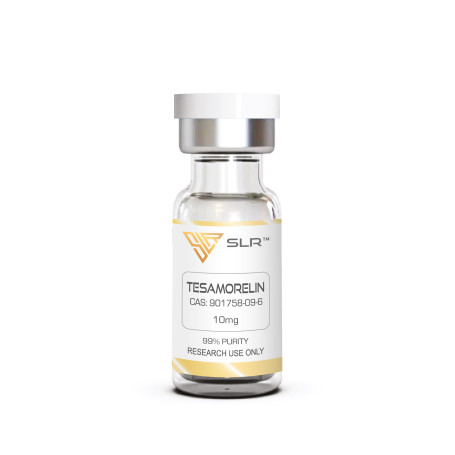

Tesamorelin is a synthetic Growth Hormone-Releasing Hormone (GHRH) analogue designed for improved stability and extended activity in human plasma. By activating pituitary GHRH receptors, it stimulates endogenous growth hormone release while maintaining physiological pulsatile secretion patterns. This leads to increased downstream IGF-1 production, supporting anabolic and metabolic regulation. Research suggests tesamorelin may reduce visceral adipose tissue, support lean muscle maintenance, and influence metabolic health. It has been extensively studied in HIV-associated lipodystrophy, where reductions in abdominal fat have been associated with improved body composition markers and potential improvements in lipid-related cardiovascular risk factors. Emerging research also suggests possible relevance in cognitive aging and neuroendocrine function, as GH and IGF-1 pathways contribute to synaptic plasticity and brain metabolism.
SPECIFICATIONS
Product Code: TES010
Sequence: Trans-3-Hexenoyl-Tyr-Ala-Asp-Ala-Ile-Phe-Thr-Asn-Ser-Tyr-Arg-Lys-Val-Leu-Gly-Gln-Leu-Ser-Ala-Arg-Lys-Leu-Leu-Gln-Asp-Ile-Met-Ser-Arg-Gln-Gln-Gly-Glu-Ser-Asn-Gln-Glu-Arg-Gly-Ala-Arg-Ala-Arg-Leu-NH2
Molecular Formula: C221H366N72O67S
Molecular Weight: 5132.77 g/mol
CAS: 901758-09-6
Purity: Technical / Research Grade 99%
Other details: No TFA Salt
Form: Lyophilized powder
Color: White
Storage temperature: -20°C
Source: Synthetic
Safety classification: Standard handling
DESCRIPTION
Tesamorelin is a synthetic peptide developed as an analogue of Growth Hormone-Releasing Hormone (GHRH), designed to preserve the physiological activity of endogenous GHRH while improving stability and duration of action in human plasma. It belongs to the same research category as other GHRH analogs such as sermorelin, GRF (1-29), and CJC-1295, all of which are studied for their ability to stimulate the pituitary gland to produce and release growth hormone (GH) through natural endocrine signaling pathways.
Tesamorelin has been structurally modified through the addition of a stabilizing moiety, such as trans-3-hexenoic acid, which increases its resistance to enzymatic breakdown and extends its functional half-life. Because it stimulates GH release through normal endocrine mechanisms, tesamorelin is often discussed as a peptide that maintains the body’s pulsatile growth hormone secretion, which is considered an important feature of physiological GH regulation. This characteristic has made tesamorelin a compound of interest in research focused on aging-related hormonal decline, body composition changes, metabolic dysfunction, and cognitive aging.
Hormonal decline and age-related physiology
As individuals age, the body undergoes gradual endocrine changes, including declining production of growth hormone and related anabolic signaling molecules. This decline is associated with changes in metabolism, body composition, and physical performance. Many aging individuals experience increased fat accumulation, particularly in the abdominal region, along with progressive loss of lean muscle mass and reduced recovery capacity.
In parallel, cognitive function may decline over time, contributing to reduced mental performance and decreased quality of life. Because growth hormone influences multiple physiological systems—including musculoskeletal tissue, fat metabolism, cardiovascular function, and neurobiology—GHRH analogs such as tesamorelin have become a topic of growing research interest in the field of metabolic aging and endocrine restoration.
Mechanism of action
Tesamorelin functions by binding to GHRH receptors located on somatotroph cells in the anterior pituitary gland. This receptor activation stimulates intracellular signaling cascades that promote synthesis and release of growth hormone in a pattern that resembles natural physiological secretion.
Once growth hormone is released into circulation, it exerts systemic effects both directly and indirectly through stimulation of Insulin-like Growth Factor 1 (IGF-1) production. IGF-1 is a key downstream mediator of GH signaling and is strongly associated with anabolic and regenerative processes, including protein synthesis, muscle tissue maintenance, bone remodeling, and cellular repair mechanisms.
A key feature of tesamorelin is that it supports GH release while allowing endogenous regulatory feedback loops to remain active. This is considered relevant because the body normally regulates GH output through negative feedback, preventing excessive hormone exposure. In research discussions, this is often viewed as a potential advantage compared to approaches that bypass physiological control.
Restoring growth hormone signaling
Growth hormone production declines gradually with age, contributing to multiple age-associated changes such as increased fat accumulation, reduced lean tissue, decreased bone density, and impaired metabolic efficiency. Tesamorelin has been investigated as a peptide capable of restoring GH signaling closer to youthful physiological patterns by stimulating the pituitary gland to increase GH output.
By supporting GH secretion and increasing downstream IGF-1 levels, tesamorelin may influence cellular regeneration capacity, tissue metabolism, and recovery processes. These effects have positioned tesamorelin as a peptide of interest in research related to aging biology, metabolic regulation, and endocrine function maintenance.
Visceral fat and metabolic health
One of the most widely discussed research topics regarding tesamorelin involves its potential effects on visceral adipose tissue, which is the fat stored around internal organs. Visceral fat is metabolically active and strongly associated with increased risk of metabolic syndrome, insulin resistance, fatty liver disease, and cardiovascular complications.
Research suggests that increased growth hormone signaling may enhance lipolysis and fat oxidation, promoting the breakdown of stored triglycerides into fatty acids for energy utilization. Tesamorelin has been studied for its ability to reduce visceral fat while having relatively limited impact on subcutaneous fat, which is considered a notable feature of its metabolic profile.
This selective reduction of visceral fat is considered relevant because ectopic fat deposition in organs such as the liver and heart is associated with inflammation and metabolic risk. Therefore, compounds that reduce visceral adiposity may contribute to improved systemic metabolic balance.
Lean muscle preservation and anabolic signaling
Another major physiological function associated with GH and IGF-1 signaling is the support of lean muscle mass. Age-related muscle loss, known as sarcopenia, is a major contributor to frailty and reduced physical performance. Growth hormone influences muscle metabolism by supporting amino acid uptake, protein synthesis, and tissue repair processes.
Tesamorelin has been studied in contexts involving GH deficiency and age-associated anabolic decline, where restoring GH signaling may contribute to improved muscle function and preservation of lean body mass. Research suggests that GH-related interventions may support muscular strength recovery, and this has contributed to interest in tesamorelin as a peptide relevant to musculoskeletal aging research.
Cognitive function and neuroendocrine research
Beyond its metabolic and anabolic effects, tesamorelin has been investigated for its potential influence on cognitive function. Growth hormone and IGF-1 are increasingly recognized as neuroactive factors that influence synaptic plasticity, neuronal metabolism, and brain repair pathways.
Research suggests that tesamorelin may improve certain cognitive parameters in older individuals and in populations with mild cognitive impairment. Improvements have been described in areas such as memory recall, problem-solving performance, focus, and planning ability. These findings have contributed to scientific interest in tesamorelin as a peptide potentially relevant to neuroendocrine aging.
Some studies have proposed that GHRH analogs may influence brain chemistry by modulating neurotransmitter balance and altering markers such as GABA-related activity and myo-inositol levels. Because neurodegenerative disorders often involve metabolic decline and neurotransmitter dysregulation, these mechanisms have positioned tesamorelin within a growing field of research focused on dementia-related metabolic signaling.
HIV-associated lipodystrophy and cardiovascular risk research
Tesamorelin is particularly well known in research and clinical contexts for its investigation in HIV-associated lipodystrophy, a condition characterized by abnormal fat distribution, often involving increased visceral fat accumulation. Lipodystrophy is associated with increased cardiovascular risk due to metabolic disruption, inflammation, and altered lipid profiles.
Studies have reported that tesamorelin can reduce visceral fat in HIV-positive individuals, with associated reductions in waist circumference and improved body fat distribution markers. In these studies, tesamorelin was also linked to increased IGF-1 levels, while glucose-related parameters were reported to remain relatively stable in many participants.
Research has also suggested that reductions in visceral fat may correlate with improvements in lipid markers such as triglycerides and non-HDL cholesterol. Since cardiovascular disease risk is elevated in HIV populations, particularly in individuals receiving highly active antiretroviral therapy (HAART), tesamorelin has become a significant research compound in efforts aimed at improving metabolic health and reducing long-term cardiovascular risk.
Because ectopic fat accumulation is linked to systemic inflammation, reductions in visceral adipose tissue may also contribute to lower inflammatory burden, indirectly supporting cardiovascular health.
Peripheral nerve recovery research
Peripheral nerve damage can occur due to trauma, metabolic disorders such as diabetes, or surgical complications. Because nerve regeneration is limited and slow, peripheral neuropathy often leads to persistent sensory impairment and reduced motor function.
Research suggests that growth hormone signaling and IGF-1 pathways may support nerve repair processes by enhancing neuronal metabolism and promoting regeneration-related signaling. Tesamorelin and other GHRH analogs have therefore been investigated in experimental contexts related to peripheral nerve injury, where endocrine modulation may support improved recovery capacity.
Comparison to other GH-stimulating peptides
Tesamorelin is often compared to other peptides that increase GH release, including compounds that act through different endocrine receptors. For example, some peptides stimulate GH release by activating ghrelin-related pathways, while GHRH analogs act directly through pituitary GHRH receptors.
Because these pathways operate through different physiological mechanisms, research discussions have explored whether different GH-stimulating peptides may produce complementary effects. However, tesamorelin remains distinct in that it primarily supports GH release through the natural GHRH signaling axis and is designed to preserve physiological secretion rhythms.
Research perspective
Tesamorelin is widely considered a significant GHRH analogue due to its enhanced stability and its ability to stimulate endogenous growth hormone release in a physiologically regulated pattern. Its relevance spans multiple research areas, including aging-related hormonal decline, visceral fat metabolism, lean muscle preservation, cognitive aging, and metabolic dysfunction.
Its extensive investigation in HIV-associated lipodystrophy has also positioned tesamorelin as an important compound in metabolic research focused on reducing ectopic fat accumulation and associated cardiovascular risk markers.
REFERENCES
All information presented above is derived from in vitro experiments, animal studies, and other preclinical research models. These data are intended solely for basic scientific investigation of biological mechanisms and do not imply any therapeutic, diagnostic, preventive, or clinical use in humans or animals.
J. Falutz et al., "Effects of tesamorelin, a growth hormone-releasing factor, in HIV-infected patients with abdominal fat accumulation: a randomized placebo-controlled trial with a safety extension" [PubMed]
J. Falutz et al., "Effects of tesamorelin (TH9507), a growth hormone-releasing factor analog, in human immunodeficiency virus-infected patients with excess abdominal fat: a pooled analysis of two multicenter, double-blind placebo-controlled phase 3 trials with safety extension data" [PubMed]
S. Dhillon "Tesamorelin: a review of its use in the management of HIV-associated lipodystrophy" [PubMed]
J.E. Lake et al., "Tesamorelin improves fat quality independent of changes in fat quantity" [PubMed]
Bethesda "Tesamorelin" [National Institute of Diabetes and Digestive and Kidney Diseases]
Y. Wang et al., "Tesamorelin, a human growth hormone releasing factor analogue" [PubMed]
J. Falutz et al., "Long-term safety and effects of tesamorelin, a growth hormone-releasing factor analogue, in HIV patients with abdominal fat accumulation" [PubMed]
B. Tomlinson "Drug evaluation: tesamorelin, a synthetic human growth hormone releasing factor" [PubMed]
S. Teng et al., "Impact of Tesamorelin, a Growth Hormone-Releasing Factor (GRF) Analogue, on the Pharmacokinetics of Simvastatin and Ritonavir in Healthy Volunteers" [PubMed]
T.L. Stanley et al., "Effect of tesamorelin on visceral fat and liver fat in HIV-infected patients with abdominal fat accumulation: a randomized clinical trial" [PubMed]
L.M. Spooner et al., "Tesamorelin: a growth hormone-releasing factor analogue for HIV-associated lipodystrophy" [PubMed]
S. Adrian et al., "The Growth Hormone Releasing Hormone Analogue, Tesamorelin, Decreases Muscle Fat and Increases Muscle Area in Adults with HIV" [PubMed]
H. Makimura et al., "The effects of tesamorelin on phosphocreatine recovery in obese subjects with reduced GH" [PubMed]
L.T. Fourman et al., "Visceral fat reduction with tesamorelin is associated with improved liver enzymes in HIV" [PubMed]
H. Makimura et al., "Metabolic Effects of a Growth Hormone-Releasing Factor in Obese Subjects with Reduced Growth Hormone Secretion: A Randomized Controlled Trial" [PubMed]
DISCLAIMER
This product is intendend for lab research and development use only. These studies are performed outside of the body. This product is not medicines or drugs and has not been approved by the FDA or EMA to prevent, treat or cure any medical condition, ailment or disease. Bodily introduction of any kind into humans or animals is strictly forbidden by law. This product should only be handled by licensed, qualified professionals.
All product information provided on this website is for informational and educational purposes only.
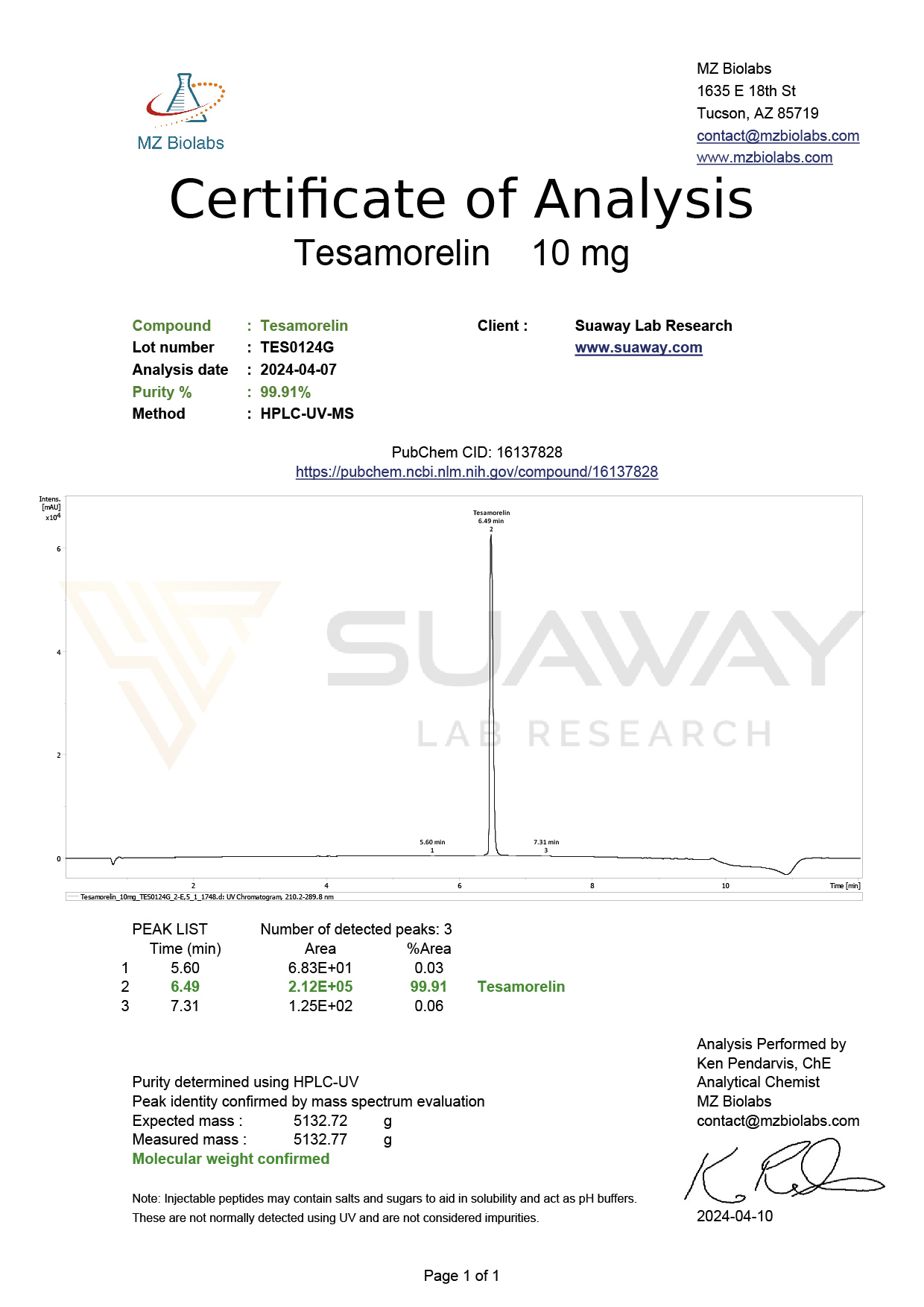
INDEPENDENT THIRD-PARTY CERTIFICATE OF ANALYSIS SHOWN FOR REFERENCE PURPOSES. ANALYTICAL RESULTS MAY VARY SLIGHTLY BETWEEN BATCHES.

| Image | Ref. | Unit price | Weight | Avail. | Buy |
|---|---|---|---|---|---|
| TES010 | €69.00 Discount by quantity 10+ €60.72 –12% 20+ €55.20 –20% 50+ €48.30 –30% 100+ €42.78 –38% 200+ €37.95 –45% | 0.000000 kg |  | |
| Total: 0,0 All prices with tax included. | |||||
Product is available Product is no longer in stock
 Product is no in stock, but is allowed to be back-ordered