OVAGEN - 40mg
€119.00

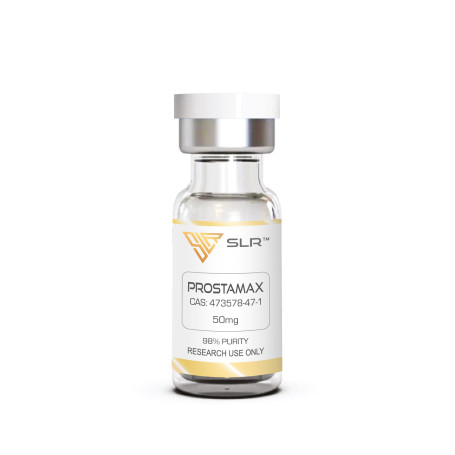

Prostamax is a prostate-derived bioregulatory peptide that has been investigated in experimental models of chronic aseptic prostate inflammation. Research data indicate that Prostamax is associated with a reduction in inflammatory markers, modulation of tissue remodeling processes, and prevention of fibrotic and atrophic changes within prostate tissue in animal-based studies. Additionally, experimental observations suggest an influence on functional activity parameters in studied models. Comparative research has shown that Prostamax demonstrates a broader and more sustained biological activity in prostate-focused experimental systems when compared with other commonly used prostatotropic research compounds of peptide origin.
SPECIFICATIONS
Product Code: PRO050
Sequence: H-Lys-Glu-Asp-Pro-OH
Molecular Formula: C20H33N5O9
Molecular Weight: 487.5 g/mol
CAS: 473578-47-1
Purity: Technical / Research Grade 98%
Other details: No TFA Salt
Form: Lyophilized powder
Color: White
Storage temperature: -20°C
Source: Synthetic
Safety classification: Standard handling
DESCRIPTION
The prostate gland is the origin of several highly prevalent urological disorders, including prostatitis and benign prostatic hyperplasia (BPH). In these conditions, the prostate becomes inflamed, congested, or enlarged, often leading to chronic symptoms that significantly impair quality of life. Prostatitis, in particular, is defined as inflammation or infection of the prostate gland and represents one of the most common diagnoses in adult men. While acute prostatitis may present with systemic manifestations such as fever, chills, malaise, and rigors, the majority of cases evolve into chronic forms that are notoriously difficult to treat and are associated with frequent relapses despite appropriate standard medical therapy.
Chronic prostatitis, whether bacterial or abacterial in nature, is widely prevalent across adult male populations. Histological and clinical observations indicate that inflammatory changes in the prostate are present in nearly all adult men and are commonly identified in prostate biopsies, even in the absence of overt clinical symptoms. Importantly, chronic inflammatory processes are associated with virtually all cases of prostate cancer, suggesting a strong link between long-standing inflammation, tissue remodeling, and malignant transformation. Although many men remain asymptomatic, a substantial subset experience persistent pelvic pain, urinary dysfunction, sexual disturbances, and psychological distress, making chronic prostatitis a potentially debilitating condition.
The diagnosis of chronic prostatitis remains challenging due to the heterogeneity of symptoms, overlap with other pelvic disorders, and limited sensitivity of conventional diagnostic tools. Treatment is equally complex, as many patients respond poorly to antibiotics, anti-inflammatory drugs, or alpha-blockers, particularly in cases where no active bacterial infection is identified. This has prompted growing interest in therapies that target the underlying pathogenic mechanisms rather than focusing exclusively on microbial eradication.
The reported high efficacy of Prostamax in patients with prostatitis has been attributed to its modulatory effects on the core pathogenetic mechanisms involved in prostate inflammation. A central aspect of its activity relates to the restoration of normal hemodynamics within the prostate gland. Impaired blood flow, venous stasis, and microcirculatory dysfunction are considered fundamental contributors to the initiation and persistence of chronic prostatitis. These circulatory disturbances lead to tissue hypoxia, impaired drainage of prostatic secretions, and accumulation of inflammatory mediators, thereby sustaining a chronic inflammatory environment.
In addition to improving prostate microcirculation, Prostamax has demonstrated anti-inflammatory and immunotropic properties that appear to contribute significantly to its therapeutic profile. Hemodynamic dysfunction is not limited to abacterial prostatitis but is also a key factor in the development and progression of both acute and chronic bacterial prostatitis. By improving vascular tone and reducing venous congestion, Prostamax may enhance tissue oxygenation, normalize secretory function, and improve the prostate’s intrinsic defense mechanisms.
Experimental studies have shown that prostate inflammation often begins as an aseptic process, with bacterial involvement developing secondarily in a significant proportion of cases. Approximately one-quarter of patients exhibit bacterial infection already during the acute phase of inflammation. This transition is believed to result from reduced resistance of the prostate gland due to congestion-related factors, including decreased tone of the excretory ducts, urethro-prostatic reflux, and diminished bactericidal properties of prostatic secretions. These changes create a favorable environment for microbial colonization and persistent infection.
In experimental models of both acute and chronic prostatitis, administration of Prostamax at a dose of 0.1 mg per 100 g of body weight for periods ranging from 5 to 10 days produced consistent histological and functional improvements. These effects included a marked reduction in leukocyte infiltration within prostate tissue, indicating attenuation of the inflammatory response. Additionally, Prostamax enhanced the functional activity of the acinar epithelium and eliminated venular thrombosis, suggesting restoration of microvascular integrity. Notably, these benefits were observed in both bacterial and abacterial forms of prostatitis, supporting a mechanism of action that is not solely dependent on antimicrobial activity.
Clinical evaluation further substantiated these experimental findings. A large clinical study involving 307 men aged 18 to 70 years assessed the effects of Prostamax administered intramuscularly at daily doses of 5 mg or 10 mg over a 10-day period. The majority of participants experienced significant clinical improvement, including reduction or complete elimination of pelvic pain and dysuric symptoms. Improvements in sexual function were also commonly reported, highlighting the relevance of prostate inflammation to erectile and ejaculatory disorders.
Importantly, these clinical benefits were not transient. In more than half of the treated patients (55.4%), symptom improvement persisted throughout the entire 6-month follow-up period. Among the 230 patients who initially reported sexual dysfunction, 102 experienced complete recovery, while an additional 96 reported partial improvement. These outcomes suggest a sustained therapeutic effect rather than short-term symptomatic relief.
Subjective improvements were corroborated by objective laboratory and instrumental assessments. Follow-up evaluations demonstrated normalization of prostate size and consistency, reduction in leukocyte counts in urine, ejaculate, and prostate secretions, and measurable improvements in urinary flow parameters. These findings indicate that Prostamax exerts a structural and functional normalizing effect on prostate tissue.
Comparable outcomes have been reported by independent research groups, with some studies documenting clinical improvement in up to 95% of treated patients. The consistency of these results across experimental and clinical settings has positioned prostate-derived peptides such as Prostamax as key therapeutic agents in the management of both bacterial and abacterial prostatitis.
Taken together, the available evidence suggests that Prostamax may serve as an effective therapeutic option either as monotherapy or as part of a combination regimen. Its multifaceted mechanism—encompassing restoration of microcirculation, modulation of inflammatory responses, and support of prostate tissue function—addresses several fundamental aspects of prostatitis pathophysiology, offering a rationale for its observed clinical efficacy.
REFERENCES
All information presented above is derived from in vitro experiments, animal studies, and other preclinical research models. These data are intended solely for basic scientific investigation of biological mechanisms and do not imply any therapeutic, diagnostic, preventive, or clinical use in humans or animals.
В.Х. Хавинсон et al., "Tetrapeptide regulating prostate function, pharmacological agent based on thereof and method of its using" [В.Х. ХавинсонВ.В. МалининЕ.И. Григорьев]
T. Meskhi et al., "The influence of the peptide bioregulator prostamax on heterochromatin of human lymphocytes in situ" [PubMed]
T.G. Borovskaya et al., "Experimental studying of the drug efficiency Prostamax in the therapy of chronic aseptic prostatitis and its complications" [Scientific Research]
T.A. Dzhokhadze et al., "Deheterochromatinization of the chromatin in old age induced by oligopeptide bioregulator (Lys-Glu-Asp-Pro)" [PubMed]
M. Kiladze et al., "Microcalorimetric study of human blood lymphocytes culture at presence of copper, cadmium and prostamax" [PubMed]
V.K. Khavinson et al., "Peptides (Epigenetic Regulators) in the Structure of Rodents with a Long and Short Lifespan" [PubMed]
DISCLAIMER
This product is intendend for lab research and development use only. These studies are performed outside of the body. This product is not medicines or drugs and has not been approved by the FDA or EMA to prevent, treat or cure any medical condition, ailment or disease. Bodily introduction of any kind into humans or animals is strictly forbidden by law. This product should only be handled by licensed, qualified professionals.
All product information provided on this website is for informational and educational purposes only.
| Image | Ref. | Unit price | Weight | Avail. | Buy |
|---|---|---|---|---|---|
| PRO050 | €128.00 Discount by quantity 10+ €108.80 –15% 20+ €102.40 –20% 50+ €76.80 –40% 100+ €66.56 –48% 200+ €57.60 –55% | 0.000000 kg |  | |
| Total: 0,0 All prices with tax included. | |||||
Product is available Product is no longer in stock
 Product is no in stock, but is allowed to be back-ordered