SS-31 - 100mg
€250.00

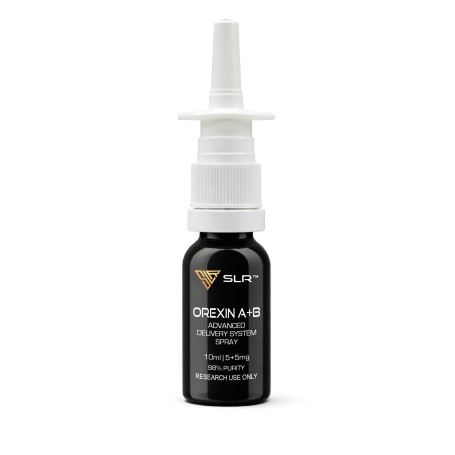

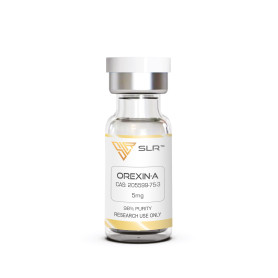
Orexin-A (Hypocretin-1) is a neuropeptide derived from the lateral hypothalamus and plays a central role in sleep–wake regulation, arousal stability, and autonomic balance. It interacts with orexin receptors OXR1 and OXR2 and modulates key neurotransmitter systems including dopamine, norepinephrine, serotonin, and histamine. Experimental research has examined Orexin-A in models of narcolepsy, sleep–wake dysregulation, neuroinflammation, thermoregulation, and autonomic control. Due to its ability to cross the blood–brain barrier, Orexin-A remains a molecule of interest in central nervous system signaling research.
Orexin-B (Hypocretin-2) is a hypothalamic neuropeptide primarily interacting with the orexin receptor OXR2, contributing to sleep–wake homeostasis and arousal regulation. Unlike Orexin-A, Orexin-B exhibits receptor selectivity toward OXR2, making it a valuable tool for receptor-specific signaling studies. Preclinical research has investigated Orexin-B in the context of narcolepsy models, vigilance state regulation, autonomic modulation, and neuroendocrine signaling. Its receptor selectivity provides insight into differential orexin pathway activation in sleep and arousal research.
FRESHLY PREPARED SOLUTION
ADVANCED DELIVERY SYSTEM – CELL PENETRATING PEPTIDE TECHNOLOGY
This product utilizes advanced delivery technology incorporating calibrated cell-penetrating peptide (CPP) systems. The formulation is engineered to support efficient and targeted intracellular delivery of active ingredients, contributing to enhanced transport performance and bioavailability.
SPECIFICATIONS
Product Code: ORAB55S
OREXIN A
Sequence: Glp-Pro-Leu-Pro-Asp-Cys-Cys-Arg-Gln-Lys-Thr-Cys-Ser-Cys-Arg-Leu-Tyr-Glu-Leu-Leu-His-Gly-Ala-Gly-Asn-His-Ala-Ala-Gly-Ile-Leu-Thr-Leu-NH₂
Disulfide Bridges: 6–12; 7–14
Molecular Formula: C152H243N47O44S4
Molecular Weight: 3561.1 g/mol
CAS: 205599-75-3
Purity: Technical / Research Grade ≥98%
OREXIN B
Sequence: RSGPPGLQGRLQRLLQASGNHAAGILTM (Met-28 = C-terminal amide)
Molecular Formula: C123H212N44O35S
Molecular Weight: 2899.36 g/mol
CAS: 205640-91-1
Purity: Technical / Research Grade ≥98%
General Properties (Common)
Other Details: No TFA Salt
Form: Liquid Solution
Color: Clear / Slightly Opalescent
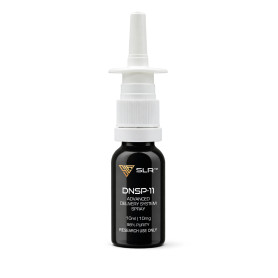
Total Content: 10 mL (5 mg + 5 mg)
Concentration: 500 mcg + 500 mcg per mL
Approximate Sprays per Bottle: ~82
Approximate Peptide per Spray: ~61 mcg + ~61 mcg
Vehicle / Carrier System: Proprietary carrier system
Storage Temperature: 4°C (Do Not Freeze)
Source: Synthetic
Safety Classification: Standard handling
DESCRIPTION
OREXIN A
Orexin neuropeptides were independently identified in 1998 by two research groups. Sakurai and Yanagisawa named them orexin-A and orexin-B due to their initially proposed role in appetite regulation (orexis = appetite). In parallel, de Lecea and Sutcliffe referred to them as hypocretin-1 and hypocretin-2, reflecting their hypothalamic origin and structural similarity to incretin peptides.
Subsequent research demonstrated that orexins exert modest effects on feeding but play a central role in arousal and sleep regulation. Narcolepsy has been strongly associated with the loss of orexin-producing neurons, leading to significant interest in orexin receptor modulation in sleep research.
Orexin-A and orexin-B are produced by neurons in the lateral hypothalamus and regulate wakefulness and arousal. They stimulate brain regions including the raphe nuclei, ventral tegmental area, tuberomammillary nucleus, and locus coeruleus, promoting neurotransmitter release such as dopamine, norepinephrine, serotonin, and histamine. This coordinated activation stabilizes sleep–wake transitions and prevents inappropriate REM intrusion.
Approximately 90% of individuals with narcolepsy and cataplexy exhibit low or undetectable orexin levels in cerebrospinal fluid.
Orexin receptor antagonism has been explored as a mechanism to promote sleep in insomnia research. Orexin receptor 1 (OX1R) and orexin receptor 2 (OX2R) are G protein-coupled receptors central to sleep–wake homeostasis.
Animal studies confirm that activation of orexin pathways increases arousal, whereas inhibition promotes sleep. Orexinergic neurons are functionally opposed by inhibitory GABAergic neurons from the ventrolateral preoptic nucleus (VLPO), demonstrating balanced interplay between arousal and sleep systems.
Orexins also contribute to thermoregulation and metabolic homeostasis. Animal models deficient in orexin signaling exhibit reduced energy expenditure, decreased locomotor activity, and altered autonomic regulation.
OREXIN B
Orexin-B shares functional roles in sleep–wake regulation but exhibits preferential binding affinity toward OXR2. It contributes to arousal stabilization, autonomic modulation, and neuroendocrine signaling.
Receptor distribution is region-specific, with OXR1 predominant in dorsal raphe and hippocampal regions, and OXR2 primarily expressed in basal ganglia structures.
Experimental models suggest involvement of orexin signaling in inflammatory modulation and neuronal response regulation, particularly in cerebral ischemia research.
REFERENCES
All observations described above originate from in vitro systems, animal studies, or other preclinical experimental models. They are intended solely to support basic research into molecular, cellular, and physiological mechanisms and do not imply therapeutic, diagnostic, or preventive applications in humans or animals.
C.B. Calva et al., “Effects of Intranasal Orexin-A (Hypocretin-1) Administration on Neuronal Activation, Neurochemistry, and Attention in Aged Rats” [Frontiers in Aging Neuroscience]
Tao Li et al., “Orexin A alleviates neuroinflammation via OXR2/CaMKKβ/AMPK signaling pathway after ICH in mice” [BMC]
T.E. Scammell et al., “Orexin Receptors: Pharmacology and Therapeutic Opportunities” [PMC]
M. Lang et al., “Structure–Activity Studies of Orexin A and Orexin B at Human Orexin Receptors” [Journal of Medicinal Chemistry]
A. Yamanaka et al., “Orexin Directly Excites Orexin Neurons through Orexin 2 Receptor” [The Journal of Neuroscience]
J.P. Nixon et al., “Distribution of immunoreactive orexin A and B in nocturnal and diurnal rodents” [BMC]
S. Goodrick, “Orexin or hypocretin?” [The Lancet]
M. Mieda et al., “Orexin peptides prevent cataplexy and improve wakefulness in narcolepsy models” [PNAS]
K. Bieganska et al., “Orexin A Suppresses the Growth of Rat C6 Glioma Cells” [Journal of Molecular Neuroscience]
J.E. Digby et al., “Orexin receptor expression in human adipose tissue” [Journal of Endocrinology]
K. Hirota et al., “Orexin A and B evoke noradrenaline release” [British Journal of Pharmacology]
DISCLAIMER
This product is intended for laboratory research and development use only. This product is not a medicine or drug and has not been approved by the FDA or EMA to prevent, treat, or cure any medical condition. Bodily introduction into humans or animals is strictly forbidden by law. This product should only be handled by licensed, qualified professionals.
All product information provided on this website is for informational and educational purposes only.

| Image | Ref. | Unit price | Weight | Avail. | Buy |
|---|---|---|---|---|---|
| ORAB55S | €248.00 Discount by quantity 10+ €203.36 –18% 20+ €178.56 –28% 50+ €153.76 –38% 100+ €136.40 –45% 200+ €124.00 –50% | 0.100000 kg |  | — |
| Total: 0,0 All prices with tax included. | |||||
 Product is available Product is no longer in stock
 Product is no in stock, but is allowed to be back-ordered