RETINALAMIN - 200 mg
€259.00

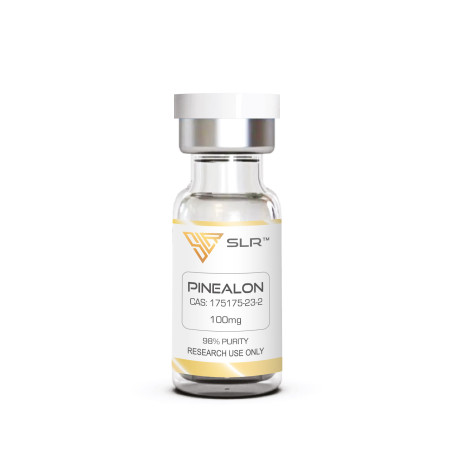

Most peptides exert their biological effects by interacting with cell surface or intracellular receptors. However, a limited number of peptides are capable of binding directly to DNA, thereby influencing fundamental biological processes at the level of gene regulation. Pinealon is one of these bioregulatory peptides. It has demonstrated neuroprotective properties and is considered a promising candidate for research focused on the modulation and management of various neurological conditions. Pinealon is known to affect the central nervous system by influencing behavior while also protecting neurons and other cell types from oxidative damage. One of the most notable characteristics of Pinealon is its ability to cross the cellular membrane, nuclear membrane, and the blood–brain barrier. This unique property helps explain its capacity to interact directly with DNA and regulate gene expression. Pinealon has been associated in research with potential applications including:
Anti-aging effects
Neuronal protection
Modulation of depressive pathways
Research into neurological disorders such as Alzheimer’s disease and Parkinson’s disease
Memory enhancement
Regulation of sleep and circadian rhythms
SPECIFICATIONS
Product Code: PIN100
Sequence: Glu-Asp-Arg
Molecular Formula: C15H26N6O8
Molecular Weight: 418.407 g/mol
CAS: 175175-23-2
Purity: Technical / Research Grade ≥98%
Other Details: No TFA Salt
Form: Lyophilized powder
Color: White
Storage Temperature: -20°C
Source: Synthetic
Safety Classification: Standard handling
DESCRIPTION
Pinealon is a short synthetic tripeptide belonging to the class of peptide bioregulators. It has been investigated for its capacity to influence gene expression through direct interaction with DNA and has been studied in the context of neuronal protection, circadian regulation, and age-related biological processes.
Due to its small molecular size, Pinealon has been hypothesized to cross cellular and nuclear membranes. In vitro studies, including experiments conducted in HeLa cells, demonstrate its ability to penetrate both cytoplasmic and nuclear compartments. This supports a mechanism distinct from classical receptor-mediated signaling, suggesting direct modulation of gene expression.
Anti-Aging and Systemic Modulation
Preclinical research indicates that Pinealon may exhibit anti-aging effects within the central nervous system. Russian studies suggest anabolic activity in neural tissue and modulation of biological aging markers.
Pinealon has also been associated with regulation of irisin expression. Irisin is involved in muscle preservation, fat metabolism, telomere maintenance, and systemic metabolic regulation. Increased circulating irisin levels correlate with telomere length in healthy individuals. Irisin is additionally expressed in the brain, where it supports neuronal differentiation, energy regulation, and hippocampal gene activation related to memory and learning.
Neuronal Protection
Experimental models demonstrate that Pinealon protects neurons against oxidative stress. Studies in fetal and adult rat models show reductions in reactive oxygen species accumulation and neuronal necrosis under hypoxic conditions.
Neuroprotective activity appears to involve modulation of the cell cycle, upregulation of endogenous antioxidant systems, and attenuation of NMDA-mediated excitotoxicity. NMDA excitotoxic signaling is implicated in ischemic stroke, traumatic brain injury, and alcohol withdrawal–related neuronal damage.
Serotonin and Mood-Related Pathways
In cortical neuron cultures, Pinealon has been shown to increase expression of tryptophan hydroxylase via epigenetic mechanisms. Tryptophan hydroxylase is the rate-limiting enzyme in serotonin synthesis. By supporting endogenous serotonin production, Pinealon may influence mood-related pathways in experimental models.
Caspase-3 and Apoptotic Regulation
In rat models of hypoxia and ischemic stroke, Pinealon modulates cytokine signaling and reduces caspase-3 activation, a key executor of apoptosis. Reduced caspase-3 activity has also been observed in cardiac and skin tissue models, where Pinealon appears to support cell proliferation and regenerative processes.
Sleep and Circadian Regulation
Pinealon has been studied for its interaction with the pineal gland and its potential influence on circadian rhythm regulation. Disruption of circadian balance is associated with accelerated aging, impaired cognition, immune dysregulation, and cardiovascular stress. Experimental evidence suggests that Pinealon may support restoration of circadian function following rhythm disturbances such as shift work or long-distance travel.
REFERENCES
All information presented above is derived from in vitro experiments, animal studies, and other preclinical research models. These data are intended solely for basic scientific investigation and do not imply therapeutic, diagnostic, preventive, or clinical use.
L.I. Fedoreyeva et al., “Penetration of short fluorescence-labeled peptides into the nucleus in HeLa cells” [PubMed]
V.N. Meshchaninov et al., “Effect of synthetic peptides on aging of patients with chronic polymorbidity” [PubMed]
V. Khavinson et al., “Short Peptides and Telomere Length Regulator Hormone Irisin” [PubMed]
K.S. Rana et al., “Plasma irisin levels predict telomere length in healthy adults” [PubMed]
A. Arutjiunyan et al., “Pinealon protects the rat offspring from prenatal hyperhomocysteinemia” [PMC]
V. Khavinson et al., “Pinealon increases cell viability by suppression of free radical levels” [PubMed]
L.S. Kozina, “Investigation of antihypoxic properties of short peptides” [PubMed]
V.K. Khavinson et al., “Short Peptides Stimulate Serotonin Expression in Cells of Brain Cortex” [PubMed]
A.M. Mendzheritskii et al., “Regulation of cytokines and caspase-3 activity in hypoxic rat brain” [PubMed]
M. Agosto et al., “Serum Caspase-3 p17 Fragment Is Elevated in Patients With ST-Segment Elevation Myocardial Infarction” [JACC Journal]
M.A. Voicekhovskaya et al., “Effect of bioregulatory tripeptides on skin cell cultures” [PubMed]
A.S. Bashkireva et al., “The peptide correction of neurotic disorders among professional truck-drivers” [PubMed]
DISCLAIMER
This product is intended for laboratory research and development use only. This product is not a medicine or drug and has not been approved by the FDA or EMA to prevent, treat, or cure any medical condition. Bodily introduction into humans or animals is strictly forbidden. This product should only be handled by qualified professionals.
All product information provided on this website is for informational and educational purposes only.
| Image | Ref. | Unit price | Weight | Avail. | Buy |
|---|---|---|---|---|---|
| PIN100 | €245.00 Discount by quantity 10+ €196.00 –20% 20+ €171.50 –30% 50+ €151.90 –38% 100+ €137.20 –44% 200+ €122.50 –50% | 0.000000 kg |  | |
| Total: 0,0 All prices with tax included. | |||||
Product is available Product is no longer in stock
 Product is no in stock, but is allowed to be back-ordered