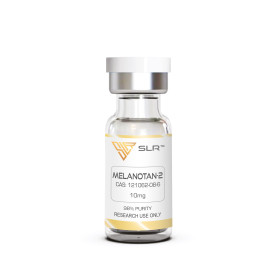
MELANOTAN 2 - 10mg
€28.00

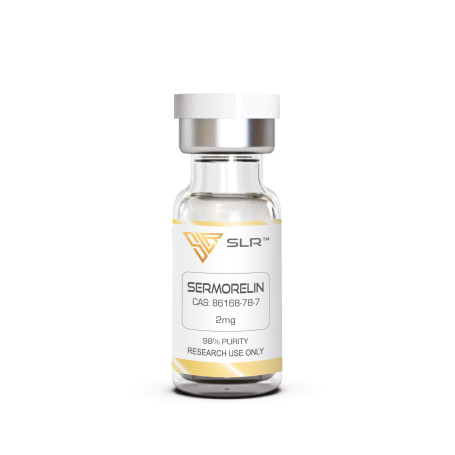

Sermorelin is a synthetic peptide derived from Growth Hormone-Releasing Hormone (GHRH) that stimulates the pituitary gland to increase endogenous growth hormone secretion. By activating GHRH receptors, Sermorelin promotes physiological GH release and enhances downstream IGF-1 production, supporting anabolic and regenerative signaling. Research suggests it may be relevant in studies involving body composition improvement, bone density support, metabolic regulation, and tissue repair. Additional research interest includes potential cardiovascular recovery effects through reduced scar remodeling, neuroprotective support via IGF-1-mediated neuronal resilience, and systemic benefits in chronic inflammation-related conditions. Due to its feedback-regulated mechanism and sustained receptor responsiveness, Sermorelin remains an important peptide in research related to endocrine aging, regeneration, and long-term metabolic health.
SPECIFICATIONS
Product Code: SER002
Sequence: Tyr-DL-Ala-DL-Asp-DL-Ala-DL-xiIle-DL-Phe-DL-xiThr-DL-Asn-DL-Ser-DL-Tyr-DL-Arg-DL-Lys-DL-Val-DL-Leu-Gly-DL-Gln-DL-Leu-DL-Ser-DL-Ala-DL-Arg-DL-Lys-DL-Leu-DL-Leu-DL-Gln-DL-Asp-DL-xiIle-DL-Met-DL-Ser-DL-Arg
Molecular Formula: C149H246N44O42S
Molecular Weight: 3357.933 g/mol
CAS: 516482-86-3
Purity: Technical / Research Grade 98%
Other details: No TFA Salt
Form: Lyophilized powder
Color: White
Storage temperature: -20°C
Source: Synthetic
Safety classification: Standard handling
DESCRIPTION
Sermorelin is a synthetic peptide derived from Growth Hormone-Releasing Hormone (GHRH), designed to mimic the biological activity of the body’s natural hypothalamic signaling peptides. Its primary function is to stimulate the anterior pituitary gland to increase the physiological production and release of growth hormone (GH). Because growth hormone influences multiple metabolic and regenerative processes, Sermorelin has gained interest as a peptide involved in research related to aging biology, tissue regeneration, endocrine function, metabolism, musculoskeletal health, and neurological resilience.
Unlike direct administration of exogenous growth hormone, Sermorelin works upstream, activating the body’s natural endocrine pathways. For this reason, it has been studied as a potentially more physiologically balanced approach for supporting GH-related biological functions, while potentially reducing the risk of excessive GH exposure.
Endocrine role and biological significance
Growth hormone is one of the most important regulatory hormones involved in maintaining tissue repair capacity, metabolic efficiency, and body composition. GH secretion naturally declines with age, a phenomenon sometimes associated with reduced muscle tone, increased fat accumulation, reduced bone density, and slower recovery capacity. Since Sermorelin promotes endogenous GH release, it has attracted attention in research related to age-associated hormonal decline and metabolic slowdown.
The physiological actions stimulated by Sermorelin resemble those of GH, including support for protein synthesis, muscle maintenance, fat metabolism, connective tissue repair, and skeletal remodeling. Many of these effects occur through downstream signaling molecules, particularly Insulin-like Growth Factor 1 (IGF-1), which is produced mainly in the liver and other tissues in response to growth hormone stimulation.
Mechanism of action
Sermorelin functions by binding to GHRH receptors on pituitary somatotroph cells. This interaction stimulates intracellular signaling pathways that trigger pulsatile secretion of growth hormone. Once GH is released, it acts systemically and also stimulates production of IGF-1, which mediates many of GH’s long-term anabolic and regenerative effects.
A key advantage of Sermorelin, according to research discussions, is that its activity is regulated by the body’s own negative feedback mechanisms. This means that GH secretion remains partly controlled by physiological signals, potentially lowering the risk of chronically excessive GH levels compared to direct GH administration.
Another important research point is that Sermorelin is not typically associated with strong tachyphylaxis (loss of response due to receptor downregulation). On the contrary, some evidence suggests that repeated stimulation may support receptor expression and responsiveness over time, which may contribute to sustained activity in long-term endocrine research protocols.
Body composition and metabolic regulation
One of the most well-known effects associated with growth hormone stimulation is the influence on body composition. GH supports fat metabolism by enhancing lipolysis and improving the mobilization of fatty acids from adipose tissue. For this reason, Sermorelin has been investigated in research contexts related to adipose reduction, metabolic syndrome, insulin sensitivity balance, and age-related body recomposition.
At the same time, GH and IGF-1 support muscle metabolism by enhancing amino acid uptake and promoting protein synthesis, which may contribute to improvements in lean mass maintenance. These effects are of particular interest in studies focused on age-related sarcopenia, recovery capacity, and physical performance decline.
Increased bone density and skeletal support
Research has suggested that Sermorelin may support bone health by stimulating GH release, which in turn enhances IGF-1 production. IGF-1 is an important mediator of bone remodeling, supporting osteoblast activity, collagen synthesis, and mineral deposition.
Over time, these mechanisms may contribute to improvements in bone density and skeletal resilience, making Sermorelin a peptide of interest in research related to osteopenia, age-associated bone loss, and fracture risk. Since bone remodeling is a slow biological process, its potential benefits are generally discussed in the context of long-term endocrine and regenerative signaling.
Cardiovascular repair and post-injury tissue remodeling
Sermorelin has also been discussed in research involving tissue regeneration in cardiovascular systems. Growth hormone and IGF-1 are both known to influence cellular repair mechanisms, blood vessel function, and tissue remodeling. Some studies suggest that GH-related signaling may reduce excessive fibrotic scarring and support recovery of damaged tissues.
In particular, Sermorelin has been associated with research exploring reduced scar formation in heart tissue after ischemic injury, such as myocardial infarction. The proposed mechanism involves IGF-1 mediated support of cellular regeneration and improved tissue structural integrity. This has led to interest in Sermorelin as a peptide relevant to cardiac repair biology and post-injury functional recovery.
Neuroprotection and cognitive research interest
Beyond endocrine and metabolic effects, Sermorelin has gained attention due to the neuroactive properties of GH and IGF-1. IGF-1 in particular is considered a major growth factor involved in neuronal survival, synaptic plasticity, and brain repair processes.
Research suggests that IGF-1 may support neuronal function by improving synaptic adaptability and reducing neuroinflammatory signaling. This has positioned Sermorelin as a peptide of interest in studies related to cognitive decline and neurodegenerative disorders, including dementia-related models.
Some research discussions propose that Sermorelin-induced IGF-1 may support memory, focus, and overall cognitive performance by improving neuronal resilience and reducing inflammatory stress within the central nervous system.
Chronic inflammation and systemic recovery support
A significant aspect of GH/IGF-1 biology is its involvement in cellular repair and immune-metabolic regulation. Sermorelin has been discussed in research contexts involving chronic low-grade inflammation, which is frequently associated with aging, metabolic dysfunction, and systemic stress.
By stimulating endogenous GH release, Sermorelin may support cellular regeneration processes and contribute to improved tissue recovery dynamics. This has made it relevant in research related to chronic conditions such as metabolic syndromes, long-term fatigue states, and age-associated physiological decline.
Kidney function and renal resilience
Some studies suggest that growth hormone and IGF-1 signaling may influence kidney function through effects on blood flow regulation, tissue regeneration, and nephron-related cellular maintenance. Sermorelin has therefore been discussed in research exploring renal stress conditions.
The proposed mechanism includes improved renal circulation and potential support of nephron cellular resilience. These properties have led to interest in Sermorelin as a peptide relevant to research involving mild renal dysfunction, aging-related kidney decline, or recovery after systemic metabolic stress.
Neurological stability and seizure-related research
Sermorelin has also been explored in research contexts related to neurological stability. Growth hormone and IGF-1 influence neuronal metabolism and electrical signaling balance. Some experimental discussions suggest that increased IGF-1 may reduce abnormal neuronal excitability and support more stable neural function.
These effects have led to interest in Sermorelin in studies involving seizure-related mechanisms, where neuroprotective growth factors may play a role in reducing neural hyperactivity and supporting brain recovery processes.
Research perspective
Sermorelin remains a peptide of significant interest in endocrine and regenerative research because it stimulates the body’s natural GH secretion pathways rather than replacing growth hormone directly. Its activity is regulated by physiological feedback loops, which may contribute to a more balanced hormonal response.
Because GH and IGF-1 signaling affects multiple systems—including muscle, bone, cardiovascular tissue, brain, kidney function, and metabolic regulation—Sermorelin is widely discussed in research focused on aging biology, tissue regeneration, and systemic recovery.
REFERENCES
All information presented above is derived from in vitro experiments, animal studies, and other preclinical research models. These data are intended solely for basic scientific investigation of biological mechanisms and do not imply any therapeutic, diagnostic, preventive, or clinical use in humans or animals.
A. Prakash et al., "Sermorelin: a review of its use in the diagnosis and treatment of children with idiopathic growth hormone deficiency" [PubMed]
R.F. Walker "Sermorelin: A better approach to management of adult-onset growth hormone insufficiency?" [PubMed]
D.K. Sinha et al., "Beyond the androgen receptor: the role of growth hormone secretagogues in the modern management of body composition in hypogonadal males" [National Library of Medicine]
J. Jimenez et al., "A new approach to the treatment of acute myeloid leukaemia targeting the receptor for growth hormone-releasing hormone" [PubMed]
P. Wilton et al., "Pharmacokinetics of growth hormone-releasing hormone(1-29)-NH2 and stimulation of growth hormone secretion in healthy subjects after intravenous or intranasal administration" [PubMed]
O. Khorram et al., "Endocrine and metabolic effects of long-term administration of [Nle27]growth hormone-releasing hormone-(1-29)-NH2 in age-advanced men and women" [PubMed]
W.C. Liang et al., "Signaling mechanisms of growth hormone-releasing hormone receptor in LPS-induced acute ocular inflammation" [PubMed]
S.D. Friedman et al., "Growth Hormone–Releasing Hormone Effects on Brain γ-Aminobutyric Acid Levels in Mild Cognitive Impairment and Healthy Aging" [PMC]
DISCLAIMER
This product is intendend for lab research and development use only. These studies are performed outside of the body. This product is not medicines or drugs and has not been approved by the FDA or EMA to prevent, treat or cure any medical condition, ailment or disease. Bodily introduction of any kind into humans or animals is strictly forbidden by law. This product should only be handled by licensed, qualified professionals.
All product information provided on this website is for informational and educational purposes only.
| Image | Ref. | Unit price | Weight | Avail. | Buy |
|---|---|---|---|---|---|
| SER002 | €28.00 Discount by quantity 10+ €23.80 –15% 20+ €20.16 –28% 50+ €16.80 –40% 100+ €14.56 –48% 200+ €12.60 –55% | 0.000000 kg |  | |
| Total: 0,0 All prices with tax included. | |||||
Product is available Product is no longer in stock
 Product is no in stock, but is allowed to be back-ordered