SERMORELIN - 2mg
€28.00

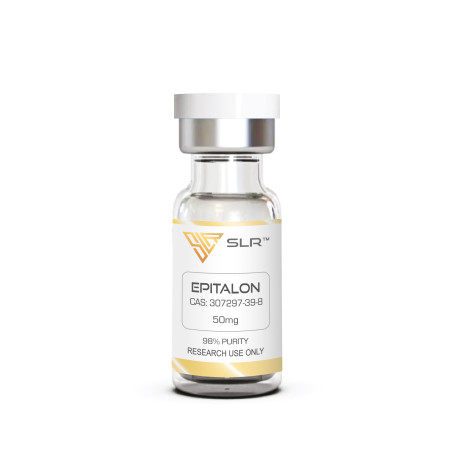


Epitalon stimulates the renewal of the whole body, beginning with the inside organs and working its way outward to the skin. It demonstrates a variety of bioactivities, including the following:
Improving ocular retina condition in retinitis pigmentosa
Anti-aging by activating chromatin in old age
Anticancer and antitumour metastatic effects
Activation telomerase
Elongation of telomeres
Survival of cells, resistance to stress and oxidative changes
Balancing of endocrine secretion, improvement pineal gland function and increases the release of melatonin
Decreased cortisol levels
Increased antioxidant enzymes
Increased brain health
SPECIFICATIONS
Product Code: EPI100
Sequence: Ala-Glu-Asp-Gly
Molecular Formula: C14H22N4O9
Molecular Weight: 390.349 g/mol
CAS Number: 307297-39-8
Purity: Technical / Research Grade ≥98%
Other Details: No TFA Salt
Form: Lyophilized powder
Appearance: White
Storage: -20°C
Source: Synthetic
Safety Classification: Standard laboratory handling
DESCRIPTION
Epitalon is a short synthetic tetrapeptide that has been extensively investigated in experimental and preclinical research settings for its interaction with melatonin regulation pathways, telomerase-associated mechanisms, and cellular aging processes. Originally developed in Russia in the 1980s, Epitalon has been studied in animal models in relation to age-associated biological parameters.
In vitro investigations in human somatic cells have reported that Epitalon exposure may influence telomerase-related activity. Telomerase plays a role in telomere maintenance, a key factor in chromosomal stability and genomic integrity. Experimental modulation of telomerase-associated pathways has therefore been explored in cellular lifespan research models.
Observed effects in experimental systems are not fully explained by telomere maintenance or oxidative stress modulation alone. Ongoing research continues to examine potential influences on gene expression networks and regulatory pathways involved in long-term cellular function.
Preclinical studies suggest that Epitalon exposure may interact with immune-related signaling and adaptive responses to physiological stress. These findings are consistent with its characterization as a regulatory peptide.
Experimental rodent models have reported associations between Epitalon exposure and increased interferon-gamma expression in aged lymphocytes. Interferon-gamma is a signaling molecule involved in immune regulation and cellular communication processes.
Gene-level interactions observed in experimental systems include:
Epitalon has also been associated in experimental models with modulation of MMP2-related pathways and fibroblast activity. Fibroblasts are involved in extracellular matrix structure, including collagen and elastin production.
Additional findings indicate that Epitalon exposure may be associated with modulation of caspase-3-related apoptotic signaling in laboratory systems.
In oncological research models, Epitalon administration has been evaluated in relation to tumor development dynamics and metastatic behavior. These findings remain confined to experimental and preclinical settings.
Experimental evidence suggests that Epitalon may influence expression of circadian-related genes such as PER1 in hypothalamic tissue. Circadian gene regulation is closely linked to melatonin synthesis and neuroendocrine rhythm control.
Animal model research indicates that Epitalon exposure may influence melatonin synthesis through modulation of AANAT and pCREB-associated transcription pathways within the pineal gland.
Additional investigations have explored Epitalon in retinal degeneration models, where structural and functional observations have been reported in preclinical systems.
REFERENCES
All information presented above is derived from in vitro experiments, animal studies, and other preclinical research models. These data are intended solely for scientific investigation and do not imply therapeutic or clinical application.
V. Khavinson et al., "Pineal-regulating tetrapeptide epitalon improves eye retina condition in retinitis pigmentosa" [PubMed]
I.A. Vinogradova et al., "Effect of Ala-Glu-Asp-Gly peptide on life span and development of spontaneous tumors in female rats exposed to different illumination regimes" [PubMed]
T.A. Dzhokhadze et al., "[Functional regulation of genome with peptide bioregulators by hypertrophic cardiomyopathy]" [PubMed]
I.N. Alimova et al., "Effect of Epitalon and Vilon treatment on mammary carcinogenesis in transgenic erbB-2/NEU mice" [PubMed]
N.S. Lin'Kova et al., "Peptide Ala-Glu-Asp-Gly and interferon gamma: their role in immune response during aging" [PubMed]
D.A. Sibarov et al., "Epitalon influences pineal secretion in stress-exposed rats" [PubMed]
N.S. Lin'Kova et al., "Peptide Regulation of Skin Fibroblast Functions during Their Aging In Vitro" [PubMed]
I.F. Labunets et al., "Effect of epithalamin on circadian relationship between thymus and pineal function" [PubMed]
D.A. Sibarov et al., "Effects of intranasal administration of epitalon on neuron activity" [PubMed]
V.N. Anisimov et al., "Epithalon decelerates aging and suppresses development of breast adenocarcinomas" [PubMed]
G. Kossoy et al., "Effect of epitalon on spontaneous carcinogenesis in mice" [PubMed]
N.I. Chasilova et al., "Short peptides stimulate skin cell regeneration during ageing" [PubMed]
O.V. Korkushko et al., "Effect of epithalamin on circadian rhythm of melatonin-producing function" [PubMed]
V.K. Khavinson et al., "Effect of regulatory peptides on gene transcription" [Springer Nature Link]
V. Khavinson et al., "AEDG Peptide (Epitalon) Stimulates Gene Expression" [PubMed]
V.N. Anisimov et al., "Effect of Epitalon on biomarkers of aging and tumor incidence" [PubMed]
G. Kossoy et al., "Epitalon and colon carcinogenesis in rats" [PubMed]
V.N. Anisimov et al., "Inhibitory effect of epitalon on spontaneous mammary tumors" [PubMed]
V.K. Khavinson et al., "Epithalon peptide induces telomerase activity" [PubMed]
V.N. Anisimov et al., "Epithalamin increases lifespan in experimental models" [PubMed]
V.K. Khavinson et al., "Short cell-penetrating peptides and gene promoter interaction" [PubMed]
V. Khavinson et al., "Peptide Epitalon activates chromatin at old age" [Europe PMC]
DISCLAIMER
This product is intended strictly for laboratory research and development use only. It is not a medicine, pharmaceutical product, or dietary supplement. It has not been evaluated or approved by the FDA, EMA, or any regulatory authority for the prevention, treatment, or diagnosis of any disease.
Bodily introduction into humans or animals is strictly prohibited. This product must be handled exclusively by qualified laboratory professionals.
All product information provided on this website is for scientific and educational purposes only.
| Image | Ref. | mg | Unit price | Weight | Avail. | Buy |
|---|---|---|---|---|---|---|
 | EPI100 | 100 mg | €115.00 Discount by quantity 10+ €92.00 –20% 20+ €80.50 –30% 50+ €71.30 –38% 100+ €64.40 –44% 200+ €57.50 –50% | 0.1 kg |  | |
| | EPI100 | 50 mg | €59.00 Discount by quantity 10+ €47.20 –20% 20+ €41.30 –30% 50+ €36.58 –38% 100+ €33.04 –44% 200+ €29.50 –50% | 0.1 kg | | |
| Total: 0,0 All prices with tax included. | ||||||
Product is available Product is no longer in stock
 Product is no in stock, but is allowed to be back-ordered