KISSPEPTIN-10 - 5mg
€22.00

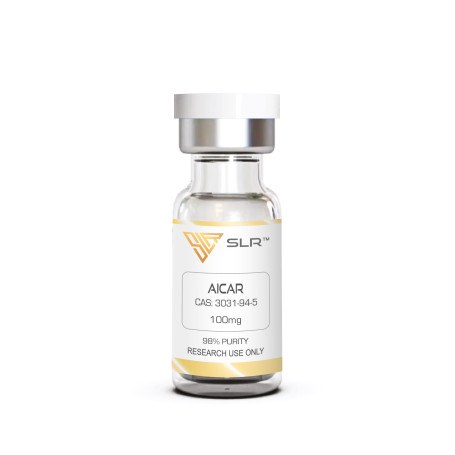

Adenosine monophosphate (AMP) has a well-known experimental analog in the molecule AICAR. In preclinical research models, AICAR has been extensively used to investigate AMPK-mediated cellular energy regulation, metabolic stress responses, and redox balance.
In in vitro systems and animal studies, AICAR has been evaluated in experimental contexts related to cardiac ischemia models, where AMPK activation has been associated with modulation of cellular survival pathways under ischemic stress.
Due to its role in regulating oxidative stress and energy metabolism, AICAR has also been studied in experimental ageing-related models, as well as in preclinical models of metabolic and inflammatory dysregulation, including those used to investigate mechanisms relevant to insulin signaling, immune activation, and chronic inflammation.
These findings are limited to controlled laboratory and animal research settings and are used to explore underlying biological mechanisms rather than clinical applications.
SPECIFICATIONS
Product Code: AIC100
Sequence: 5-aminoimidazole-4-carboxamide ribonucleoside
Molecular Formula: C9H15N4O8P
Molecular Weight: 338.213 g/mol
CAS: 3031-94-5
Purity: Technical / Research Grade 98%
Other details: No TFA Salt
Form: Lyophilized powder
Color: White
Storage temperature: -20°C
Source: Synthetic
Safety classification: Standard handling
DESCRIPTION
AICAR (5-Aminoimidazole-4-carboxamide ribonucleotide), also known as acadesine in its related or precursor form, is widely used in experimental research models to study cellular energy sensing and metabolic stress responses, primarily through its role as an AMP-activated protein kinase (AMPK) pathway activator.
AMPK activation and metabolic research (in vitro / in vivo)
In cell-based systems and animal models, AMPK signaling has been extensively investigated for its involvement in regulating glucose homeostasis, lipid metabolism, energy balance, and inflammatory pathways. In multiple preclinical settings, AICAR-induced AMPK activation has been associated with changes in:
In murine studies, AICAR administration has been reported to reduce inflammatory signals in adipose tissue, sometimes at relatively low doses, with experimental observations including improvements in markers associated with glucose regulation and insulin sensitivity, even when changes in body weight were not the primary outcome. Mechanistic investigations in these models have suggested that these effects may involve multiple pathways, including those related to SIRT1 activity and immune cell (e.g., macrophage) signaling.
Inflammation and immune-related experimental models
Beyond metabolic research, AMPK activators including AICAR have been examined in preclinical models of inflammatory conditions. Across various in vivo and in vitro experimental settings, AMPK activation has been associated with modulation of inflammatory cascades, including pathways linked to NF-κB signaling and cytokine patterns often studied in immunology research. In animal models of inflammatory bowel conditions, AICAR has been investigated for its potential to influence inflammatory markers and immune response profiles under controlled experimental conditions.
Cardiovascular and vascular biology research (preclinical)
Inflammation and vascular remodeling are frequent targets of AMPK-focused research. In animal models of atherosclerosis and vascular injury, AICAR has been evaluated for its effects on experimental endpoints related to:
These observations are derived from preclinical models designed to explore mechanisms involved in vascular disease processes, including plaque development and vessel-wall responses.
Experimental oncology research contexts (preclinical)
AMPK signaling has been studied extensively in oncology research due to its complex relationship with cellular growth and metabolic adaptation. In cell culture and animal studies, AMPK activation has been reported to exert context-dependent effects, with findings varying by tumor type, metabolic environment, and experimental design. In some preclinical settings, prolonged AMPK activation has been associated with decreased proliferation and increased susceptibility to stressors in rapidly dividing cells.
Accordingly, AICAR has been investigated in experimental oncology systems as a tool compound to study:
In studies using specific cancer cell models including thyroid cancer cell lines, AICAR exposure has been reported to correlate with experimental signals consistent with apoptosis-associated pathways, including observations involving caspase-related activity and cell-cycle regulatory markers such as p21 under controlled laboratory conditions.
Exercise-mimetic pathway research (preclinical)
Because physical activity increases glucose uptake in skeletal muscle partly through pathways involving AMPK and GLUT4 translocation, AICAR has also been used in experimental physiology models to investigate overlaps between pharmacologic AMPK activation and exercise-associated signaling. In animal studies, repeated AICAR administration has been reported to produce changes in some metabolic and gene-expression endpoints that resemble aspects of training-related adaptations. These comparisons are used in research contexts to explore shared pathways, without implying equivalence to exercise in real-world settings.
Reproductive biology research (preclinical)
AICAR and AMPK activation have additionally been examined in reproductive and veterinary research models, including studies on spermatozoa metabolism and motility in various species. In controlled in vitro and in vivo experiments (e.g., in cats, goats, chickens), AMPK activators including AICAR have been reported to influence experimental endpoints related to:
REFERENCES
Scientific references are provided to document the experimental contexts and preclinical models in which AICAR has been studied. References are included for informational and educational purposes only and do not imply any approved therapeutic, diagnostic, preventive, or clinical use in humans or animals.
N. Jessen et al., “Effects of AICAR and exercise on insulin-stimulated glucose uptake, signaling, and GLUT-4 content in rat muscles” [PubMed]
M. Igata et al., “Adenosine monophosphate-activated protein kinase suppresses vascular smooth muscle cell proliferation through the inhibition of cell cycle progression” [PubMed]
K. Pan et al., “AMPK activation attenuates inflammatory response to reduce ambient PM2.5-induced metabolic disorders in healthy and diabetic mice” [PubMed]
A. Bai et al., “Novel anti-inflammatory action of 5-aminoimidazole-4-carboxamide ribonucleoside with protective effect in dextran sulfate sodium-induced acute and chronic colitis” [PubMed]
M. M. H. Yung et al., “Targeting AMPK signaling in combating ovarian cancers: opportunities and challenges” [PubMed]
Z. Yang et al., “The full capacity of AICAR to reduce obesity-induced inflammation and insulin resistance requires myeloid SIRT1” [PubMed]
DISCLAIMER
This product is intended for laboratory research and development use only. These studies are performed outside of the body. This product is not a medicine or drug and has not been approved by the FDA or EMA to prevent, treat, or cure any medical condition, ailment, or disease.
Bodily introduction of any kind into humans or animals is strictly forbidden by law. This product should only be handled by licensed, qualified professionals.
All product information provided on this website is for informational and educational purposes only.

| Image | Ref. | Unit price | Weight | Avail. | Buy |
|---|---|---|---|---|---|
| AIC100 | €79.00 Discount by quantity 10+ €67.15 –15% 20+ €56.88 –28% 50+ €47.40 –40% 100+ €41.08 –48% 200+ €35.55 –55% | 0.000000 kg |  | |
| Total: 0,0 All prices with tax included. | |||||
Product is available Product is no longer in stock
 Product is no in stock, but is allowed to be back-ordered