DSIP - 10ml/10mg - Spray
€79.00

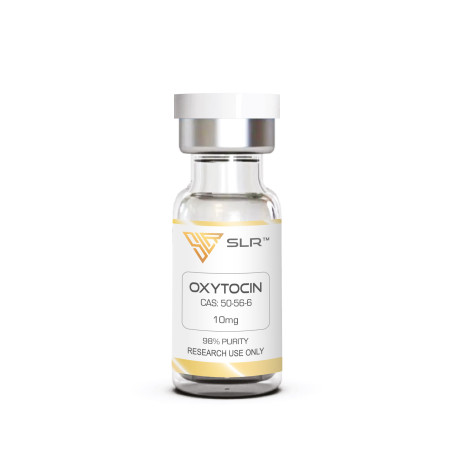

Oxytocin is a multifunctional peptide hormone and neuropeptide involved in a wide range of physiological and psychological processes. Synthesized in the hypothalamus and released by the posterior pituitary gland, it acts both peripherally and within the central nervous system. Research has associated oxytocin with the following effects:
Exhibits anti-inflammatory properties that support wound healing and tissue regeneration
Enhances trust, empathy, and social recognition involved in interpersonal bonding
Improves recognition of emotional expressions, supporting effective social communication
Modulates neurotransmitter systems such as dopamine and serotonin, contributing to mood balance and stress reduction
Has been investigated for potential roles in reducing symptoms associated with anxiety and depressive states
Contributes to sexual receptivity and reproductive behaviors in both men and women
Reduces activity of the amygdala, which is associated with fear and anxiety responses
Induces uterine contractions during labor and mediates milk ejection during breastfeeding
SPECIFICATION
Product Code: OXY010
Sequence: Cys(1)-Tyr-Ile-Gln-Asn-Cys(1)-Pro-Leu-Gly
Molecular Formula: C43H66N12O12S2
Molecular Weight: 1007.193 g/mol
CAS: 50-56-6
Purity: Technical / Research Grade ≥98%
Other details: No TFA Salt
Form: Lyophilized powder
Color: White
Storage temperature: -20°C
Source: Synthetic
Safety classification: Standard handling
DESCRIPTION
Oxytocin, often referred to as the “love hormone” or “bonding hormone,” is a peptide hormone and neuropeptide that plays a fundamental role in social behavior, reproductive physiology, and emotional regulation. It is synthesized in the hypothalamus and released into the circulation by the posterior pituitary gland. In addition to its well-known involvement in childbirth and lactation, oxytocin acts within the central nervous system as a neuromodulator, influencing a wide range of psychological and physiological processes.
Wound Healing and Immune Function
Research has highlighted oxytocin’s involvement in wound healing and immune regulation. Oxytocin exhibits anti-inflammatory properties that may help modulate inflammatory responses and support tissue repair processes. Experimental studies suggest that oxytocin can facilitate wound closure and tissue regeneration, making it relevant in recovery from injury or surgical stress. Indirectly, oxytocin’s stress-reducing effects may also contribute to improved immune function, as lower stress levels are associated with more balanced immune responses.
Social Bonding
Oxytocin is widely recognized for its role in social bonding and interpersonal attachment. It is involved in promoting trust, empathy, and social recognition, which are essential for forming and maintaining social relationships. Oxytocin release occurs during various forms of social interaction, including physical touch and close interpersonal contact, reinforcing emotional closeness and social cohesion. In parental contexts, oxytocin supports bonding behaviors that are important for caregiving and emotional development.
Childbirth and Lactation
One of oxytocin’s most established physiological roles is in childbirth and lactation. During labor, oxytocin stimulates uterine smooth muscle contractions, facilitating delivery. Following childbirth, oxytocin contributes to uterine involution, helping reduce postpartum bleeding. In lactation, oxytocin mediates the milk ejection reflex by inducing contraction of myoepithelial cells surrounding the mammary glands. Beyond its mechanical functions, oxytocin release during breastfeeding supports maternal–infant bonding.
Cognitive Function and Memory
Oxytocin influences cognitive processes, particularly those related to social cognition and emotional memory. Studies indicate that oxytocin may enhance recognition of social cues and emotional expressions. Its effects on memory appear to be context-dependent, with research suggesting selective enhancement of socially relevant or positive information, while potentially diminishing the salience of negative social stimuli.
Neural Circuitry and Brain Regions
Oxytocin acts on specific neural circuits and brain regions involved in emotion and social behavior. The amygdala, which plays a key role in fear and emotional processing, is particularly sensitive to oxytocin modulation. Oxytocin can reduce amygdala reactivity, which may support social approach behaviors and emotional regulation. The prefrontal cortex is another important target, where oxytocin may enhance connectivity with limbic regions, contributing to improved regulation of emotions and social decision-making.
Emotional Regulation
Oxytocin contributes to emotional balance by interacting with neurotransmitter systems such as dopamine and serotonin. Through these interactions, it may support positive mood states, reduce anxiety, and enhance feelings of calm and emotional stability. These effects are considered important for maintaining psychological well-being and adaptive social functioning.
Depression and Anxiety
Due to its role in stress modulation and social bonding, oxytocin has been investigated in research settings for its potential relevance to mood and anxiety disorders. Experimental studies suggest that oxytocin may influence anxiety-related behaviors and emotional responses, although outcomes can vary depending on individual factors and experimental conditions. Its capacity to reduce stress responses and promote social engagement has made it an area of interest in affective neuroscience research.
Stress and Cortisol Regulation
Oxytocin can influence the physiological stress response by modulating cortisol release. Cortisol is a primary stress hormone, and chronically elevated levels are associated with adverse health effects. Oxytocin has been shown in research models to attenuate cortisol responses under certain conditions, potentially contributing to improved stress resilience and overall homeostasis.
Role in Sexual Behavior
Oxytocin is involved in sexual arousal and reproductive behaviors. Levels of oxytocin increase during sexual activity and orgasm in both males and females, contributing to sensations of pleasure, emotional closeness, and post-interaction bonding. These effects support pair bonding and reinforce social attachment within intimate relationships.
Sexual Satisfaction and Relationship Quality
By enhancing emotional intimacy and trust, oxytocin is associated with perceived relationship satisfaction and stability. Research suggests that oxytocin’s influence on empathy and anxiety reduction may improve communication and emotional connection between partners, contributing to more satisfying interpersonal relationships.
Anxiolytic Effects
Oxytocin demonstrates anxiolytic properties in experimental studies, primarily through modulation of fear-related neural pathways. By reducing activity in brain regions associated with threat detection, oxytocin may facilitate social engagement and reduce social avoidance. These properties have prompted research into its role in anxiety-related conditions, particularly those involving social fear and stress reactivity.
Autism Spectrum Disorders
Oxytocin has attracted attention in research on autism spectrum disorders (ASD), where social communication and interaction are often affected. Clinical and experimental studies have explored oxytocin’s influence on social cognition, emotional recognition, and social behavior in ASD populations. While some findings suggest potential benefits, results remain mixed, and further investigation is required to clarify its role and limitations.
Social Anxiety Disorder
Given its involvement in trust, empathy, and stress reduction, oxytocin has been studied for its relevance to social anxiety disorder. Research indicates that oxytocin may influence social comfort and emotional processing in socially stressful situations, though long-term effects and clinical applicability remain areas of active investigation.
Post-Traumatic Stress Disorder (PTSD)
Oxytocin’s role in fear extinction and emotional regulation has implications for PTSD research. By influencing neural circuits involved in fear learning and stress responses, oxytocin may support adaptive processing of traumatic memories and emotional regulation. These properties have made it a subject of interest in studies exploring novel approaches to trauma-related conditions.
Schizophrenia
Research has also examined oxytocin’s effects on social cognition in schizophrenia, a condition often associated with social withdrawal and impaired interpersonal functioning. Experimental findings suggest that oxytocin may influence social perception and emotional processing, indicating potential relevance as an adjunctive area of study in understanding social deficits associated with the disorder.
Conclusion
Oxytocin is a multifunctional hormone and neuropeptide with broad effects on social behavior, emotional regulation, reproduction, stress physiology, and immune-related processes. Its influence on bonding, mood, cognition, and physiological homeostasis highlights its importance in human biology. Ongoing research continues to expand understanding of oxytocin’s mechanisms and its potential relevance across a wide range of psychological and physiological contexts.
REFERENCES
All observations described above originate from in vitro systems, animal studies, or other preclinical experimental models. They are intended solely to support basic research into molecular, cellular, and physiological mechanisms and do not imply therapeutic, diagnostic, or preventive applications in humans or animals.
Etsuro Ito et al., "A novel role of oxytocin: Oxytocin-induced well-being in humans" [National Library of Medicine]
A.S. Tsingotjidou, "Oxytocin: A Multi-Functional Biomolecule with Potential Actions in Dysfunctional Conditions; From Animal Studies and Beyond" [MDPI]
E.M. Palace et al., "The enhancing effects of anxiety on arousal in sexually dysfunctional and functional women" [PubMed]
S. Wolchik et al., "The effect of emotional arousal on subsequent sexual arousal in men" [PubMed]
H.E. LeWine, "Oxytocin: The love hormone" [Harvard Medical School]
N. Bernick et al., "Physiologic Differentiation of Sexual Arousal and Anxiety" [PubMed]
H. Shen, "Neuroscience: The hard science of oxytocin" [Nature]
N. Yusoff et al., "The Effect of Sex on the Electropsychological Process of Emotional Arousal Intensity" [National Library of Medicine]
B. Hodgson et al., "Using the Dual Control Model to Investigate the Relationship Between Mood, Genital, and Self-Reported Sexual Arousal in Men and Women" [PubMed]
A. Skvortsova et al., "Effects of oxytocin administration and conditioned oxytocin on brain activity: An fMRI study" [Plos]
V. Ruggieri et al., "Relationships among Pleasure, Anxiety and Physiological Response Patterns during the Sexual Sequence in Normal and Dispermic Subjects" [PubMed]
DISCLAIMER
This product is intendend for lab research and development use only. These studies are performed outside of the body. This product is not medicines or drugs and has not been approved by the FDA or EMA to prevent, treat or cure any medical condition, ailment or disease. Bodily introduction of any kind into humans or animals is strictly forbidden by law. This product should only be handled by licensed, qualified professionals.
All product information provided on this website is for informational and educational purposes only.
| Image | Ref. | Unit price | Weight | Avail. | Buy |
|---|---|---|---|---|---|
| OXY010 | €34.00 Discount by quantity 10+ €27.20 –20% 20+ €23.80 –30% 50+ €21.08 –38% 100+ €19.04 –44% 200+ €17.00 –50% | 0.000000 kg |  | |
| Total: 0,0 All prices with tax included. | |||||
Product is available Product is no longer in stock
 Product is no in stock, but is allowed to be back-ordered