CARDIOGEN - 10ml/50mg - Spray
€175.00

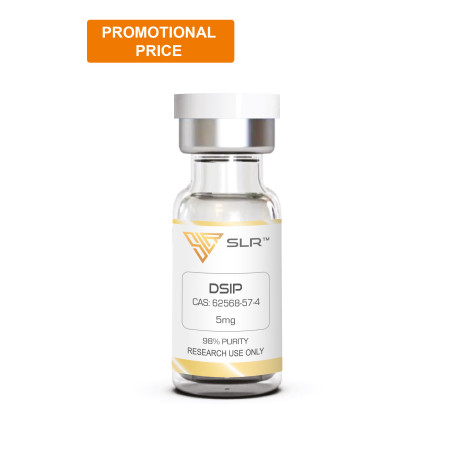


Delta sleep-inducing peptide (DSIP) is a neuropeptide that has been investigated in experimental and preclinical research settings for its involvement in the regulation of multiple endocrine and physiological processes, particularly those related to sleep–wake modulation and adaptive stress responses.
Experimental studies suggest that DSIP may be associated with:
Modulation of sleep-related physiological processes
Regulation of sleep quality under conditions of chronic sleep disruption
Adaptive responses to physiological and psychological stress
Influence on autonomic and cardiovascular regulatory parameters
Modulation of pain-related sensory processing
SPECIFICATIONS
Product Code: DSI005
Sequence: Trp-Ala-Gly-Gly-Asp-Ala-Ser-Gly-Glu
Molecular Formula: C35H48N10O15
Molecular Weight: 848.824 g/mol
CAS Number: 62568-57-4
Purity: Technical / Research Grade ≥98%
Other Details: No TFA Salt
Form: Lyophilized powder
Color: White
Storage Temperature: -20°C
Source: Synthetic
Safety Classification: Standard laboratory handling
DESCRIPTION
Delta sleep-inducing peptide (DSIP) was first isolated in 1977 from rabbit brain tissue. Since its identification, DSIP has been investigated in experimental research environments for its potential involvement in sleep-related physiological processes across multiple species, including humans and various animal models. Experimental observations indicate an association between DSIP and sleep patterns characterized by increased delta-frequency activity on electroencephalographic (EEG) recordings.
DSIP is typically detected in peripheral circulation at very low concentrations. Both brain and plasma levels display diurnal variation, and research findings suggest an association between circulating DSIP concentrations and circadian rhythmicity. Lower concentrations are generally observed in morning hours, with higher levels detected later in the day. Variations in endogenous DSIP levels have been associated in experimental settings with modulation of slow-wave and rapid-eye-movement (REM) sleep parameters, as well as changes in thermoregulatory processes.
Observational investigations involving individuals with endocrine disorders such as Cushing’s syndrome have described alterations in slow-wave sleep architecture, while overall circadian distribution of sleep phases appears broadly comparable to unaffected populations.
DSIP has been described in research literature as unusual among peptides due to reported ability to cross the blood–brain barrier in experimental models. Elevated concentrations have been detected in human breast milk, and its presence has been examined in relation to neonatal sleep-associated physiological responses.
Following its discovery, numerous studies explored whether DSIP may function as an endogenous modulator of sleep regulation. In controlled research environments, administration of very small quantities has been associated with increased sleep propensity and modulation of delta-wave activity, leading to its classification in scientific literature as a sleep-modulating peptide rather than a classical sedative compound.
DSIP has been described as exerting regulatory influence on sleep–wake dynamics, with more pronounced activity under experimentally induced conditions of sleep disruption. In individuals without documented sleep disturbances, exposure has generally produced minimal observable effects. Due to its modulatory profile, DSIP has also been examined independently of immediate nighttime administration, with findings suggesting potential influence on subsequent nocturnal sleep parameters.
Beyond sleep-related processes, DSIP has been investigated in exploratory studies related to circadian rhythm modulation, stress-response behavior, alertness, and adaptive coping mechanisms during wakefulness.
Preliminary observational research involving limited human cohorts has reported associations between DSIP exposure and changes in mood parameters and pain perception. Additional studies have explored its interaction with opioid-related pathways in experimental models, suggesting dose-dependent modulation of pain-related behavioral responses without evidence of classical opioid-type dependence.
DSIP has also been examined for potential effects on cellular metabolism under hypoxic conditions. Experimental data indicate possible support of oxidative phosphorylation and mitochondrial activity in low-oxygen environments, suggesting involvement in metabolic resilience during transient hypoxic stress. Modulation of oxidative stress parameters and monoamine oxidase-A (MAO-A) activity has also been described in preclinical models.
Analyses of cerebrospinal fluid samples from individuals with major depressive disorders have reported altered DSIP concentrations compared to control groups. Given the established relationship between sleep regulation and mood disorders, DSIP continues to be investigated in neurobiological research focused on affective regulation mechanisms.
REFERENCES
All information presented above is derived from in vitro experiments, animal studies, and other preclinical research models. These data are intended solely for basic scientific investigation of biological mechanisms and do not imply any therapeutic, diagnostic, preventive, or clinical use in humans or animals.
F. Bes et al., "Effects of delta sleep-inducing peptide on sleep of chronic insomniac patients. A double-blind study" [PubMed]
E.M. Khvatova et al., "Effects of delta-sleep inducing peptide (DSIP) and some analogues on the activity of monoamine oxidase type A in rat brain under hypoxia stress" [PubMed]
A. Nakamura et al., "Potent antinociceptive effect of centrally administered delta-sleep-inducing peptide (DSIP)" [PubMed]
D. Schneider-Helmert et al., "Acute and delayed effects of DSIP (delta sleep-inducing peptide) on human sleep behavior" [PubMed]
D. Schneider-Helmert & G.A. Schoenenberger, "The influence of synthetic DSIP (delta-sleep-inducing-peptide) on disturbed human sleep" [SpringerNature]
D. Schneider-Helmert, "Effects of delta-sleep-inducing peptide on 24-hour sleep-wake behaviour in severe chronic insomnia" [PubMed]
B.J. Pollard et al., "Delta sleep-inducing peptide" [European Journal of Anaesthesiology]
A. Westrin et al., "High delta sleep-inducing peptide-like immunoreactivity in plasma in suicidal patients with major depressive disorder" [PubMed]
H. Walleus et al., "Decreased concentrations of delta-sleep inducing peptide in plasma and cerebrospinal fluid from depressed patients" [Nordisk Psykiatrisk Tidsskrift]
E.M. Khvatova et al., "Delta sleep inducing peptide (DSIP): effect on respiration activity in rat brain mitochondria and stress protective potency under experimental hypoxia" [PubMed]
W. Larbig et al., "Therapeutic effects of delta-sleep-inducing peptide (DSIP) in patients with chronic, pronounced pain episodes. A clinical pilot study" [PubMed]
A. Bjartell et al., "Delta sleep-inducing peptide (DSIP): An overview of central actions and possible relationship to psychiatric illnesses" [Nordisk Psykiatrisk Tidsskrift]
DISCLAIMER
This product is intended strictly for laboratory research and development use only. This material is not a medicine or drug and has not been evaluated or approved by the FDA, EMA, or any regulatory authority for the prevention, treatment, or cure of any disease. Any form of administration to humans or animals is strictly prohibited. Handling is restricted to qualified laboratory professionals.
All product information provided on this website is for informational and educational purposes only.
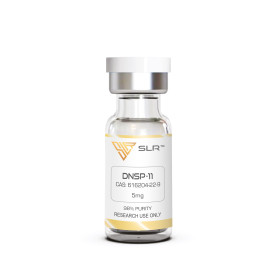
| Image | Ref. | mg | Unit price | Weight | Avail. | Buy |
|---|---|---|---|---|---|---|
 | DSI005 | 10 mg | €37.00 Discount by quantity 10+ €31.45 –15% 20+ €26.64 –28% 50+ €22.20 –40% 100+ €19.24 –48% 200+ €16.65 –55% | 0.1 kg |  | |
| | DSI005 | 5 mg | €21.00 Discount by quantity 10+ €17.85 –15% 20+ €15.12 –28% 50+ €12.60 –40% 100+ €10.92 –48% 200+ €9.45 –55% | 0.1 kg | | |
| Total: 0,0 All prices with tax included. | ||||||
Product is available Product is no longer in stock
 Product is no in stock, but is allowed to be back-ordered