
COLIVELIN - 100mg
€490.00

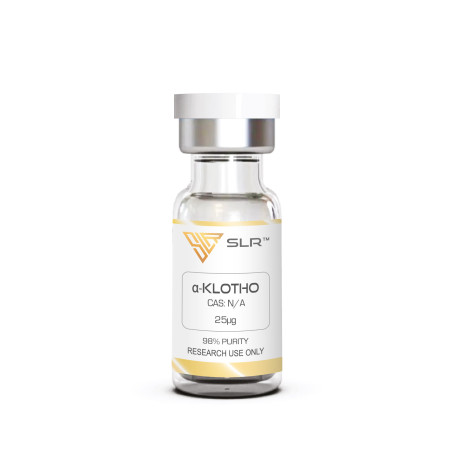

α-Klotho is a transmembrane and soluble endocrine protein first identified in 1997 and now widely recognized as a key candidate in aging biology. It is expressed predominantly in the kidney and choroid plexus of the brain, and its soluble form circulates in blood, urine, and cerebrospinal fluid. Membrane α-Klotho functions as an essential co-receptor for FGF23, regulating phosphate and vitamin D metabolism. Soluble α-Klotho is studied for its broader endocrine-like effects, including modulation of oxidative stress responses, inflammatory signaling, IGF-1 and mTOR pathways, and Wnt-associated tissue remodeling. Experimental models show that Klotho deficiency is linked to accelerated aging-like phenotypes such as vascular dysfunction, sarcopenia, cognitive decline, cardiac fibrosis, and osteopenia, while elevated Klotho expression is associated with improved cognition, delayed vascular aging, enhanced muscle regeneration, and increased lifespan. Due to its connection with senescence biology, SASP-driven inflammation, kidney decline, and neurodegenerative processes, α-Klotho remains a central molecule in research focused on longevity, metabolic regulation, and systemic resilience.
SPECIFICATIONS
Product Code: AKL025
Protein: Recombinant Human α-Klotho
Sequence: EPGDGAQTWA RFSRPPAPEA AGLFQGTFPD GFLWAVGSAA YQTEGGWQQH GKGASIWDTF THHPLAPPGD SRNASLPLGA PSPLQPATGD VASDSYNNVF RDTEALRELG VTHYRFSISW ARVLPNGSAG VPNREGLRYY RRLLERLREL GVQPVVTLYH WDLPQRLQDA YGGWANRALA DHFRDYAELC FRHFGGQVKY WITIDNPYVV AWHGYATGRL APGIRGSPRL GYLVAHNLLL AHAKVWHLYN TSFRPTQGGQ VSIALSSHWI NPRRMTDHSI KECQKSLDFV LGWFAKPVFI DGDYPESMKN NLSSILPDFT ESEKKFIKGT ADFFALCFGP TLSFQLLDPH MKFRQLESPN LRQLLSWIDL EFNHPQIFIV ENGWFVSGTT KRDDAKYMYY LKKFIMETLK AIKLDGVDVI GYTAWSLMDG FEWHRGYSIR RGLFYVDFLS QDKMLLPKSS ALFYQKLIEK NGFPPLPENQ PLEGTFPCDF AWGVVDNYIQ VSQLTKPISS LTKPYH
UniProt ID: Q9UEF7
Expression Host: HEK293 cells
Expression Region: aa 34–549
Tag: C-terminal His Tag
Molecular Weight: ~72 kDa (reducing conditions)
Purity: Technical / Research Grade 95%
Formulation: Lyophilized from 10 mM HEPES, 150 mM NaCl, 5% trehalose, pH 7.4
Other details: No TFA Salt
Form: Solid
Color: White
Reconstitution: sterile water, gentle pipetting (no vortex)
Storage temperature: -20°C / -80°C, avoid freeze-thaw cycles
Source: Recombinant human α-Klotho protein
Safety classification: Standard handling
DESCRIPTION
The Klotho protein was first identified in 1997 by a research team in Japan, after the discovery of a gene whose disruption produced a phenotype resembling accelerated aging in animal models. This breakthrough introduced Klotho as one of the most important molecular candidates in the field of gerontology and longevity biology, and it immediately became associated with the concept of systemic regulators capable of influencing aging-related decline.
Among the Klotho family, α-Klotho (alpha-Klotho) is the most widely investigated isoform and is often described in the scientific literature as a geroprotective endocrine factor, meaning a molecule potentially capable of supporting resilience against physiological stressors. Over the past decades, α-Klotho has been studied for its involvement in multiple regulatory systems, including phosphate homeostasis, mineral metabolism, endocrine signaling, oxidative stress response, inflammation modulation, and cellular survival mechanisms.
In experimental research, α-Klotho has been linked to pathways that are strongly associated with aging biology, including insulin-like growth factor 1 (IGF-1) signaling, mTOR regulation, cAMP signaling, p53/p21 stress response pathways, and Wnt-associated cellular differentiation mechanisms. The broad range of these interactions suggests that Klotho may function as a “global modulator” of biological homeostasis rather than acting through a single isolated pathway.
Tissue Distribution and Physiological Relevance
α-Klotho is expressed in a highly tissue-specific manner. The highest expression levels are found in the distal convoluted tubules of the kidney, making renal tissue one of the primary sources of circulating α-Klotho. This strong renal expression is a key reason why Klotho has become a major focus in research related to kidney aging and chronic renal decline.
Because α-Klotho is secreted and detectable in systemic fluids, it is considered an endocrine-like protein. Soluble α-Klotho can be measured in blood plasma, urine, and cerebrospinal fluid, indicating that it may contribute to signaling processes that extend beyond the kidney.
In addition to renal tissue, α-Klotho is strongly expressed in the choroid plexus of the brain. This structure is essential for the production and regulation of cerebrospinal fluid and plays an important role in the biochemical exchange between blood and central nervous system environments. This localization supports the hypothesis that α-Klotho may be involved in brain homeostasis, cognitive resilience, and neuroprotective regulation.
Lower expression levels have also been reported in other tissues such as adipose tissue, reproductive organs, vascular tissue compartments, and certain endocrine-associated regions. Ongoing transcriptomic research continues to refine and expand the known expression profile of α-Klotho.
Molecular Structure and Protein Features
Klotho is encoded as a type I single-pass transmembrane glycoprotein. In humans, the protein contains approximately 1012 amino acids, while the mouse ortholog contains about 1014 amino acids. It is mainly localized to the plasma membrane and Golgi apparatus, with a short intracellular C-terminal domain. The extracellular domain of α-Klotho contains two homologous repeat regions known as KL1 and KL2, which are structurally related to glycosidases. These domains share sequence similarity with enzymes involved in the hydrolysis of β-glycosidic linkages in glycoproteins and glycolipids.
However, despite the glycosidase-like architecture, classical glycosidase catalytic activity has not been conclusively demonstrated. This is likely due to divergence in key catalytic residues that are typically required for enzymatic cleavage. Some experimental data suggest that Klotho may exhibit weak enzymatic activity resembling β-glucuronidase or sialidase-like functions. These observations have led to the hypothesis that α-Klotho’s biological role may involve subtle glycan remodeling or modification of surface proteins rather than direct enzymatic digestion in a classical sense. This concept is important because glycan modification can strongly influence receptor binding affinity, ion channel stability, and cellular communication pathways.
Soluble Klotho and Proteolytic Shedding
One of the defining characteristics of α-Klotho is its ability to exist in both a membrane-bound form and a soluble circulating form. The extracellular domain of α-Klotho can be cleaved by membrane-associated metalloproteases, primarily ADAM10 and ADAM17. This cleavage releases the soluble ectodomain into circulation, generating a bioactive form of Klotho that can function systemically.
Soluble α-Klotho has been detected in plasma, urine, and cerebrospinal fluid. In addition, alternative transcription events have been described in some models that may generate secreted isoforms, further contributing to circulating pools of Klotho. The existence of these multiple forms has led to the concept that Klotho functions as both:
This duality is central to understanding why α-Klotho has been implicated in such a wide range of biological processes.
Soluble Klotho as a Modulator of Cellular Signaling
In addition to its role as an FGF23 co-receptor, soluble α-Klotho has been studied for its broader systemic activity. Research suggests that soluble Klotho may modulate the function of several membrane proteins, including ion channels, transporters, and growth factor receptors. One of the most frequently cited examples is the regulation of calcium channels such as TRPV5, which influences calcium retention and cellular signaling stability.
Soluble Klotho may influence these proteins through mechanisms related to glycan modification, altering receptor stability, membrane localization, or ligand sensitivity. Through these actions, Klotho has been associated with modulation of multiple aging-relevant pathways, including:
Because these pathways are strongly linked to age-related decline, α-Klotho has become a major candidate in research exploring the molecular foundation of longevity.
Klotho and IGF-1 / Insulin Signaling
Insulin and IGF-1 signaling pathways are essential regulators of growth, metabolism, and cellular survival. However, excessive activation of these pathways is often associated with accelerated aging and increased oxidative stress. Several studies suggest that α-Klotho may act as a modulator that dampens excessive IGF-1 signaling. This modulation may contribute to improved cellular stress resistance, reduced metabolic overload, and enhanced survival capacity under damaging conditions.
Because IGF-1 and insulin signaling also influence mitochondrial function, inflammation, and autophagy pathways, Klotho’s interaction with these networks is considered highly relevant to metabolic aging biology.
Klotho and mTOR Regulation
The mTOR pathway is one of the most studied metabolic regulators in aging research. Overactivation of mTOR signaling is associated with reduced autophagy, increased oxidative stress, and accelerated aging phenotypes. Experimental models have suggested that α-Klotho may influence signaling networks connected to mTOR, potentially contributing to a more balanced metabolic environment.
This is particularly important because mTOR regulation is strongly linked to:
Thus, Klotho has been proposed as a molecule that may indirectly support pathways associated with cellular renewal and homeostasis.
Klotho and Wnt Signaling
Wnt signaling is a crucial pathway in embryonic development, tissue regeneration, and stem cell differentiation. However, excessive Wnt activation in adulthood has been linked to fibrosis, cellular exhaustion, and degenerative tissue remodeling. Research suggests that α-Klotho may act as a suppressor or modulator of Wnt signaling. This has led to hypotheses that Klotho may protect against pathological tissue remodeling processes, including fibrotic progression in kidney and vascular tissues.
Because Wnt signaling is also implicated in cancer biology, tissue scarring, and aging-related loss of regenerative capacity, Klotho’s role in this pathway is an area of active investigation.
Klotho and Oxidative Stress Resistance
Oxidative stress is one of the most widely accepted contributors to biological aging. Reactive oxygen species (ROS) can damage proteins, lipids, mitochondria, and DNA, leading to progressive cellular dysfunction. α-Klotho has been described in multiple experimental models as a molecule that may support resistance against oxidative stress. This protective role has been observed in contexts involving hypoxia, cytotoxic injury, and metabolic stress.
Klotho has therefore been studied as a factor that may enhance cellular resilience by influencing antioxidant signaling pathways, stress-response gene expression, and survival networks.
Age-Related Decline and Klotho Deficiency Models
In animal studies, α-Klotho deficiency produces systemic phenotypes resembling accelerated aging. These phenotypes have included:
These findings have been used to support the hypothesis that α-Klotho is a central regulator of systemic aging biology.
Conversely, animals overexpressing α-Klotho have demonstrated delayed functional decline in multiple physiological systems, supporting the idea that higher Klotho levels may be associated with improved health-span.
Cognitive Function and Neurobiology
α-Klotho has become one of the most interesting candidates in neuroaging research due to its high expression in the choroid plexus and its detectability in cerebrospinal fluid.
Preclinical studies have suggested that Klotho may influence:
These observations have led to interest in α-Klotho as a factor potentially relevant to neurodegenerative disease models such as Alzheimer’s disease.
Some experimental research has reported that administration of Klotho-related proteins may produce rapid functional effects in animal cognition models. These findings have contributed to speculation that Klotho may have acute neuromodulatory properties in addition to its long-term systemic effects.
Klotho and Cardiovascular Aging
Cardiovascular aging is characterized by endothelial dysfunction, reduced nitric oxide signaling, increased oxidative stress, arterial stiffness, and progressive vascular calcification.
Multiple observational studies have linked low circulating α-Klotho levels to markers such as:
Mechanistically, Klotho has been studied for its potential role in maintaining nitric oxide bioavailability and reducing oxidative vascular injury.
Because vascular degeneration contributes to hypertension, ischemic events, and cardiac remodeling, Klotho has become a major target in research exploring systemic cardiovascular decline with aging.
Klotho and Chronic Kidney Disease
Because Klotho is produced primarily in the kidney, chronic kidney disease is one of the most strongly linked pathological contexts for Klotho research.
In multiple experimental models, CKD is associated with reduced renal Klotho expression and reduced circulating Klotho levels. This reduction has been investigated as a contributing factor to:
The decline of Klotho in CKD is often considered a central component of the “kidney-aging axis,” connecting mineral metabolism disturbances to systemic cardiovascular decline.
Pulmonary Fibrosis and Senescence-Linked Conditions
Idiopathic pulmonary fibrosis (IPF) is an age-associated progressive disease linked to senescent cell accumulation and reduced tissue regeneration capacity.
Research suggests that IPF is associated with reduced Klotho levels, and experimental models have shown that Klotho overexpression may protect against fibrosis-like remodeling in lung tissue.
Because pulmonary fibrosis involves chronic inflammation, oxidative stress, and fibroblast activation, Klotho’s anti-stress signaling profile has been considered relevant to fibrosis research.
Cellular Senescence, SASP, and Klotho Decline
Aging is associated with increased accumulation of senescent cells. Senescence is characterized by permanent cell cycle arrest, altered metabolism, and resistance to apoptosis.
Senescent cells often secrete a mixture of inflammatory and tissue-disruptive molecules called the SASP (senescence-associated secretory phenotype), including:
SASP factors can impair tissue regeneration, promote chronic inflammation, and spread senescence to nearby cells.
Because Klotho declines with age, researchers have proposed that reduced Klotho may contribute to increased senescence burden, while senescence-related inflammation may further suppress Klotho production, forming a feed-forward cycle.
This has led to interest in whether senescence-targeting strategies might influence circulating Klotho levels.
Klotho and Senolytic Research Connections
Senolytics are compounds studied for their ability to selectively reduce senescent cell burden. In animal models, senolytics have been shown to improve health-span and reduce inflammation markers.
Some studies have investigated whether reducing senescence burden may influence Klotho expression and restore more youthful endocrine patterns.
This relationship is of interest because it suggests that Klotho may not only be a marker of aging but also part of the mechanistic network connecting senescence, inflammation, and metabolic dysfunction.
Klotho and Stem Cell / Regeneration Biology
Stem cell exhaustion is a major hallmark of aging. Reduced regenerative capacity contributes to slower healing, muscle loss, organ decline, and increased frailty.
Klotho has been studied as a factor potentially influencing stem and progenitor cell environments by regulating stress pathways and reducing inflammatory signaling.
This has contributed to hypotheses that α-Klotho may indirectly support regenerative function in tissues such as skeletal muscle, vascular structures, and renal tissue.
Oncology-Related Observations
Reduced Klotho expression has been reported in several tumor models and cancer-associated pathways. Research has examined Klotho interactions with growth-related signaling networks such as:
These findings are primarily mechanistic and observational in nature, but they suggest that Klotho may influence cellular growth regulation, differentiation, and survival signaling.
Because cancer biology intersects with aging pathways, Klotho has become a topic of interest in research examining longevity-associated protective mechanisms.
Klotho Isoforms: α, β, and γ
Research Perspective and Scientific Importance
α-Klotho is one of the most compelling proteins in longevity and metabolic aging research due to its multi-system effects and its integration with endocrine signaling, inflammation, oxidative stress, and mineral homeostasis.
Its central role in the kidney-brain axis, its ability to circulate systemically, and its interactions with key aging pathways make it a candidate of high interest in studies exploring biomarkers of aging, health-span, and resilience.
Because Klotho levels decline with age and correlate with multiple physiological parameters, it is increasingly studied not only as a mechanistic factor but also as a measurable biomarker potentially associated with systemic biological aging.
REFERENCES
All information presented above is derived from in vitro experiments, animal studies, and other preclinical research models. These data are intended solely for basic scientific investigation of biological mechanisms and do not imply any therapeutic, diagnostic, preventive, or clinical use in humans or animals.
Makoto Kuro-O "The Klotho proteins in health and disease" [PubMed]
Q.Yuan et al., "A Klotho-derived peptide protects against kidney fibrosis by targeting TGF-β signaling" [PubMed]
G.J. Prud'homme et al., "Pathobiology of the Klotho Antiaging Protein and Therapeutic Considerations" [PubMed]
S. Yokojama et al., "A klotho gene single nucleotide polymorphism is associated with the onset of stroke and plasma klotho concentration" [PubMed]
J. Leon et al., "Peripheral Elevation of a Klotho Fragment Enhances Brain Function and Resilience in Young, Aging, and α-Synuclein Transgenic Mice" [PubMed]
H. Kurosu et al., "The Klotho gene family as a regulator of endocrine fibroblast growth factors" [PubMed]
Makoto Kuro-O "Klotho and calciprotein particles as therapeutic targets against accelerated ageing" [PubMed]
P-Urena Torres et al., "Klotho: an antiaging protein involved in mineral and vitamin D metabolism" [PubMed]
Yo-ichi Nabeshima "Klotho: a fundamental regulator of aging" [PubMed]
T. Isakova et al., "A Klotho-Derived Peptide as a Possible Novel Drug to Prevent Kidney Fibrosis" [PubMed]
M. Torbus-Paluszczak et al., "Klotho protein in neurodegenerative disorders" [PubMed]
M. Dermaku-Sopjani et al., "Significance of the anti-aging protein Klotho" [PubMed]
DISCLAIMER
This product is intendend for lab research and development use only. These studies are performed outside of the body. This product is not medicines or drugs and has not been approved by the FDA or EMA to prevent, treat or cure any medical condition, ailment or disease. Bodily introduction of any kind into humans or animals is strictly forbidden by law. This product should only be handled by licensed, qualified professionals.
All product information provided on this website is for informational and educational purposes only.




| Image | Ref. | Unit price | Weight | Avail. | Buy |
|---|---|---|---|---|---|
| AKL025 | €245.00 Discount by quantity 10+ €208.25 –15% 20+ €176.40 –28% 50+ €151.90 –38% 100+ €134.75 –45% 200+ €122.50 –50% | 0.050000 kg |  | |
| Total: 0,0 All prices with tax included. | |||||
Product is available Product is no longer in stock
 Product is no in stock, but is allowed to be back-ordered