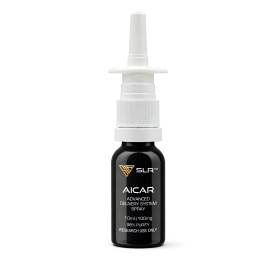
AICAR - 10ml/100mg - Spray
€99.00

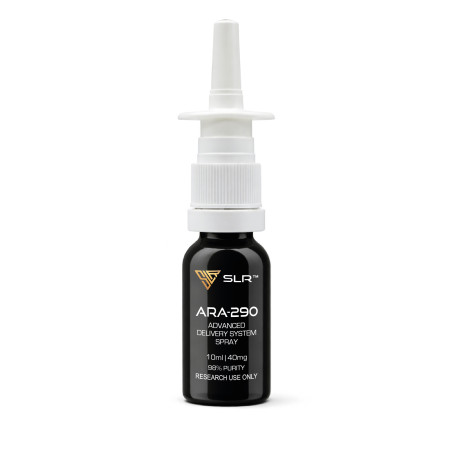

ARA-290 has been investigated in preclinical and experimental research models designed to study inflammatory, metabolic, vascular, and neurobiological mechanisms relevant to the following disease-related research contexts:
Cardiovascular-related experimental modelsRetinal ischemia and microvascular injury models
Peripheral nerve injury and neuropathy models
Small fiber nerve degeneration models
Chronic inflammatory joint disease models
Renal inflammation and metabolic stress models
Hepatic lipid accumulation and inflammatory liver models
Intestinal inflammation models
Systemic autoimmune and immune dysregulation models
Wound healing and tissue repair models
FRESHLY PREPARED SOLUTION
ADVANCED DELIVERY SYSTEM - CELL PENETRATING PEPTIDE TECHNOLOGY
This product utilizes advanced delivery technology incorporating calibrated cell-penetrating peptide (CPP) systems. The formulation is engineered to support efficient and targeted intracellular delivery of active ingredients, contributing to enhanced transport performance and bioavailability.
SPECIFICATIONS
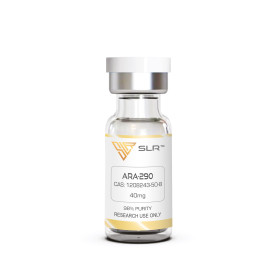
Product Code: AR2040S
Sequence: H-Pyr-Glu-Gln-Leu-Glu-Arg-Ala-Leu-Asn-Ser-Ser-OH
Molecular Formula: C51H84N16O21
Molecular Weight: 1253.3 g/mol
CAS: 1208243-50-8
Purity: Technical / Research Grade ≥98%
Other details: No TFA Salt
Form: Liquid Solution
Color: Clear / Slightly opalescent
Total Content: 10 mL / 40 mg
Concentration: 4 mg/mL
Approximate Sprays per Bottle: ~82
Approximate Peptide per Spray: ~488 mcg
Vehicle / Carrier System: Proprietary carrier system
Storage Temperature: 4°C (Do not freeze)
Source: Synthetic
Safety classification: Standard handling
DESCRIPTION
ARA-290 is a short synthetic peptide derived from the β-helix region of erythropoietin (EPO) and has been developed as a research tool to study tissue-protective and immunomodulatory signaling pathways that are distinct from the erythropoietic activity of the parent glycoprotein. While full-length EPO is primarily known for its role in red blood cell production, extensive experimental research has demonstrated that EPO-derived peptides can exert non-hematopoietic biological effects under controlled laboratory conditions.
Tissue-protective signaling and receptor biology (preclinical)
ARA-290 has been widely used in preclinical research models to investigate signaling mediated by the tissue-protective receptor (TPR), also referred to in the literature as the innate repair receptor (IRR). In contrast to full-length EPO, ARA-290 selectively engages tissue-protective signaling pathways without activating erythropoiesis, making it a valuable experimental compound for studying cell survival, anti-apoptotic mechanisms, and inflammation control in non-clinical systems.
Neurobiology and neuropathic pain research (preclinical)
In cell culture systems and animal models, ARA-290 has been investigated for its effects on neuronal survival, neuroinflammation, and nociceptive signaling. Experimental findings suggest that activation of TPR-associated pathways may contribute to:
modulation of inflammatory responses in neural tissue,
protection of small nerve fibers under metabolic or inflammatory stress,
and alteration of pain-related signaling cascades.
Additional mechanistic studies have explored the interaction of ARA-290 with TRPV1 (capsaicin) channels, which are involved in thermal and pain sensation. These investigations are conducted exclusively in laboratory and animal research settings to better understand molecular contributors to neuropathic pain mechanisms.
Vascular and endothelial biology research (preclinical)
ARA-290 has also been studied in preclinical vascular and ischemia-related models, particularly in relation to endothelial colony-forming cells (ECFCs). In murine and in vitro systems, exposure to ARA-290 has been associated with experimental changes in:
These observations are used to explore mechanisms of endothelial regeneration and angiogenesis in ischemia-relevant experimental models.
Immunomodulation and inflammatory signaling (preclinical)
A growing body of preclinical research has examined ARA-290 as a modulator of innate and adaptive immune responses. Various immune cell populations—including macrophages, dendritic cells, mast cells, and lymphocytes—have been shown to express TPR-related signaling machinery in experimental systems.
In animal and cell-based models, activation of TPR by ARA-290 has been associated with:
These effects are investigated to understand how fine-tuning immune activation may influence inflammation resolution and tissue repair, without implying immunosuppression or clinical applicability.
Transplantation and cell survival models (preclinical)
In experimental transplantation models, ARA-290 has been used to study mechanisms involved in cell survival and inflammatory tolerance, including research on transplanted endocrine and non-endocrine cell populations. Preclinical findings suggest that modulation of inflammatory cytokine signaling may contribute to extended viability of transplanted cells in laboratory settings, providing mechanistic insight into immune-mediated graft stress.
Wound healing and tissue regeneration research (preclinical)
ARA-290 has further been investigated in animal models of impaired wound healing, particularly those involving metabolic or inflammatory stress. In these systems, experimental activation of tissue-protective pathways has been associated with changes in:
These studies aim to characterize repair-associated signaling, not therapeutic outcomes.
Systemic inflammatory and autoimmune model research (preclinical)
In murine models designed to study chronic inflammation and autoimmune-like processes, ARA-290 has been evaluated for its ability to modulate immune signaling and tissue damage markers. Experimental observations include alterations in autoantibody-related parameters and protection of inflammation-sensitive organs, such as renal tissue, under controlled laboratory conditions.
Such findings are used to explore immune tolerance and tissue protection mechanisms in complex inflammatory environments.
REFERENCES
All information presented above is derived from in vitro experiments, animal studies, and other preclinical research models. These data are intended solely for basic scientific investigation of biological mechanisms and do not imply any therapeutic, diagnostic, preventive, or clinical use in humans or animals.
M. Brines et al., "ARA 290, a Nonerythropoietic Peptide Engineered from Erythropoietin, Improves Metabolic Control and Neuropathic Symptoms in Patients with Type 2 Diabetes" [Molecular Medicine]
A. Bitto et al., "Activation of the EPOR-β common receptor complex by cibinetide ameliorates impaired wound healing in mice with genetic diabetes" [ScienceDirect]
Araim Pharm. "Study of Efficacy of ARA 290 on Corneal Nerve Fiber Density and Neuropathic Symptoms of Subjects With Sarcoidosis" [ClinicalTrials.gov]
H. Chen et al., "Therapeutic effects of nonerythropoietic erythropoietin analog ARA290 in experimental autoimmune encephalomyelitis rat" [PubMed]
Leiden University Medical Center "Cognitive and Neural Effects of ARA290 (CONEARA)" [ClinicalTrials.gov]
O.E.O'Leary et al., "The vasoreparative potential of endothelial colony-forming cells in the ischemic retina is enhanced by cibinetide, a non-hematopoietic erythropoietin mimetic" [PubMed]
G.Hache et al., "ARA290, a Specific Agonist of Erythropoietin/CD131 Heteroreceptor, Improves Circulating Endothelial Progenitors' Angiogenic Potential and Homing Ability" [PubMed]
B.Peng et al., "Erythropoietin and its derivatives: from tissue protection to immune regulation" [Nature]
B.Huang et al., "Non-erythropoietic erythropoietin-derived peptide protects mice from systemic lupus erythematosus" [PubMed]
M. van Velzen et al., "ARA 290 for treatment of small fiber neuropathy in sarcoidosis" [PubMed]
DISCLAIMER
This product is intendend for lab research and development use only. These studies are performed outside of the body. This product is not medicines or drugs and has not been approved by the FDA or EMA to prevent, treat or cure any medical condition, ailment or disease. Bodily introduction of any kind into humans or animals is strictly forbidden by law. This product should only be handled by licensed, qualified professionals.
All product information provided on this website is for informational and educational purposes only.
| Image | Ref. | Unit price | Weight | Avail. | Buy |
|---|---|---|---|---|---|
| AR2040S | €138.00 Discount by quantity 10+ €110.40 –20% 20+ €96.60 –30% 50+ €85.56 –38% 100+ €77.28 –44% 200+ €69.00 –50% | 0.100000 kg |  | |
| Total: 0,0 All prices with tax included. | |||||
Product is available Product is no longer in stock
 Product is no in stock, but is allowed to be back-ordered