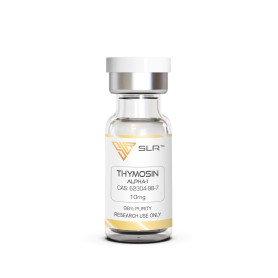
THYMOSIN ALPHA-1 - 10 mg
€89.00


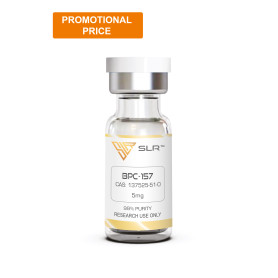
BPC-157 is a 15-amino-acid synthetic peptide used in preclinical research models to investigate cellular repair mechanisms, extracellular matrix dynamics, vascular signaling, and tissue stress responses. In in vitro systems and animal studies, BPC-157 has been explored for its involvement in pathways related to fibroblast activity, angiogenesis, nitric oxide-associated signaling, coagulation-related processes, immune modulation, and gene expression regulation under experimental conditions.
Thymosin Beta-4 is a 43-amino-acid peptide widely used in preclinical experimental systems to study actin-mediated cell migration, angiogenesis, inflammatory signaling, and tissue remodeling processes. In laboratory and animal models, Thymosin Beta-4 has been investigated for its role in wound-associated cell dynamics, oxidative stress responses, and regeneration-related signaling pathways.
SPECIFICATIONS
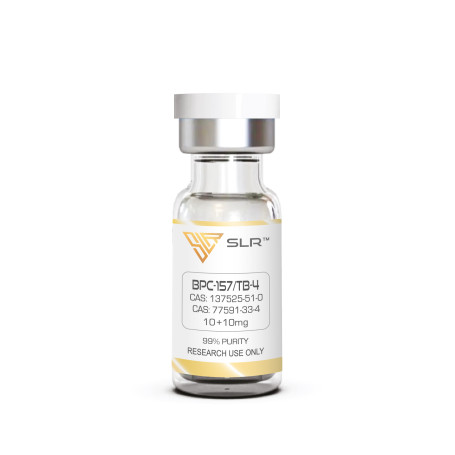
Product Code: BPTB43
BPC-157 - 10mg
Sequence: Gly-Glu-Pro-Pro-Pro-Gly- Lys-Pro-Ala-Asp-Asp-Ala-Gly-Leu-Val
Molecular Formula: C62H98N16O22
Molecular Weight: 1419.556 g/mol
CAS: 137525-51-0
Purity: Technical / Research Grade ≥99%
THYMOSIN BETA-4 (43AA)-10mg
Sequence: Ac-Ser-Asp-Lys-Pro-Asp-Met-Ala-Glu-Ile-Glu-Lys-Phe-Asp-Lys-Ser-Lys-Leu-Lys-Lys-Thr-Glu-Thr-Gln-Glu-Lys-Asn-Pro-Leu-Pro-Ser-Lys-Glu-Thr-Ile-Glu-Gln-Glu-Lys-Gln-Ala-Gly-Glu-Ser
Molecular Formula: C212H350N56O78S
Molecular Weight: 4963.4408 g/mol
CAS: 77591-33-4
Purity: Technical / Research Grade ≥99%
General Properties (Common)
Other details: No TFA Salt
Form: Lyophilized powder
Color: White
Storage temperature: -20°C
Source: Synthetic
Safety classification: Standard handling
DESCRIPTION
BPC-157
BPC-157 is a synthetic peptide derived from a sequence naturally present in gastric juice, where endogenous BPC peptides are involved in maintaining gastrointestinal mucosal integrity. In preclinical research models, BPC-157 has been used to investigate mechanisms related to epithelial barrier stability, extracellular matrix organization, and tissue repair signaling under experimental conditions.
Fibroblast activity and extracellular matrix research (preclinical)
In cell culture systems and animal models, BPC-157 has been studied for its influence on fibroblast proliferation and migration, two key cellular processes involved in wound healing and connective tissue remodeling. Fibroblasts are responsible for the deposition of extracellular matrix components such as collagen, fibrin, and elastin, and experimental modulation of their activity is commonly used to study tissue regeneration mechanisms.
Angiogenesis and ischemia-related models (preclinical)
BPC-157 has been investigated in preclinical angiogenesis assays to explore its effects on endothelial cell behavior and collateral vessel formation. In animal models of ischemic injury, experimental exposure to BPC-157 has been associated with altered vascular responses, which are used to study blood supply restoration and tissue recovery dynamics in gastrointestinal, cardiovascular, neural, and musculoskeletal research contexts.
Musculoskeletal and connective tissue research (preclinical)
In in vitro and in vivo models of tendon, ligament, and bone injury, BPC-157 has been examined for its role in cell recruitment, vascular density, and connective tissue organization. These experimental systems are used to explore why tissues with limited blood supply exhibit delayed repair and how angiogenesis and fibroblast migration contribute to structural recovery under laboratory conditions.
Oxidative stress and inflammatory signaling models (preclinical)
In rodent models, BPC-157 has been studied for its interaction with oxidative stress markers, including pathways involving nitric oxide signaling and lipid peroxidation indices. These studies investigate antioxidant-related mechanisms and their contribution to tissue protection in experimental gastrointestinal and systemic inflammation models.
Drug interaction and tissue stress research (preclinical)
BPC-157 has also been explored in preclinical models assessing tissue responses to pharmacologically induced stress, including systems designed to study adverse tissue effects associated with various compound classes. These investigations focus on cellular resilience, barrier protection, and repair signaling, rather than mitigation of drug effects in clinical settings.
Neurobiology and brain–gut axis research (preclinical)
Experimental studies have examined BPC-157 in preclinical neurobiological models to explore interactions between peripheral tissues and central signaling pathways, including serotonergic and dopaminergic systems. These models are used to study brain–gut communication and stress-related signaling, without implying behavioral or therapeutic outcomes.
THYMOSIN BETA-4 (43AA)
Thymosin Beta-4 (Tβ4), also referred to as TB-500 in research contexts, is a 43-amino-acid peptide originally identified in thymic tissue and produced by various cell types following tissue injury. It is widely used in preclinical research models to study cell migration, cytoskeletal dynamics, and tissue repair mechanisms.
Actin regulation and cell migration (preclinical)
One of the primary experimental roles of Tβ4 is its interaction with G-actin, which influences cytoskeletal organization and cell motility. In laboratory models, Tβ4 has been shown to regulate the migration of keratinocytes, endothelial cells, and fibroblasts, processes fundamental to wound closure and tissue remodeling.
Angiogenesis and tissue repair models (preclinical)
Tβ4 has been extensively studied in angiogenesis assays and wound-healing models, where it has been associated with endothelial cell differentiation, capillary sprouting, and extracellular matrix restructuring. These effects are examined in cutaneous, corneal, muscular, and cardiac experimental systems.
Inflammatory signaling research (preclinical)
In animal models of inflammation, Tβ4 has been investigated for its ability to modulate cytokine-associated signaling pathways, including those related to NF-κB activity and matrix metalloproteinase expression. These studies aim to clarify how cytoskeletal regulation intersects with inflammatory resolution and tissue protection.
Cardiovascular and ischemia-related research (preclinical)
Tβ4 has been included in preclinical cardiovascular models, such as myocardial injury and reperfusion systems, to explore cell survival, migration, and fibrosis-related signaling. Experimental findings focus on integrin-linked kinase activation, cellular resilience, and remodeling of injured cardiac tissue.
Neurological research models (preclinical)
In in vivo and in vitro neurological models, Tβ4 has been studied for its role in neuronal survival, oligodendrocyte maturation, and protection against excitotoxic or inflammatory stressors. These systems are used to investigate neuroprotective signaling pathways, not clinical neurological outcomes.
Systemic tissue remodeling and regeneration research (preclinical)
Because Tβ4 is upregulated during early stages of tissue repair, it has been explored in broad experimental models of regeneration, including musculoskeletal recovery, connective tissue remodeling, and vascular development. Its ability to influence cell migration, extracellular matrix turnover, and angiogenic enzyme expression makes it a widely used probe in regenerative biology research.
REFERENCES
All information presented above is derived from in vitro experiments, animal studies, and other preclinical research models. These data are intended solely for basic scientific investigation of biological mechanisms and do not imply any therapeutic, diagnostic, preventive, or clinical use in humans or animals.
A. Goldstein et al., "Thymosin β4: a multi-functional regenerative peptide. Basic properties and clinical applications" [PubMed]
A. Goldstein et al., "Advances in the basic and clinical applications of thymosin β4" [PubMed]
D. Crockford et al., "Thymosin beta4: structure, function, and biological properties supporting current and future clinical applications" [PubMed]
G. Sosne et al., "Biological activities of thymosin beta4 defined by active sites in short peptide sequences" [PubMed]
E.G. Yarmola et al., "Thymosin beta4: actin regulation and more" [PubMed]
M. Badamchian et al., "Thymosin beta(4) reduces lethality and down-regulates inflammatory mediators in endotoxin-induced septic shock" [PubMed]
A. Gonzales-Franquesa et al., "Discovery of thymosin β4 as a human exerkine and growth factor" [PubMed]
J.D. Young et al., "Thymosin beta 4 sulfoxide is an anti-inflammatory agent generated by monocytes in the presence of glucocorticoids" [PubMed]
M.R. Bubb "Thymosin beta 4 interactions" [PubMed]
Y. Xing et al., "Progress on the Function and Application of Thymosin β4" [PubMed]
N. Shomali et al., "A new insight into thymosin β4, a promising therapeutic approach for neurodegenerative disorders" [PubMed]
S. Munshaw et al., "Thymosin β4 protects against aortic aneurysm via endocytic regulation of growth factor signaling" [PubMed]
G. Renga et al., "Thymosin β4 limits inflammation through autophagy" [PubMed]
Y. Wang et al., "Adjunctive Thymosin Beta-4 Treatment Influences MΦ Effector Cell Function to Improve Disease Outcome in Pseudomonas aeruginosa-Induced Keratitis" [PubMed]
K.W. Freeman et al., "Regenerative protein thymosin beta-4 is a novel regulator of purinergic signaling" [PubMed]
G. Sosne et al., "Thymosin beta 4 promotes corneal wound healing and decreases inflammation in vivo following alkali injury" [PubMed]
J. Zhang et al., "Thymosin beta4 promotes oligodendrogenesis in the demyelinating central nervous system" [PubMed]
Rui Yu et al., "Recombinant Human Thymosin Beta-4 Protects against Mouse Coronavirus Infection" [PubMed]
M. Hsieh et al., "Therapeutic potential of pro-angiogenic BPC157 is associated with VEGFR2 activation and up-regulation" [PubMed]
J. Vukojevic et al., "Rat inferior caval vein (ICV) ligature and particular new insights with the stable gastric pentadecapeptide BPC 157" [PubMed]
N. Jelovac et al., "Pentadecapeptide BPC 157 attenuates disturbances induced by neuroleptics: the effect on catalepsy and gastric ulcers in mice and rats" [PubMed]
D. Strinic et al., "BPC 157 counteracts QTc prolongation induced by haloperidol, fluphenazine, clozapine, olanzapine, quetiapine, sulpiride, and metoclopramide in rats" [PubMed]
K. Skrlec et al., "Engineering recombinant Lactococcus lactis as a delivery vehicle for BPC-157 peptide with antioxidant activities" [PubMed]
C. Chang et al., "The promoting effect of pentadecapeptide BPC 157 on tendon healing involves tendon outgrowth, cell survival, and cell migration" [PubMed]
S. Seiwerth et al., "BPC 157 and Standard Angiogenic Growth Factors. Gastrointestinal Tract Healing, Lessons from Tendon, Ligament, Muscle and Bone Healing" [PubMed]
P. Sikiric et al., "Novel Cytoprotective Mediator, Stable Gastric Pentadecapeptide BPC 157. Vascular Recruitment and Gastrointestinal Tract Healing" [PubMed]
DISCLAIMER
This product is intendend for lab research and development use only. These studies are performed outside of the body. This product is not medicines or drugs and has not been approved by the FDA or EMA to prevent, treat or cure any medical condition, ailment or disease. Bodily introduction of any kind into humans or animals is strictly forbidden by law. This product should only be handled by licensed, qualified professionals.
All product information provided on this website is for informational and educational purposes only.
| Image | Ref. | Unit price | Weight | Avail. | Buy |
|---|---|---|---|---|---|
| BPTB43 | €115.00 Discount by quantity 10+ €92.00 –20% 20+ €82.80 –28% 50+ €74.75 –35% 100+ €66.70 –42% 200+ €59.80 –48% | 0.000000 kg |  | |
| Total: 0,0 All prices with tax included. | |||||
Product is available Product is no longer in stock
 Product is no in stock, but is allowed to be back-ordered