GHK-CU - 200mg
€98.00

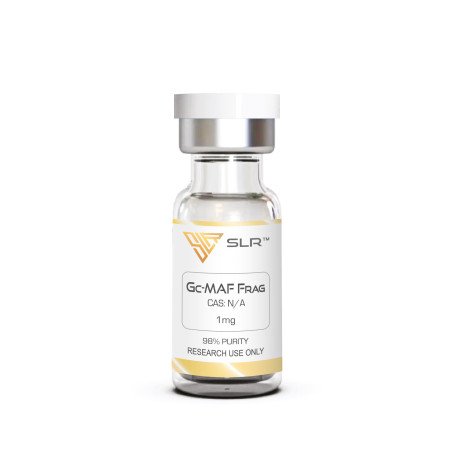


GcMAF Frag (Gc protein–derived macrophage activating factor fragment) is a peptide fragment derived from vitamin D–binding protein (DBP) and studied for its interaction with macrophages, key cells of the innate immune system involved in immune surveillance and phagocytic processes. In experimental and preclinical research settings, GcMAF Frag has been investigated for its ability to influence macrophage-associated signaling pathways and immune-related functional markers.
Within controlled laboratory models, exposure to GcMAF-related fragments has been associated with modulation of macrophage activity, including phagocytosis-related assays and cytokine-associated readouts. For this reason, the peptide is primarily used as a research tool in studies focused on immune regulation, inflammatory signaling, and host defense mechanisms.
Chemical modifications such as N-terminal acetylation and C-terminal amidation have been evaluated in peptide research for their impact on structural stability and resistance to enzymatic degradation. In experimental systems, these features may contribute to enhanced molecular stability, prolonged functional persistence, and optimized receptor interaction profiles under in vitro conditions.
SPECIFICATIONS
Product Code: GCM110
Sequence: Ac-Thr-Pro-Thr(GalNAc)-Glu-Leu-Ala-Lys-Leu-Val-Asn-Lys-Arg-Ser-Glu-NH₂
Molecular Weight: 2292 Da
CAS: N/A
Purity: Technical / Research Grade 98%
Other Details: No TFA Salt
Form: Lyophilized powder
Color: White
Storage Temperature: -20°C
Source: Synthetic
Safety Classification: Standard handling
DESCRIPTION
GcMAF Frag (Gc protein–derived macrophage activating factor fragment) is a peptide fragment derived from vitamin D–binding protein (DBP), a multifunctional plasma protein primarily known for transporting vitamin D metabolites and for participation in immune-related pathways. In research literature, GcMAF-related fragments are associated with enzymatic processing of DBP that can expose glycan motifs (including an N-acetylgalactosamine, GalNAc, moiety) relevant to immune-cell interaction studies. For this reason, GcMAF Frag has been investigated as a tool in experimental work focused on immune modulation and macrophage biology.
GcMAF-related fragments are described as arising from enzymatic processing of DBP, including removal of specific sugar residues, resulting in an exposed GalNAc group. This structural feature has been examined for its potential to interact with lectin-type receptors expressed on macrophages and other immune cells.
In experimental systems, macrophages are central components of innate immunity and are widely used in laboratory studies of cellular recognition and clearance mechanisms. In this context, GcMAF-derived fragments have been investigated for their ability to influence macrophage-associated functional readouts under controlled conditions, including phagocytosis-related assays and immune signaling markers. Several research groups have reported that GcMAF-related constructs containing Gal/GalNAc-associated motifs can display measurable activity in experimental models.
Mechanistic discussions in the literature commonly describe the following research steps and readouts:
Enzymatic Processing:
GcMAF-related fragments are described as resulting from enzymatic modification of DBP (often involving β-galactosidase and sialidase activity), leading to exposure of a GalNAc group at a defined site (frequently referenced near Thr420 in DBP literature).
Macrophage Interaction:
Binding to lectin receptors reported in experimental studies (including CLEC10A, also referred to as macrophage galactose-type lectin, MGL) has been associated with downstream signaling changes in vitro. In laboratory systems, this interaction has been explored alongside cytokine-related readouts, including markers such as TNF-α, IL-1β, and IL-6.
Phagocytic Readouts:
Increased phagocytosis-related activity has been reported in selected experimental models following exposure to GcMAF-related fragments, typically evaluated via standard in vitro functional assays.
Immune Surveillance Research Context:
Macrophage function is also studied in immune surveillance frameworks. For this reason, GcMAF Frag has been examined in exploratory research contexts that include tumor microenvironment signaling, angiogenesis-associated pathways, and metastatic process models.
Reported areas of investigation include immune regulation models, macrophage functional assays, and exploratory studies in oncology-related research systems. These findings are based on in vitro experiments and animal studies and are used to investigate biological mechanisms rather than to establish clinical effects.
Chemical modifications such as N-terminal acetylation and C-terminal amidation have also been discussed in peptide research as approaches to influence stability and protease resistance in experimental systems. Such features are studied to better understand peptide behavior, persistence, and activity under laboratory conditions.
All information presented above is derived from in vitro studies, animal models, and exploratory scientific research and is provided exclusively for research and educational purposes.
REFERENCES
All information presented above is derived from in vitro experiments, animal studies, and other preclinical research models. These data are intended solely for basic scientific investigation of biological mechanisms and do not imply any therapeutic, diagnostic, preventive, or clinical use in humans or animals.
O. Kisker et al., "Vitamin D binding protein-macrophage activating factor (DBP-maf) inhibits angiogenesis and tumor growth in mice" [PubMed]
K. Gumireddy et al., "Mitogen-activated protein kinase pathway mediates DBP-maf-induced apoptosis in RAW 264.7 macrophages" [PubMed]
K.J. Gregory et al., "Vitamin D binding protein-macrophage activating factor directly inhibits proliferation, migration, and uPAR expression of prostate cancer cells" [PubMed]
S. Pacini et al., "Effects of vitamin D-binding protein-derived macrophage-activating factor on human breast cancer cells" [PubMed]
S. Kalkunte et al., "Inhibition of angiogenesis by vitamin D-binding protein: characterization of anti-endothelial activity of DBP-maf" [PubMed]
K. Nonaka et al., "Vitamin D binding protein-macrophage activating factor inhibits HCC in SCID mice" [PubMed]
E. Saburi et al., "Promising role for Gc-MAF in cancer immunotherapy: from bench to bedside" [PubMed]
D.S. Rehder et al., "Glycosylation status of vitamin D binding protein in cancer patients" [PubMed]
DISCLAIMER
This product is intended strictly for laboratory research and development use only. This material is not a medicine or drug and has not been evaluated or approved by the FDA, EMA, or any regulatory authority for the prevention, treatment, or cure of any medical condition, ailment, or disease. Any form of administration to humans or animals is strictly prohibited. This product should be handled only by qualified laboratory professionals.
All product information provided on this website is for informational and educational purposes only.
| Image | Ref. | mg | Unit price | Weight | Avail. | Buy |
|---|---|---|---|---|---|---|
 | GCM110 | 1 mg | €159.00 Discount by quantity 10+ €127.20 –20% 20+ €111.30 –30% 50+ €98.58 –38% 100+ €89.04 –44% 200+ €79.50 –50% | 0 kg |  | |
| | GCM110 | 10 mg | €642.00 Discount by quantity 10+ €513.60 –20% 20+ €449.40 –30% 50+ €398.04 –38% 100+ €359.52 –44% 200+ €321.00 –50% | 0 kg | | |
| Total: 0,0 All prices with tax included. | ||||||
Product is available Product is no longer in stock
 Product is no in stock, but is allowed to be back-ordered