GHRP-2 - 5mg
€21.00

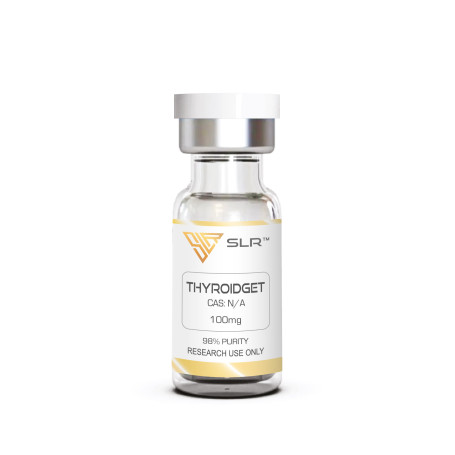

Thyroidget (Asp–Trp) is a short bioregulatory peptide studied for its potential antioxidant and anti-inflammatory properties. Research suggests it may support cellular protection against oxidative stress and modulate inflammatory signaling pathways, making it relevant in studies involving chronic inflammatory disorders, cardiovascular risk models, and systemic aging processes. Due to the thyroid gland’s high metabolic activity and vulnerability to oxidative injury, Thyroidget has attracted interest as a peptide potentially supporting thyroid homeostasis and endocrine resilience, including research contexts related to autoimmune thyroid conditions. Emerging investigations also suggest possible neuroprotective relevance in models of neurodegenerative disease. Thyroidget is considered moderately water-soluble, with solubility influenced by pH, concentration, and ionic conditions.
SPECIFICATIONS
Product Code: TRG100
Sequence: Asp-Trp
Molecular Formula: C15H18N4O4
Molecular Weight: 319.31 g/mol
Purity: Technical / Research Grade 98%
Other details: No TFA Salt
Form: Lyophilized powder
Color: White
Storage temperature: -20°C
Source: Synthetic
Safety classification: Standard handling
DESCRIPTION
Thyroidget is a short bioregulatory peptide composed of aspartic acid (Asp) and tryptophan (Trp), often referenced in research as the dipeptide Asp–Trp. Due to its compact structure and biologically active amino acid composition, Thyroidget has attracted growing interest in peptide bioregulation studies, particularly in areas involving oxidative stress modulation, inflammatory balance, endocrine resilience, and cellular protection mechanisms.
Short peptides such as Asp–Trp are often studied because of their ability to participate in regulatory signaling processes despite their minimal size. Their activity is typically linked not to classical hormone replacement, but to subtle modulation of intracellular pathways that influence tissue homeostasis and adaptive responses. In this context, Thyroidget has been investigated as a peptide potentially relevant for research involving thyroid function support, immune-inflammatory regulation, and neuroprotective mechanisms.
Biological relevance and physiological background
The thyroid gland is a metabolically active organ responsible for producing thyroid hormones that regulate energy expenditure, temperature control, cardiovascular performance, cognitive function, and overall metabolic rate. Because thyroid hormone synthesis involves oxidative biochemical reactions, the thyroid is naturally exposed to elevated levels of reactive oxygen species (ROS). While ROS play physiological roles in hormone production, excessive oxidative stress may contribute to cellular injury and thyroid dysfunction.
Additionally, thyroid health is strongly influenced by immune balance. Autoimmune thyroid disorders, such as Hashimoto’s thyroiditis and other inflammatory thyroid conditions, are characterized by chronic immune activation, inflammatory cytokine production, and progressive tissue disruption. For these reasons, peptides with antioxidant and anti-inflammatory properties are frequently studied for their potential role in maintaining thyroid homeostasis and protecting thyroid tissue integrity.
Thyroidget has therefore become of interest as a peptide potentially capable of supporting the thyroid environment by influencing oxidative and inflammatory pathways that are relevant in endocrine aging and thyroid-related stress conditions.
Mechanism of action and cellular regulation
Thyroidget (Asp–Trp) is studied as a bioregulatory peptide whose effects may be linked to modulation of intracellular signaling and gene regulatory pathways. Short peptides are often proposed to act as signaling molecules capable of influencing cellular metabolism, antioxidant defense systems, and inflammatory mediator production.
Aspartic acid contributes to the peptide’s polarity and interaction with aqueous environments, while tryptophan is a biologically significant aromatic amino acid often associated with redox biology and cellular protective pathways. The combination of these two amino acids has been discussed as a potentially functional pairing capable of influencing oxidative balance and cellular resilience.
Although the precise molecular mechanisms are still under investigation, Thyroidget has been associated in research discussions with antioxidant defense activation and inflammation modulation, which may indirectly support endocrine tissue stability.
Anti-inflammatory properties
One of the most important biological features associated with Thyroidget is its potential anti-inflammatory activity. Chronic inflammation is a major pathological driver in many disorders, including autoimmune diseases, cardiovascular dysfunction, metabolic decline, and degenerative tissue changes.
Research suggests that Thyroidget may influence inflammatory signaling pathways by modulating the production of cytokines and inflammatory mediators. This effect is particularly relevant because excessive cytokine activity can contribute to tissue damage, fibrosis, and chronic dysfunction in multiple organs.
Due to these properties, Thyroidget has been discussed as a peptide of interest in research involving chronic inflammatory conditions, including autoimmune-related disorders and inflammation-associated endocrine dysfunction.
Antioxidant effects and oxidative stress protection
Another key area of scientific interest involves Thyroidget’s potential antioxidant properties. Oxidative stress occurs when the production of reactive oxygen species exceeds the capacity of cellular antioxidant defenses. This imbalance can damage DNA, proteins, and membrane lipids, accelerating cellular aging and tissue dysfunction.
Thyroidget has been studied as a peptide capable of contributing to antioxidant defense mechanisms. By supporting cellular resistance against oxidative stress, it may help preserve the integrity of tissues that are particularly vulnerable to oxidative injury.
This is especially relevant for metabolically active organs such as the thyroid, where ROS generation is physiologically elevated. Protection against oxidative stress may support long-term thyroid cellular integrity and help maintain efficient endocrine signaling.
Oxidative stress is also strongly linked to neurological decline, cardiovascular disease progression, and systemic aging processes. For this reason, antioxidant peptides are frequently explored in research aimed at improving cellular resilience across multiple biological systems.
Neuroprotective research interest
Neurodegenerative disorders such as Alzheimer’s disease and Parkinson’s disease are characterized by progressive neuronal dysfunction, impaired synaptic communication, mitochondrial stress, and chronic neuroinflammation. Oxidative damage is widely recognized as one of the major mechanisms contributing to neuronal decline.
Thyroidget has been discussed as a peptide of interest in neuroprotection research due to its potential ability to support neuronal resistance against oxidative injury. By reducing oxidative stress burden and influencing inflammatory balance, Thyroidget may contribute to improved neuronal survival pathways in experimental models.
Because brain tissues have high energy demand and are particularly sensitive to redox imbalance, peptides that support antioxidant defense are often considered relevant for strategies aimed at slowing degenerative processes and maintaining cognitive function.
Although ongoing research is still required, the neuroprotective potential of Thyroidget remains a significant area of scientific interest, particularly in studies exploring neuronal resilience and prevention of progressive neural decline.
Implications for thyroid health and endocrine balance
Thyroidget is particularly relevant in research involving thyroid function support. The thyroid is highly vulnerable to oxidative stress, and inflammation is a major contributing factor in autoimmune thyroid disorders such as Hashimoto’s thyroiditis.
Because Thyroidget is associated with both antioxidant and anti-inflammatory properties, it has been discussed as a peptide that may provide indirect protective effects on thyroid tissue. By reducing oxidative injury and inflammatory signaling, it may help maintain thyroid homeostasis and support endocrine stability.
This may be relevant not only in autoimmune conditions but also in aging-related thyroid decline, where reduced antioxidant defenses and chronic low-grade inflammation can contribute to hormonal imbalance and metabolic dysfunction.
Since thyroid hormones influence nearly every metabolic process in the body—including lipid metabolism, cardiovascular regulation, and cognitive performance—supporting thyroid stability may have systemic relevance in broader metabolic health research.
Relevance to chronic diseases linked to inflammation
Inflammation and oxidative stress are closely interconnected processes and represent core drivers in many chronic diseases. Conditions such as cardiovascular pathologies, metabolic syndrome-related disorders, and certain degenerative disease models are often associated with elevated inflammatory cytokines and oxidative tissue injury.
Because Thyroidget is discussed as a peptide capable of influencing both inflammation and oxidative stress, it has been considered relevant in research exploring supportive strategies for chronic inflammatory disorders. Its potential ability to reduce inflammatory burden may contribute indirectly to improved tissue stability in multiple organ systems.
Solubility and physicochemical characteristics
Thyroidget contains aspartic acid, an amino acid with acidic and hydrophilic properties. This contributes to the peptide’s ability to interact with water molecules through hydrogen bonding and electrostatic interactions. As a result, Thyroidget is generally considered moderately soluble in water, despite the partially hydrophobic aromatic nature of tryptophan.
The solubility of Thyroidget may vary depending on experimental conditions, including:
In practical research environments, optimization of solution conditions may be required to ensure stable dissolution and consistent experimental performance.
Research perspective
Thyroidget (Asp–Trp) is increasingly discussed as a bioregulatory peptide of interest due to its compact structure and broad potential biological relevance. Its activity is primarily explored in the context of oxidative stress defense, inflammatory regulation, and endocrine tissue support. Because thyroid health is highly dependent on balanced redox conditions and controlled immune activity, Thyroidget has gained attention as a peptide that may contribute to thyroid resilience in experimental models.
In addition, its potential neuroprotective properties have expanded research interest into neurological and aging-related applications. While continued investigation is required to fully define its mechanisms and range of biological actions, Thyroidget remains a notable peptide within the field of short peptide bioregulators.
DISCLAIMER
This product is intendend for lab research and development use only. These studies are performed outside of the body. This product is not medicines or drugs and has not been approved by the FDA or EMA to prevent, treat or cure any medical condition, ailment or disease. Bodily introduction of any kind into humans or animals is strictly forbidden by law. This product should only be handled by licensed, qualified professionals.
All product information provided on this website is for informational and educational purposes only.
| Image | Ref. | Unit price | Weight | Avail. | Buy |
|---|---|---|---|---|---|
| TRG100 | €150.00 Discount by quantity 10+ €127.50 –15% 20+ €108.00 –28% 50+ €93.00 –38% 100+ €82.50 –45% 200+ €72.00 –52% | 0.000000 kg |  | |
| Total: 0,0 All prices with tax included. | |||||
Product is available Product is no longer in stock
 Product is no in stock, but is allowed to be back-ordered