
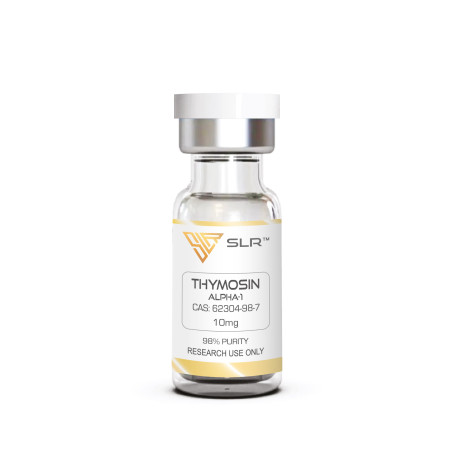
THYMOSIN ALPHA-1 - 10 mg
Thymosin alpha-1 is a thymus-derived peptide widely studied as a potent regulator of immune function. It supports adaptive immunity by promoting T-cell maturation and enhancing immune communication through cytokine signaling pathways. Research in thymus-deficient models suggests thymosin alpha-1 may restore immune competence and improve resistance to infection. It has also been investigated as a vaccine adjuvant, potentially strengthening immune memory and improving the effectiveness of inactivated vaccines. In addition, thymosin alpha-1 has been studied in sepsis-related research due to its ability to modulate immune responses and potentially improve outcomes in severe infection-driven inflammatory states. These properties make thymosin alpha-1 a peptide of significant interest in research involving immune aging, infection susceptibility, vaccine response, and immune system resilience.
Description
SPECIFICATIONS
Product Code: TH1010
Sequence: Ser-Asp-Ala-Ala-Val-Asp-Thr-Ser-Ser-Glu-Ile-Thr-Thr-Lys-Asp-Leu-Lys-Glu-Lys-Lys-Glu-Val-Val-Glu-Glu-Ala-Glu-Asn
Molecular Formula: C129H215N33O55
Molecular Weight: 3108-315 g/mol
CAS: 62304-98-7
Purity: Technical / Research Grade 98%
Other details: No TFA Salt
Form: Lyophilized powder
Color: White
Storage temperature: -20°C
Source: Synthetic
Safety classification: Standard handling
DESCRIPTION
Thymosin alpha-1 (Tα1) is a naturally occurring peptide originally isolated from thymus tissue and widely studied for its role as a powerful regulator of immune function. The thymus is a central organ in immune system development, primarily responsible for the maturation and differentiation of T lymphocytes (T-cells). These immune cells are essential components of adaptive immunity, playing a fundamental role in immune surveillance, long-term immune memory, and the coordinated activation of other immune system components involved in pathogen defense.
Because immune competence declines in many chronic conditions and also naturally with age, thymosin alpha-1 has become an important peptide of interest in research involving immune restoration, infection resistance, immune modulation, and inflammatory balance. Unlike compounds that target a single immune pathway, thymosin alpha-1 is described in scientific literature as a peptide capable of influencing immune function at multiple levels, supporting both innate and adaptive immune responses.
The thymus and immune system regulation
The thymus plays a critical role in shaping the immune system, particularly during early life, by producing and educating T-cells to recognize foreign pathogens while avoiding excessive self-reactivity. T-cells are essential for identifying infected or abnormal cells and for orchestrating immune responses through signaling molecules such as cytokines.
T-cells are also responsible for immune memory, allowing the immune system to respond faster and more efficiently when exposed to pathogens previously encountered. In addition, T-cells support the activation of other immune cell types, including macrophages, natural killer (NK) cells, and B-cells, enhancing the overall defensive capacity of the immune system.
Because thymus activity tends to decline with age (a process known as thymic involution), immune function often becomes less efficient over time. This contributes to increased susceptibility to infections, reduced vaccine responsiveness, and slower recovery from inflammatory stress. Thymosin alpha-1 has therefore been studied as a peptide potentially capable of supporting immune resilience in aging and immunocompromised conditions.
Mechanism of action
Thymosin alpha-1 functions primarily as an immune-modulating peptide that influences immune signaling pathways involved in cellular activation, differentiation, and cytokine regulation. Research suggests that it supports the maturation and activity of T-cells and may enhance the functional coordination between innate and adaptive immune responses.
At a mechanistic level, thymosin alpha-1 has been described as capable of activating immune-related signaling pathways that regulate cytokine production and immune cell communication. Cytokines are molecular messengers that allow immune cells to coordinate their actions, ensuring that immune responses are strong enough to control infection while remaining balanced enough to avoid excessive inflammation.
Through these pathways, thymosin alpha-1 has been associated with enhanced immune surveillance and improved immune responsiveness, especially in conditions where immune signaling becomes weakened or dysregulated.
Immune restoration and infection-related research
One of the most notable areas of interest surrounding thymosin alpha-1 involves its potential role in immune restoration. Experimental research in thymus-deficient animal models has shown that thymosin alpha-1 may be capable of restoring key immune functions, supporting resistance against widespread infection and improving immune system coordination.
These findings have contributed to the view that thymosin alpha-1 may influence immune function at a fundamental regulatory level. By supporting immune cell maturation and improving cytokine signaling balance, thymosin alpha-1 is considered relevant in research involving chronic infection susceptibility, weakened immune response, and immune aging.
Because immune decline is linked not only to aging but also to conditions such as chronic stress, metabolic disorders, and long-term inflammatory diseases, thymosin alpha-1 has been explored as a peptide with broad relevance across immune-related health challenges.
Vaccine response and immune enhancement
Another major research application of thymosin alpha-1 involves its potential role as a vaccine adjuvant, meaning a compound that enhances immune response to vaccination.
Many modern vaccines rely on inactivated pathogens or isolated pathogen components rather than live attenuated organisms, because live pathogens may pose risks in vulnerable populations. However, inactivated vaccines sometimes produce weaker immune responses and shorter-lasting immunity.
Thymosin alpha-1 has been studied for its potential to strengthen immune recognition of vaccine antigens, potentially improving both the magnitude and durability of immune protection. By supporting T-cell activation and immune signaling cascades, thymosin alpha-1 may enhance the formation of immune memory, which is essential for long-term vaccine effectiveness.
This area of research has been discussed in relation to severe viral threats where strong immune memory is critical, including influenza-like infections and other high-impact viral diseases.
Sepsis and immune dysregulation
Sepsis is a severe and life-threatening condition that can develop when the immune system produces an overwhelming inflammatory response to infection. This immune overactivation may lead to systemic inflammation, tissue damage, organ dysfunction, and long-term complications.
Sepsis is complex because it involves both hyperinflammation and immune exhaustion. In some phases of sepsis, the immune system becomes excessively activated, while in later phases immune suppression may develop, increasing the risk of secondary infections.
Because thymosin alpha-1 is considered an immune-modulating peptide rather than a purely immune-stimulating agent, it has been investigated in sepsis-related research as a compound that may help restore immune balance. Some research findings suggest that thymosin alpha-1 may be associated with reduced mortality in sepsis patients and may reduce long-term complications, potentially by improving immune coordination and supporting immune recovery after the acute inflammatory phase.
While further research is still required, these findings have contributed to interest in thymosin alpha-1 as a potential adjunctive immune-support strategy in severe infection-related inflammatory conditions.
Viral infections and immune surveillance research
Thymosin alpha-1 has also been explored in research related to viral infections, where immune surveillance is critical for controlling viral replication and preventing progression to severe disease. Viral infections often suppress immune signaling and disrupt normal cytokine responses, weakening the body’s ability to clear infected cells.
Because thymosin alpha-1 supports T-cell function and immune communication pathways, it has been investigated as a peptide potentially relevant in immune-support research for viral challenges. This includes contexts where immune responsiveness is impaired or where immune exhaustion contributes to prolonged infection.
Immune aging and chronic inflammatory conditions
Aging is often associated with a chronic low-grade inflammatory state sometimes referred to as “inflammaging.” This process is characterized by elevated inflammatory mediators and reduced immune adaptability. Over time, immune aging contributes to increased infection risk, slower recovery, and reduced response to vaccines.
Thymosin alpha-1 has therefore been discussed as a peptide of interest in research focused on immune aging, immune system revitalization, and improving immune balance in older individuals. Its potential to support T-cell function may be particularly relevant because T-cell decline is a key driver of reduced adaptive immunity.
In addition, chronic inflammatory conditions can involve immune dysregulation, where the immune system is overactive in some pathways and underactive in others. Because thymosin alpha-1 is described as a modulator of immune signaling, it has been explored in broader immune balance research contexts.
Research perspective
Thymosin alpha-1 is widely regarded as one of the most important immune-regulating peptides studied in thymus-derived bioregulation research. Its ability to support T-cell maturation, influence cytokine signaling, and enhance immune coordination has positioned it as a peptide of interest in immunology, infection research, vaccine enhancement studies, and systemic inflammatory disease models.
While ongoing research continues to explore the full scope of its biological effects, thymosin alpha-1 remains a well-known peptide in immune modulation research due to its broad functional activity and central role in adaptive immune regulation.
REFERENCES
All information presented above is derived from in vitro experiments, animal studies, and other preclinical research models. These data are intended solely for basic scientific investigation of biological mechanisms and do not imply any therapeutic, diagnostic, preventive, or clinical use in humans or animals.
A. Dominari et al., "Thymosin alpha 1: A comprehensive review of the literature" [PubMed]
C.D. Ancell et al., "Thymosin alpha-1" [PubMed]
R. King et al., "Immune Modulation with Thymosin Alpha 1 Treatment" [PubMed]
E. Garaci et al., "Thymosin alpha 1 in the treatment of cancer: from basic research to clinical application" [PubMed]
Y. Liu et al., "Thymosin Alpha 1 Reduces the Mortality of Severe Coronavirus Disease 2019 by Restoration of Lymphocytopenia and Reversion of Exhausted T Cells" [PubMed]
C. Matteucci et al., "Thymosin Alpha 1 Mitigates Cytokine Storm in Blood Cells From Coronavirus Disease 2019 Patients" [PubMed]
J. Liu et al., "Efficacy of Thymosin Alpha 1 in the Treatment of COVID-19: A Multicenter Cohort Study" [PubMed]
X. Wang et al., "Thymosin alpha 1 is associated with improved cellular immunity and reduced infection rate in severe acute pancreatitis patients in a double-blind randomized control study" [PubMed]
L. Romani et al., "Thymosin alpha 1 activates dendritic cells for antifungal Th1 resistance through toll-like receptor signaling" [PubMed]
C. Shao et al., "Thymosin alpha-1-transformed Bifidobacterium promotes T cell proliferation and maturation in mice by oral administration" [PubMed]
DISCLAIMER
This product is intendend for lab research and development use only. These studies are performed outside of the body. This product is not medicines or drugs and has not been approved by the FDA or EMA to prevent, treat or cure any medical condition, ailment or disease. Bodily introduction of any kind into humans or animals is strictly forbidden by law. This product should only be handled by licensed, qualified professionals.
All product information provided on this website is for informational and educational purposes only.
Data sheet
Customers who bought this product also bought:
PT-141 - 10mg
CJC-1295 + DAC - 2mg
DIHEXA - 0,5g, 1g
PROSTAMAX - 50mg
KISSPEPTIN-10 - 5mg
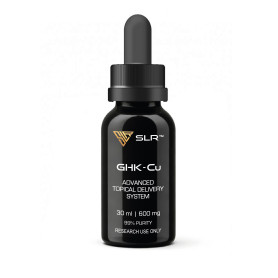
GHK-CU - 30ml/600mg
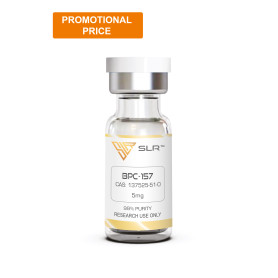
BPC-157 - 5mg, 10mg
| Image | Ref. | Unit price | Weight | Avail. | Buy |
|---|---|---|---|---|---|
 | TH1010 | €89.00 Discount by quantity 10+ €72.98 –18% 20+ €64.08 –28% 50+ €55.18 –38% 100+ €48.95 –45% 200+ €44.50 –50% | 0.000000 kg |  | |
| Total: 0,0 All prices with tax included. | |||||
Product is available Product is no longer in stock
 Product is no in stock, but is allowed to be back-ordered