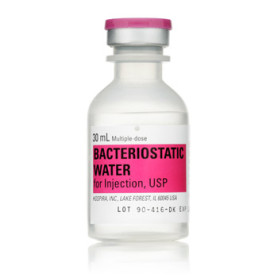
BACTERIOSTATIC WATER - 30ml
€19.50

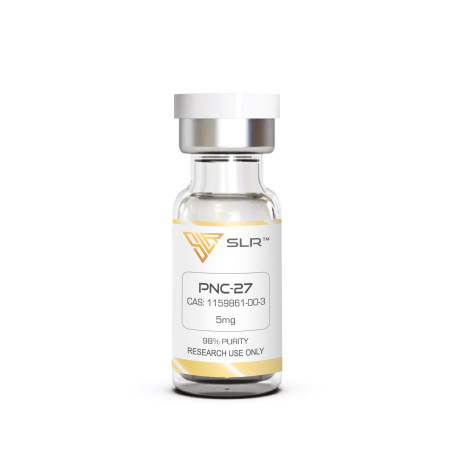

PNC-27 is a synthetic research peptide studied for its selective activity against malignant cells. It is designed to bind to HDM-2, a protein that is abnormally expressed on the membranes of many cancer cells and is known to interact with the p53 tumor suppressor pathway. Experimental research indicates that PNC-27 can selectively induce cancer cell death by disrupting the integrity of the cancer cell membrane through a process known as membranolysis, while showing minimal interaction with non-cancerous cells.
SPECIFICATIONS
Product Code: P27C005
Sequence: H-Pro-Pro-Leu-Ser-Gln-Glu-Thr-Phe-Ser-Asp-Leu-Trp-Lys-Leu-Leu-Lys-Lys-Trp-Lys-Met-Arg-Arg-Asn-Gln-Phe-Trp-Val-Lys-Val-Gln-Arg-Gly-OH
Molecular Formula: C188H293N53O44S
Molecular Weight: 4029.2 g/mol
CAS: 1159861-00-3
Purity: Technical / Research Grade 98%
Other details: No TFA Salt
Form: Lyophilized powder
Color: White
Storage temperature: -20°C
Source: Synthetic
Safety classification: Standard handling
DESCRIPTION
PNC-27 is a synthetic research peptide designed to selectively recognize and eliminate malignant cells while leaving normal, healthy cells unaffected. It belongs to the PNC family of investigational peptides, a class of molecules developed to exploit molecular differences between cancerous and non-cancerous cells. Unlike conventional cytotoxic agents that act indiscriminately on dividing cells, PNC-27 is designed to act through selective molecular recognition, making it a subject of interest in targeted cancer research. Its primary function in experimental models is to induce rapid cell death in transformed cells without causing collateral damage to surrounding tissue.
The PNC-27 peptide contains two distinct functional domains that are essential to its biological activity. One region allows the peptide to penetrate cellular membranes, while the second region is responsible for binding to the oncoprotein HDM-2, specifically through residues derived from the p53 tumor suppressor protein (amino acids 12–26). This structural configuration enables PNC-27 to localize preferentially to cancer cell membranes. Once bound, the peptide disrupts membrane integrity through a process known as membranolysis, resulting in pore formation and rapid osmotic collapse of the malignant cell.
Research has demonstrated that PNC-27 exhibits selective cytotoxicity against a broad range of cancer cell types. Experimental studies using animal models and cultured cell lines have shown activity against pancreatic cancer, breast cancer, melanoma, leukemia, and additional malignant phenotypes. Importantly, this selectivity appears to be driven by the abnormal expression of HDM-2 on the surface of cancer cells, a feature that is largely absent in normal, non-transformed cells. As a result, PNC-27 preferentially accumulates at the membranes of malignant cells and spares healthy tissue.
The PNC family of peptides, including PNC-27, was originally conceptualized and developed in 2000 by Dr. Matthew Pincus and Dr. Joseph Michl at SUNY Downstate Medical Center in New York. Their work focused on identifying peptides capable of distinguishing cancer cells based on unique membrane-associated molecular markers. PNC-27 emerged as a particularly promising candidate due to its ability to bind selectively to cancer cell membranes and induce rapid necrotic cell death rather than slower apoptotic mechanisms.
One of the defining characteristics of PNC-27 is its apparent lack of direct toxicity to healthy cells. Unlike many anticancer agents that interfere with DNA replication or mitotic processes in all rapidly dividing cells, PNC-27 appears to act only where its molecular target, membrane-associated HDM-2, is present. The peptide causes physical disruption of the cancer cell membrane, leading to rapid cell death driven by osmotic imbalance. This mechanism avoids many of the pathways associated with systemic toxicity.
The mechanism of action of PNC-27 is closely linked to the abnormal localization of HDM-2 in cancer cells. In malignant cells, HDM-2 is aberrantly expressed on the plasma membrane, where it becomes accessible to PNC-27. Upon binding, the peptide integrates into the membrane and forms transmembrane pores. These pores compromise membrane integrity, allowing uncontrolled ion and fluid movement that results in rapid cellular collapse and necrosis.
Experimental animal studies have identified consistent physiological responses following PNC-27 administration. In some models, a reduction in subjective pain-related behaviors has been observed within the first week of treatment. Subsequently, flu-like symptoms have been reported, which are thought to reflect immune activation in response to cancer cell destruction. These responses are consistent with the release of intracellular tumor antigens following membranolysis.
Over longer observation periods, researchers have reported biochemical and structural changes associated with tumor regression. Transient increases in biomarkers such as bilirubin and lactate dehydrogenase have been observed, potentially reflecting increased cellular turnover and metabolic processing of necrotic tumor tissue. Around the 8–10 week mark, tumors in treated animals have often been described as softer and more pliable, suggesting progressive breakdown of malignant tissue.
In some cases, temporary increases in tumor size have been noted during early treatment phases. This phenomenon is generally attributed to inflammation and immune cell infiltration rather than true tumor progression. As immune-mediated clearance continues, tumor growth typically slows, stabilizes, or regresses. After approximately three months, treated animals frequently display improved activity levels and reduced cancer-associated symptoms compared to untreated controls.
Animal studies have also documented non-lethal adverse effects associated with PNC-27 administration. These effects have included taste alterations, watery eyes, dry skin, headaches, musculoskeletal discomfort, transient blood pressure changes, and mild bleeding events. These observations have been reported in experimental contexts and are not associated with direct damage to healthy cellular structures.
A critical factor underlying the selectivity of PNC-27 is the differential expression of HDM-2. While cancer cells often exhibit high levels of membrane-associated HDM-2, normal cells generally do not. This molecular distinction enables PNC-27 to preferentially target malignant cells while minimizing interaction with healthy tissue.
Notably, research has shown that PNC-27 can suppress tumor growth even after treatment cessation. In animal models, cancer development was significantly inhibited during treatment and for weeks afterward, in contrast to control peptides that failed to limit tumor progression. This sustained suppression suggests that immune-mediated mechanisms may contribute to longer-term effects.
A 2014 study published in the Annals of Clinical & Laboratory Science further clarified the molecular requirements for PNC-27 activity. The authors concluded that membrane-associated HDM-2 expression is essential for PNC-27–induced necrosis in poorly differentiated leukemia cell lines. This finding reinforces the concept that HDM-2 localization is a critical determinant of the peptide’s anticancer effects.
Overall, PNC-27 remains an investigational research peptide, studied primarily in laboratory and preclinical settings. Ongoing research continues to explore its molecular selectivity, membrane-disruptive properties, immune interactions, and potential relevance to targeted cancer research strategies.
REFERENCES
All information presented above is derived from in vitro experiments, animal studies, and other preclinical research models. These data are intended solely for basic scientific investigation of biological mechanisms and do not imply any therapeutic, diagnostic, preventive, or clinical use in humans or animals.
K. Davitt et al., "The anti-cancer peptide, PNC-27, induces tumor cell necrosis of a poorly differentiated non-solid tissue human leukemia cell line that depends on expression of HDM-2 in the plasma membrane of these cells" [PubMed]
K.A. Sookraj et al., "The anti-cancer peptide, PNC-27, induces tumor cell lysis as the intact peptide" [PubMed]
E.S. Yazdi et al., "Ex vivo Efficacy of Anti-Cancer Drug PNC-27 in the Treatment of Patient-Derived Epithelial Ovarian Cancer" [PubMed]
Mi. Silberstein "Is PNC-27 and PNC-28 the best way to cure cancer?" [The Science Journal of the Lander College of Arts and Sciences]
P.M Aguon et al., "Experimental PNC-27 Therapy and Massive GI Hemorrhage: A Complication or Coincidence?" [AJG]
E. Sarafraz-Yazdi et al., "PNC-27, a Chimeric p53-Penetratin Peptide Binds to HDM-2 in a p53 Peptide-like Structure, Induces Selective Membrane-Pore Formation and Leads to Cancer Cell Lysis" [MDPI]
E. Sarafraz-Yazdi et al., "Anticancer peptide PNC-27 adopts an HDM-2-binding conformation and kills cancer cells by binding to HDM-2 in their membranes" [PNAS]
DISCLAIMER
This product is intendend for lab research and development use only. These studies are performed outside of the body. This product is not medicines or drugs and has not been approved by the FDA or EMA to prevent, treat or cure any medical condition, ailment or disease. Bodily introduction of any kind into humans or animals is strictly forbidden by law. This product should only be handled by licensed, qualified professionals.
All product information provided on this website is for informational and educational purposes only.
| Image | Ref. | Unit price | Weight | Avail. | Buy |
|---|---|---|---|---|---|
| P27005 | €58.00 Discount by quantity 10+ €49.30 –15% 20+ €41.76 –28% 50+ €34.80 –40% 100+ €30.16 –48% 200+ €26.10 –55% | 0.000000 kg |  | |
| Total: 0,0 All prices with tax included. | |||||
Product is available Product is no longer in stock
 Product is no in stock, but is allowed to be back-ordered