IPAMORELIN - 5mg
€22.00

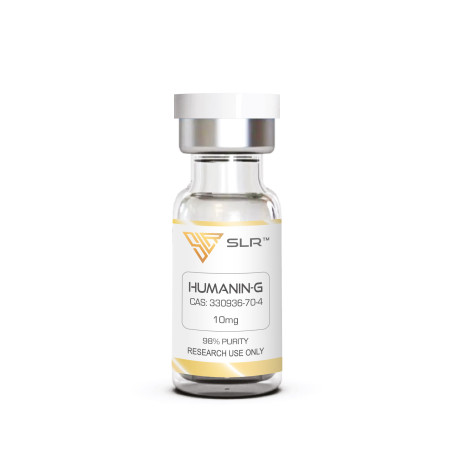

Humanin is a 24–amino acid mitochondrial-derived peptide in which each residue contributes to its biological activity. A key residue is serine at position 14, which is associated with neuroprotective properties. Substitution of this amino acid with glycine results in a more potent variant known as Humanin-G (HNG). Experimental research indicates that HNG exhibits substantially enhanced biological activity compared to native Humanin and is particularly effective in preserving mitochondrial function and cellular integrity under stress conditions. In preclinical and laboratory research settings, Humanin-G has been shown to support cellular survival by limiting mitochondrial dysfunction and reducing pathways associated with programmed cell death. These properties have generated scientific interest in its role within research models of ischemic injury, neurodegenerative processes such as Alzheimer’s disease, and other conditions linked to cellular stress. Based on experimental observations, Humanin-G has been associated with:
Protection against mitochondrial dysfunction in stressed cells
Reduction of apoptosis-related cellular pathways
Support of cellular longevity mechanisms in research models
Modulation of insulin sensitivity in experimental systems
Neuroprotective effects observed in models of ischemia and neurodegeneration
SPECIFICATIONS
Product Code: HUG010
HNG (Humanin-G) is an analog of Humanin, generated by S14G (serine-14-glycine)
Sequence: H-Met-Ala-Pro-Arg-Gly-Phe-Ser-Cys-Leu-Leu-Leu-Leu-Thr-Gly-Glu-Ile-Asp-Leu-Pro-Val-Lys-Arg-Arg-Ala-OH
Molecular Formula: C118H202N34O31S2
Molecular Weight: 2657,3 g/mol
CAS: 330936-70-4
Purity: Technical / Research Grade 98%
Other details: No TFA Salt
Form: Lyophilized powder
Color: White
Storage temperature: -20°C
Source: Synthetic
Safety classification: Standard handling
DESCRIPTION
Humanin, also known as HN, is a short cytoprotective polypeptide generated at the mitochondrial level and encoded by mitochondrial DNA (mtDNA). Through the regulation of multiple intracellular signaling mechanisms—including pathways such as JAK/STAT and interactions with members of the BCL-2 protein family—Humanin has been shown in experimental settings to exert protective effects across various cell types, including leukocytes, sperm cells, neurons, and other tissues exposed to membrane stress conditions and apoptotic stimuli. Within the human body, Humanin is considered an important regulatory peptide involved in maintaining mitochondrial function during cellular stress.
The objective of ongoing research is to explore the anti-apoptotic properties of the Humanin peptide as a potential molecular target in the study of multiple pathological conditions, including cancer, metabolic disorders, reduced fertility, bone-related disorders, cardiovascular dysfunctions, and neurological conditions. In vitro and in vivo studies have shown that Humanin can inhibit apoptosis in experimental models related to osteoporosis, cardiovascular disorders, diabetes mellitus, and neurodegenerative conditions. Accumulated experimental data also suggest that Humanin may modulate TNF-α–related apoptotic activity in cancer models, positioning it as a molecule of scientific interest in oncology research. Additionally, the development of related Akt-associated peptides has been proposed as a complementary research direction for conditions involving oxidative stress and apoptosis.
Unlike conventional peptides and proteins, micro-peptides are produced from short open reading frames (sORFs) and typically do not undergo post-translational modification. Their biological roles range from mRNA processing and DNA repair to cooperative interactions with larger protein complexes. Humanin, one of the shortest micro-peptides identified to date, consists of only 24 amino acids. It regulates apoptotic pathways through interaction with pro-apoptotic proteins such as Bcl-2–associated X protein (Bax), inhibiting Bax activity under conditions where cell survival is required.
Multiple studies indicate that Humanin provides protection not only against apoptosis but also against programmed cell death under specific stress conditions. In particular, Humanin has been shown to protect cells in experimental models of Alzheimer’s disease by preventing cell death associated with β-amyloid accumulation.
Humanin appears to protect neurons through two complementary mechanisms, both aimed at preventing mitochondrial activation of the apoptotic cascade. Under physiological conditions, BCL-2 family proteins regulate the release of mitochondrial factors that activate caspases responsible for controlled cellular dismantling. While this process is essential in normal immune and antiviral responses, dysregulation can lead to excessive cell loss. Humanin binds to pro-apoptotic proteins such as Bid and truncated Bid (tBid), inhibiting their activity and preventing initiation of the apoptotic cascade.
Advanced research from Argentina has demonstrated that astrocytes secrete Humanin to protect synapses within hippocampal neurons. It has been proposed that Humanin activity may decline with age, similar to other endogenous regulatory systems, potentially contributing to age-related cognitive decline and increased susceptibility to neurodegenerative disorders. Some studies suggest that maintaining Humanin signaling may help counteract age-associated reductions in mitochondrial protection.
A study conducted at the Mayo Clinic reported Humanin expression within human vascular walls, where it contributes to protection against oxidized LDL-induced vascular damage. Specifically, Humanin inhibits the generation of reactive oxygen species caused by LDL oxidation, resulting in approximately a 50% reduction in oxidative stress and apoptosis in vascular cells in experimental models.
Age-related macular degeneration (AMD) is a leading cause of irreversible vision loss worldwide. Emerging evidence indicates that Humanin plays a protective role in retinal pigment epithelium (RPE) cells by reducing oxidative stress. In cell culture models, Humanin supplementation improved RPE function and increased resistance to apoptosis, suggesting potential relevance for retinal disease research.
Independent studies from Sweden and Korea have identified two distinct mechanisms through which Humanin may support bone health. First, Humanin prevents chondrocyte apoptosis without interfering with the anti-inflammatory effects of glucocorticoids, thereby supporting cartilage and bone formation. Second, Humanin inhibits osteoclast formation while promoting chondrocyte activity, reducing excessive bone resorption under pathological conditions.
The skin is continuously exposed to oxidative stress, particularly from UV radiation, which plays a role in inflammatory dermatological conditions such as psoriasis. Research investigating Humanin analogs (e.g., S14-G HNG) in psoriasis-like mouse models suggests antioxidant and anti-inflammatory effects, positioning Humanin-related peptides as candidates for further dermatological research.
Low Humanin levels have been associated in research settings with the following conditions:
Experimentally observed effects associated with Humanin and its analogs include:
Humanin has demonstrated the ability to protect neural cells from amyloid-β–induced toxicity and reduce tau hyperphosphorylation in Alzheimer’s disease research models. Intranasal administration of Humanin analogs has been shown to reduce Aβ accumulation and improve memory performance in animal models. Additionally, Humanin-related peptides may improve insulin sensitivity in the brain—an important factor in the study of neurodegeneration and insulin resistance–associated cognitive decline.
REFERENCES
All observations described above originate from in vitro systems, animal studies, or other preclinical experimental models. They are intended solely to support basic research into molecular, cellular, and physiological mechanisms and do not imply therapeutic, diagnostic, or preventive applications in humans or animals.
M. Matsuoka, "Humanin; a defender against Alzheimer's disease?" [PubMed]
Seon-Yong Jeong et al., "The role of mitochondria in apoptosis" [PubMed]
J. Xiao et al., "Humanin: Functional Interfaces with IGF-I" [PubMed]
P.G. Sreekumar et al., "The Mitochondrial-Derived Peptide Humanin Protects RPE Cells From Oxidative Stress, Senescence, and Mitochondrial Dysfunction" [ResearchGate]
A.R. Bachar et al., "Humanin is expressed in human vascular walls and has a cytoprotective effect against oxidized LDL-induced oxidative stress" [PubMed]
S. Nashine et al., "Humanin G (HNG) protects age-related macular degeneration (AMD) transmitochondrial ARPE-19 cybrids from mitochondrial and cellular damage" [PMC]
Z. Salahuddin et al., "Revolutionalizing the age old conventional treatment of psoriasis: An animal based comparative study between methylprednisolone and different doses of a novel anti-oxidant humanin analogue (HNG)" [ScienceDirect]
N. Kang et al., "Humanin suppresses receptor activator of nuclear factor-κB ligand-induced osteoclast differentiation via AMP-activated protein kinase activation" [PubMed]
A. Zhloba et al., "The level of circulating humanin in patients with ischemic heart disease" [PubMed]
D. Zhai, "Humanin binds and nullifies Bid activity by blocking its activation of Bax and Bak" [PubMed]
I. Sponne et al., "Humanin rescues cortical neurons from prion-peptide-induced apoptosis" [PubMed]
S.C. Zàrate et al., "Humanin, a Mitochondrial-Derived Peptide Released by Astrocytes, Prevents Synapse Loss in Hippocampal Neurons" [PubMed]
A.R. White et al., "Sublethal concentrations of prion peptide PrP106-126 or the amyloid beta peptide of Alzheimer's disease activates expression of proapoptotic markers in primary cortical neurons" [PubMed]
DISCLAIMER
This product is intendend for lab research and development use only. These studies are performed outside of the body. This product is not medicines or drugs and has not been approved by the FDA or EMA to prevent, treat or cure any medical condition, ailment or disease. Bodily introduction of any kind into humans or animals is strictly forbidden by law. This product should only be handled by licensed, qualified professionals.
All product information provided on this website is for informational and educational purposes only.
| Image | Ref. | Unit price | Weight | Avail. | Buy |
|---|---|---|---|---|---|
| HUG010 | €119.00 Discount by quantity 10+ €97.58 –18% 20+ €85.68 –28% 50+ €73.78 –38% 100+ €65.45 –45% 200+ €59.50 –50% | 0.000000 kg |  | |
| Total: 0,0 All prices with tax included. | |||||
Product is available Product is no longer in stock
 Product is no in stock, but is allowed to be back-ordered