5-AMINO-1MQ - 3g
€145.00

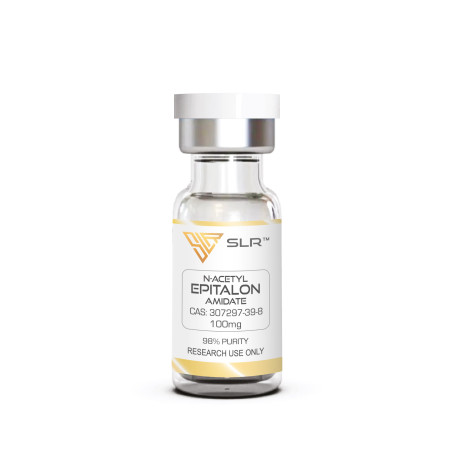

Note: Due to N-acetylation and amidation, the peptide exhibits reduced polarity, which may result in lower water solubility compared to unmodified Epitalon.
N-Acetyl Epitalon Amidate is a synthetically modified derivative of Epitalon (epithalamin), obtained through N-acetylation and C-terminal amidation. The acetylation and amidation modifications applied to N-acetyl Epitalon Amidate have been studied for their ability to confer enhanced molecular stability, extended half-life, and improved receptor interaction compared to the unmodified peptide.
Epitalon and its modified forms have been extensively studied in relation to cellular aging processes, telomere biology, circadian regulation, and genomic stability. In particular, research has examined this peptide in the context of the following biological areas:
Telomerase-related pathways
Cellular stress resistance
Endocrine and circadian regulation
Stress hormone modulation
Antioxidant activity
Central nervous system function
Longevity-related processes
SPECIFICATIONS
Product Code: NAE100
Sequence: Ac-Ala-Glu-Asp-Gly-NH2
Molecular Formula: C14H22N4O9
Molecular Weight: 431.39 g/mol
CAS: 307297-39-8
Purity: Technical / Research Grade 98%
Other details: No TFA Salt
Form: Lyophilized powder
Color: White
Storage temperature: -20°C
Source: Synthetic
Safety classification: Standard handling
DESCRIPTION
N-Acetyl Epitalon Amidate is a synthetically modified form of the peptide Epitalon, obtained through N-acetylation at the N-terminus and amidation at the C-terminus. These structural modifications do not alter the core biological identity of the native peptide but have been shown in research settings to influence its stability, half-life, and overall biological availability. Epitalon and its modified analogs have been widely studied in experimental models for their association with cellular aging processes, immune regulation, genomic stability, and circadian biology.
The chemical modifications applied to Epitalon are limited to N-acetylation and amidation, both of which are well-established strategies in peptide chemistry. Each modification confers specific physicochemical advantages that, according to experimental data, enhance peptide persistence and functional efficiency, allowing biological effects to be observed at lower concentrations compared to the unmodified form.
Gene Expression and Epigenetic Regulation
Cell culture studies have shown that N-Acetyl Epitalon Amidate is associated with changes in protein synthesis and gene expression patterns related to neurogenetic differentiation. Molecular modeling and experimental observations suggest that these effects may occur through epigenetic mechanisms involving histone interactions. Specifically, N-Acetyl Epitalon Amidate has been shown to bind to certain histone proteins, increasing chromatin accessibility and facilitating transcription of genes encoding proteins such as Nestin, GAP43, tubulin III, and doublecortin.
Improved access to these genomic regions has been associated with increased gene expression—reported in experimental settings to reach up to approximately 1.8-fold—leading to enhanced protein synthesis. These findings support the role of N-Acetyl Epitalon Amidate as a modulator of DNA accessibility and transcriptional activity in specific cellular contexts.
Central Nervous System and Neurogenetic Processes
Through its influence on gene expression and chromatin structure, N-Acetyl Epitalon Amidate has been associated in experimental research with enhanced learning processes, accelerated recovery following central nervous system injury, and modulation of age-related changes in brain function. One of the mechanisms investigated involves its ability to influence neuronal stem cell differentiation by promoting the development and maturation of neurons from progenitor cells.
These observations have positioned N-Acetyl Epitalon Amidate as a peptide of interest in research exploring neural plasticity, neurodevelopmental regulation, and long-term brain resilience in aging models.
Skin Biology and Cellular Renewal
Research conducted on skin stem cell cultures in animal models has demonstrated that N-Acetyl Epitalon Amidate is associated with increased stem cell proliferation even at very low concentrations. Experimental findings indicate that fibroblast proliferation rates may increase significantly, with studies reporting up to a 45% increase in proliferating fibroblasts. In addition, N-Acetyl Epitalon Amidate has been shown to enhance fibroblast functional activity while reducing apoptosis rates.
These combined effects are associated with normalization of the intracellular matrix and restoration of cellular homeostasis. Experimental data suggest that this shift favors protein synthesis patterns typically associated with younger tissue states, including the production of structural proteins such as collagen and elastin. The overall outcome observed in research models is improved skin structural integrity and cellular balance.
Immune System Regulation
N-Acetyl Epitalon Amidate has also been studied for its involvement in immune-related gene regulation. Cell culture studies indicate that the peptide influences the expression of several immune signaling molecules, including CD5, interleukin-2 (IL-2), arylalkylamine-N-acetyltransferase, interferon-gamma, and Tram1. Each of these molecules plays a distinct role in immune system function.
CD5 is involved in immune cell development and differentiation, supporting the maturation of functional immune cells. IL-2 is a key regulator of white blood cell proliferation. Arylalkylamine-N-acetyltransferase is a critical enzyme in melatonin synthesis, linking immune modulation with circadian regulation. Interferon-gamma has been shown in animal models to activate macrophages, natural killer cells, and T cells, contributing to immune defense mechanisms, particularly in viral response pathways.
Immune system dysregulation is considered a major contributor to aging-associated chronic inflammation, which has been linked in research to cognitive decline and cardiovascular dysfunction. By modulating immune-related gene expression, N-Acetyl Epitalon Amidate has been studied for its potential role in maintaining immune balance during aging.
Cancer-Related Research
Experimental studies in animal models have demonstrated that N-Acetyl Epitalon Amidate is associated with inhibition of tumor development across several cancer types. Research has explored its relevance as an adjunct factor in experimental models of testicular cancer, leukemia, and HER-2/neu-positive breast tumors. One of the primary mechanisms investigated involves regulation of the PER1 gene.
PER1 is a circadian rhythm–associated gene that has been found to be underexpressed in certain cancer states. N-Acetyl Epitalon Amidate has been shown in research settings to influence PER1 expression, linking circadian regulation with cellular growth control mechanisms.
Circadian Rhythm and Melatonin Regulation
N-Acetyl Epitalon Amidate has been shown in experimental models to influence the synthesis and regulation of melatonin by acting on genes such as arylalkylamine-N-acetyltransferase and pCREM. Through these pathways, the peptide has been associated with normalization of circadian rhythms and sleep–wake cycles in aging animal models.
Age-related alterations in melatonin production and circadian regulation are thought to result from changes in DNA expression patterns. By influencing chromatin accessibility and gene transcription, N-Acetyl Epitalon Amidate has been associated with a shift toward more youthful expression profiles. These changes have downstream relevance in research models examining cognition, wound healing, immune response, growth hormone release, body composition, bone integrity, and cardiovascular regulation.
Longevity and DNA Integrity
In aging animal models, supplementation with N-Acetyl Epitalon Amidate has been associated with restoration of age-altered DNA expression patterns. Experimental studies in rodents and insects have reported increased lifespan and reduced mortality rates, with some studies noting lifespan extensions of up to approximately 27%.
A portion of these effects is thought to be mediated through epigenetic mechanisms involving histone binding and regulation of antioxidant activity. Research has also examined the peptide’s influence on telomere biology. N-Acetyl Epitalon Amidate has been shown to activate telomerase in human somatic cells in experimental settings. Telomerase plays a central role in maintaining telomere length, which protects chromosomal DNA during replication and contributes to cellular longevity.
In parallel, animal studies have shown that N-Acetyl Epitalon Amidate is associated with reduced protein oxidative modification and decreased lipid peroxidation product (LPO) formation. As antioxidant production declines with age, oxidative damage accumulates. N-Acetyl Epitalon Amidate has been studied for its role in supporting redox balance and mitigating age-related oxidative stress.
Peptide Modifications: N-Acetylation and Amidation
In synthetic peptide chemistry, N-acetylation is used to modify charge, hydrophobicity, and molecular stability. This modification can influence peptide half-life, tissue distribution, and receptor interaction without altering core biological function. N-acetylation is widely used to enhance peptide stability and potency in a cost-effective manner.
Amidation involves modification of the carboxyl terminus of the peptide chain and is a naturally occurring process found in a large proportion of endogenous peptides. Amidation reduces susceptibility to proteolytic degradation, increases resistance to pH fluctuations, and enhances receptor binding affinity. Amidated peptides often exhibit prolonged biological activity compared to non-amidated forms.
In synthetic biology, amidation also serves to improve peptide bioavailability. It enhances peptide survival in the gastrointestinal environment, increases stability in circulation, and promotes stronger receptor interactions. For peptides active in the central nervous system, such as Epitalon, amidation has also been associated with increased lipid solubility, facilitating greater penetration across the blood–brain barrier. As a result, N-Acetyl Epitalon Amidate combines enhanced stability, improved receptor engagement, and increased central nervous system accessibility.
REFERENCES
All observations described above originate from in vitro systems, animal studies, or other preclinical experimental models. They are intended solely to support basic research into molecular, cellular, and physiological mechanisms and do not imply therapeutic, diagnostic, or preventive applications in humans or animals.
V. Khavinson et al., "Pineal-regulating tetrapeptide epitalon improves eye retina condition in retinitis pigmentosa" [PubMed]
I.A. Vinogradova et al., "Effect of Ala-Glu-Asp-Gly peptide on life span and development of spontaneous tumors in female rats exposed to different illumination regimes" [PubMed]
T.A. Dzhokhadze et al., "[Functional regulation of genome with peptide bioregulators by hypertrophic cardiomyopathy (by patients and relatives)]" [PubMed]
I.N. Alimova et al., "Effect of Epitalon and Vilon treatment on mammary carcinogenesis in transgenic erbB-2/NEU mice" [PubMed]
N.S. Lin'Kova et al., "Peptide Ala-Glu-Asp-Gly and interferon gamma: their role in immune response during aging" [PubMed]
D.A. Sibarov et al., "Epitalon influences pineal secretion in stress-exposed rats in the daytime" [PubMed]
N.S. Lin'Kova et al., "Peptide Regulation of Skin Fibroblast Functions during Their Aging In Vitro" [PubMed]
I.F. Labunets et al., "Effect of epithalamin on circadian relationship between the endocrine function of the thymus and melatonin-producing function of the pineal gland in elderly people" [PubMed]
D.A. Sibarov et al., "Effects of intranasal administration of epitalon on neuron activity in the rat neocortex" [PubMed]
V.N. Anisimov et al., "Epithalon decelerates aging and suppresses development of breast adenocarcinomas in transgenic her-2/neu mice" [PubMed]
G. Kossoy et al., "Effect of the synthetic pineal peptide epitalon on spontaneous carcinogenesis in female C3H/He mice" [PubMed]
N.I. Chasilova et al., "Short peptides stimulate skin cell regeneration during ageing" [PubMed]
O.V. Korkushko et al., "Effect of peptide preparation epithalamin on circadian rhythm of epiphyseal melatonin-producing function in elderly people" [PubMed]
V.K. Khavinson et al., "Effect of regulatory peptides on gene transcription" [PubMed]
V. Khavinson et al., "AEDG Peptide (Epitalon) Stimulates Gene Expression and Protein Synthesis during Neurogenesis: Possible Epigenetic Mechanism" [PubMed]
V.N. Anisimov et al., "Effect of Epitalon on biomarkers of aging, life span and spontaneous tumor incidence in female Swiss-derived SHR mice" [PubMed]
G. Kossoy et al., "Epitalon and colon carcinogenesis in rats: proliferative activity and apoptosis in colon tumors and mucosa" [PubMed]
V.N. Anisimov et al., "Inhibitory effect of the peptide epitalon on the development of spontaneous mammary tumors in HER-2/neu transgenic mice" [PubMed]
V.K. Khavinson et al., "Epithalon peptide induces telomerase activity and telomere elongation in human somatic cells" [PubMed]
V.N. Anisimov et al., "Pineal peptide preparation epithalamin increases the lifespan of fruit flies, mice and rats" [PubMed]
V.K. Khavinson et al., "Short cell-penetrating peptides: a model of interactions with gene promoter sites" [PubMed]
V. Khavinson et al., "Peptide Epitalon activates chromatin at the old age" [PubMed]
DISCLAIMER
This product is intendend for lab research and development use only. These studies are performed outside of the body. This product is not medicines or drugs and has not been approved by the FDA or EMA to prevent, treat or cure any medical condition, ailment or disease. Bodily introduction of any kind into humans or animals is strictly forbidden by law. This product should only be handled by licensed, qualified professionals.
All product information provided on this website is for informational and educational purposes only.

| Image | Ref. | Unit price | Weight | Avail. | Buy |
|---|---|---|---|---|---|
| NAE100 | €169.00 Discount by quantity 10+ €135.20 –20% 20+ €118.30 –30% 50+ €104.78 –38% 100+ €94.64 –44% 200+ €84.50 –50% | 0.000000 kg |  | |
| Total: 0,0 All prices with tax included. | |||||
Product is available Product is no longer in stock
 Product is no in stock, but is allowed to be back-ordered