
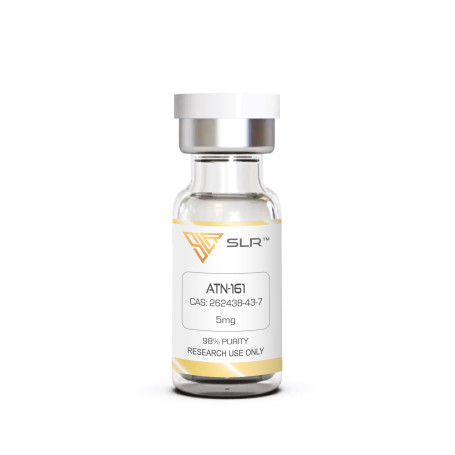


ATN-161- 5mg, 60mg
ATN-161 is a synthetic pentapeptide used in preclinical research models to study integrin–extracellular matrix interactions, particularly those involving fibronectin binding. In in vitro systems and animal studies, modulation of these interactions has been employed to investigate cell adhesion, migration, angiogenesis-related signaling, and tissue remodeling mechanisms under experimental conditions.
Description
SPECIFICATIONS
Product Code: AT1005
Sequence: Ac-Pro-His-Ser-Cys-Asn-NH2
Molecular Formula: C₂₃H₃₅N₉O₈S
Molecular Weight: 597.64 g/mol
CAS: 262438-43-7
Purity: Technical / Research Grade 98%
Other details: No TFA Salt
Form: Lyophilized powder
Color: White
Storage temperature: -20°C
Source: Synthetic
Safety classification: Standard handling
DESCRIPTION
ATN-161 is a synthetic pentapeptide derived from a sequence within the α5β1 integrin, a key binding domain involved in interactions with fibronectin, an extracellular matrix (ECM) glycoprotein. It is used in preclinical research models as a tool to investigate cell–matrix interactions and their role in processes such as cell adhesion, migration, survival, and tissue remodeling.
To improve experimental stability, ATN-161 incorporates N-terminal acetylation (Ac) and C-terminal amidation (NH₂). These structural modifications are commonly employed in peptide research to increase resistance to enzymatic degradation and to facilitate the study of peptide behavior in controlled laboratory systems.
Integrin and extracellular matrix signaling research (preclinical)
In in vitro systems and animal models, ATN-161 has been investigated for its ability to interfere with integrin-mediated binding to fibronectin, particularly involving α5β1 and αvβ3 integrins. These integrins are known to regulate a variety of cellular processes, including:
- adhesion to the extracellular matrix,
- cytoskeletal organization,
- cell migration,
- and survival-related signaling pathways.
By modulating these interactions, ATN-161 serves as a research compound for studying how cell–ECM dynamics influence tissue behavior under experimental conditions.
Angiogenesis and cell migration models (preclinical)
ATN-161 has been examined in preclinical angiogenesis and migration assays to explore the role of integrin–fibronectin signaling in vascular formation and cell motility. Experimental findings in laboratory models have shown that disruption of integrin engagement can influence:
- endothelial cell organization,
- migration through ECM substrates,
- and vascular-related signaling cascades.
These studies are designed to characterize mechanistic aspects of angiogenesis and invasion, rather than therapeutic outcomes.
Intracellular signaling pathway investigations (preclinical)
At the molecular level, ATN-161 has been used to study integrin-dependent intracellular signaling, including pathways involving focal adhesion kinase (FAK) and Src-family kinases, which play central roles in adhesion, migration, and survival signaling.
In experimental systems, inhibition of integrin engagement has been associated with:
- altered activation of FAK/Src signaling,
- changes in cytoskeletal dynamics,
- and modulation of downstream signaling networks linked to cell movement and stress responses.
These observations provide insight into structure–function relationships between integrins and intracellular signaling machinery.
Tumor microenvironment and stromal interaction research (preclinical)
Beyond direct effects on isolated cells, ATN-161 has been studied in preclinical models that include stromal and microenvironmental components, where integrin signaling contributes to cell–cell and cell–matrix communication. In these models, experimental modulation of integrin pathways has been used to explore:
- stromal–cell interactions,
- recruitment of supportive cell populations,
- and extracellular matrix remodeling.
Such studies aim to better understand the complex signaling networks within tissue microenvironments.
Inflammatory signaling and immune interaction models (preclinical)
Integrins also participate in immune cell trafficking and inflammatory signaling. In laboratory models, ATN-161 has been explored as a tool to investigate how modulation of integrin pathways may influence:
- leukocyte adhesion and migration,
- cytokine-associated signaling pathways (including NF-κB–related mechanisms),
- and inflammatory responses at sites of tissue stress or damage.
These investigations are confined to experimental inflammatory models and are intended to clarify basic immunobiological mechanisms.
Broader disease-related research contexts (preclinical)
Due to the central role of integrins in cell adhesion and tissue remodeling, ATN-161 has been included in preclinical research models relevant to a wide range of disease-associated biological processes, including:
- solid tumor biology and metastasis-related mechanisms,
- fibrotic tissue remodeling,
- bone turnover and osteoclast signaling,
- vascular remodeling and atherosclerosis-related pathways.
In all cases, ATN-161 is used as a research probe to investigate underlying molecular and cellular mechanisms, not as a therapeutic agent.
Pharmacokinetic and formulation research (preclinical)
Experimental studies have also examined pharmacokinetic-related parameters of ATN-161 in laboratory settings, such as bioavailability, duration of action, and clearance profiles. Additionally, alternative research formulations (e.g., liposomal encapsulation or PEGylation) have been explored experimentally to study how formulation strategies may influence peptide stability and delivery in non-clinical models.
REFERENCES
All information presented above is derived from in vitro experiments, animal studies, and other preclinical research models. These data are intended solely for basic scientific investigation of biological mechanisms and do not imply any therapeutic, diagnostic, preventive, or clinical use in humans or animals.
P. Khalili et al., "A non-RGD-based integrin binding peptide (ATN-161) blocks breast cancer growth and metastasis in vivo" [PubMed]
F. Donate et al., "Pharmacology of the novel antiangiogenic peptide ATN-161 (Ac-PHSCN-NH2): observation of a U-shaped dose-response curve in several preclinical models of angiogenesis and tumor growth" [PubMed]
B.J. Beddingfield et al., "The Integrin Binding Peptide, ATN-161, as a Novel Therapy for SARS-CoV-2 Infection" [PubMed]
M.E. Cianfrocca et al., "Phase 1 trial of the antiangiogenic peptide ATN-161 (Ac-PHSCN-NH(2)), a beta integrin antagonist, in patients with solid tumours" [PubMed]
D.E. Edwards et al., "Integrin α5β1 inhibition by ATN-161 reduces neuroinflammation and is neuroprotective in ischemic stroke" [PubMed]
O. Stoeltzing et al., "Inhibition of integrin alpha5beta1 function with a small peptide (ATN-161) plus continuous 5-FU infusion reduces colorectal liver metastases and improves survival in mice" [PubMed]
DISCLAIMER
This product is intendend for lab research and development use only. These studies are performed outside of the body. This product is not medicines or drugs and has not been approved by the FDA or EMA to prevent, treat or cure any medical condition, ailment or disease. Bodily introduction of any kind into humans or animals is strictly forbidden by law. This product should only be handled by licensed, qualified professionals.
All product information provided on this website is for informational and educational purposes only.
Data sheet
Customers who bought this product also bought:
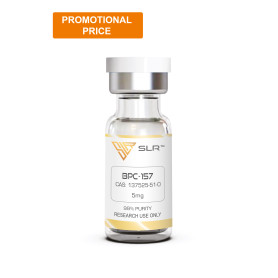
BPC-157 - 5mg, 10mg
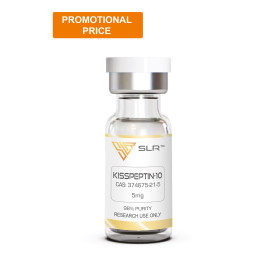
KISSPEPTIN-10 - 5mg
PNC-27 - 5mg
GHK-CU - 200mg
THYMOSIN ALPHA-1 - 10 mg

HUMANIN G - 10ml/10mg - Spray
Choose product attributes:
| Image | Ref. | mg | Unit price | Weight | Avail. | Buy |
|---|---|---|---|---|---|---|
 | AT1005 | 5 mg | €56.00 Discount by quantity 10+ €47.60 –15% 20+ €40.32 –28% 50+ €34.72 –38% 100+ €31.36 –44% 200+ €28.00 –50% | 0 kg |  | |
| | AT1005 | 60 mg | €498.00 Discount by quantity 10+ €423.30 –15% | 0 kg | | |
| Total: 0,0 All prices with tax included. | ||||||
Product is available Product is no longer in stock
 Product is no in stock, but is allowed to be back-ordered