IPAMORELIN - 5mg
€22.00

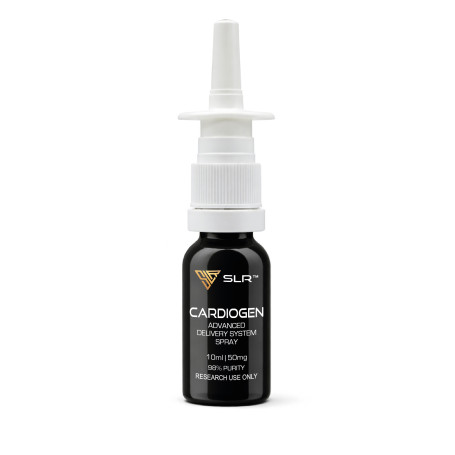

Cardiogen is a short synthetic peptide used in preclinical research models to study fibroblast-associated signaling and tissue remodeling mechanisms. In in vitro systems and animal studies, it has been investigated for its role in regulating cellular processes involved in extracellular matrix organization and scar-related responses under experimental conditions.
FRESHLY PREPARED SOLUTION
ADVANCED DELIVERY SYSTEM - CELL PENETRATING PEPTIDE TECHNOLOGY
This product utilizes advanced delivery technology incorporating calibrated cell-penetrating peptide (CPP) systems. The formulation is engineered to support efficient and targeted intracellular delivery of active ingredients, contributing to enhanced transport performance and bioavailability.
SPECIFICATIONS
Product Code: CAR050S
Sequence: H-Ala-Glu-Asp-Arg-OH
Molecular Formula: C18H31N7O9
Molecular Weight: 489.5 g/mol
PubChem CID: 11583989
Purity: Technical / Research Grade ≥98%
Other details: No TFA Salt
Form: Liquid Solution
Color: Clear / Slightly opalescent
Total Content: 10 mL / 50 mg
Concentration: 5 mg/mL
Approximate Sprays per Bottle: ~82
Approximate Peptide per Spray: ~609 mcg
Vehicle / Carrier System: Proprietary carrier system
Storage Temperature: 4°C (Do not freeze)
Source: Synthetic
Safety classification: Standard handling
DESCRIPTION
Cardio Cardiogen is a short synthetic peptide investigated in preclinical research models as a bioregulatory compound with activity primarily directed toward fibroblast-mediated signaling pathways. Fibroblasts play a central role in tissue remodeling, extracellular matrix deposition, and scar formation, and experimental modulation of their activity is widely used to study mechanisms of tissue repair and fibrosis under laboratory conditions.
Fibroblast regulation and tissue remodeling research (preclinical)
In cell culture systems and animal models, Cardiogen has been examined for its ability to modulate fibroblast proliferation, migration, and signaling activity. These investigations focus on understanding how altered fibroblast behavior influences scar formation, connective tissue organization, and long-term tissue remodeling across different experimental tissue contexts.
Although a significant portion of the research has explored cardiac-related models, the effects of Cardiogen on fibroblast activity have also been studied in non-cardiac tissues, reflecting the ubiquitous role of fibroblasts in tissue homeostasis and repair.
Experimental synergy and pathway interaction studies (preclinical)
Cardiogen has been included in preclinical combination studies designed to explore synergistic or modulatory interactions with other experimental interventions. These studies aim to characterize how bioregulatory peptides may influence cellular stress responses, signaling balance, and pathway specificity in complex experimental systems, without implying enhancement of clinical treatments.
Cardiomyocyte and cardiac remodeling models (preclinical)
In preclinical cardiac research models, Cardiogen has been investigated for its effects on cardiomyocyte-associated signaling and fibroblast-driven remodeling processes. Experimental findings suggest differential regulation of cell populations involved in cardiac tissue structure, providing a framework for studying scar formation and remodeling dynamics following experimental injury or stress.
In these models, Cardiogen has also been examined for its interaction with apoptosis-related signaling pathways, including experimental modulation of p53-associated mechanisms, which are commonly used markers in studies of cell survival and programmed cell death.
Differential apoptosis signaling research (preclinical)
Experimental evidence from animal tumor models and cell culture systems has explored how Cardiogen may influence apoptotic signaling in different cellular environments. In laboratory settings, contrasting effects on apoptosis-related markers have been observed between non-transformed cells and tumor-derived cells, supporting its use as a research probe to study context-dependent regulation of cell death pathways.
These findings are interpreted as mechanistic observations related to cellular microenvironment, vascular characteristics, and stress signaling, rather than as selective cytotoxic activity.
Tumor microenvironment and fibroblast signaling studies (preclinical)
In tissue culture models, Cardiogen has been studied for its effects on fibroblast-derived signaling molecules involved in shaping the tumor microenvironment, including pathways associated with stromal support, cell–cell communication, and extracellular matrix regulation.
Additional experimental work has investigated how age-related or senescent fibroblast states alter the expression of these signaling markers, providing insight into how stromal aging may influence tumor initiation and progression in laboratory models.
REFERENCES
All information presented above is derived from in vitro experiments, animal studies, and other preclinical research models. These data are intended solely for basic scientific investigation of biological mechanisms and do not imply any therapeutic, diagnostic, preventive, or clinical use in humans or animals.
L. Begley et al., "CXCL12 overexpression and secretion by aging fibroblasts enhance human prostate epithelial proliferation in vitro" [PubMed]
N.I. Chalisova et al., "The effect of the amino acids and cardiogen on the development of myocard tissue culture from young and old rats" [PubMed]
N.V. Levdik et al., "Tumor-modifying effect of cardiogen peptide on M-1 sarcoma in senescent rats" [PubMed]
DISCLAIMER
This product is intendend for lab research and development use only. These studies are performed outside of the body. This product is not medicines or drugs and has not been approved by the FDA or EMA to prevent, treat or cure any medical condition, ailment or disease. Bodily introduction of any kind into humans or animals is strictly forbidden by law. This product should only be handled by licensed, qualified professionals.
All product information provided on this website is for informational and educational purposes only.
| Image | Ref. | Unit price | Weight | Avail. | Buy |
|---|---|---|---|---|---|
| CAR050S | €175.00 Discount by quantity 10+ €140.00 –20% 20+ €122.50 –30% 50+ €108.50 –38% 100+ €98.00 –44% 200+ €87.50 –50% | 0.100000 kg |  | |
| Total: 0,0 All prices with tax included. | |||||
Product is available Product is no longer in stock
 Product is no in stock, but is allowed to be back-ordered