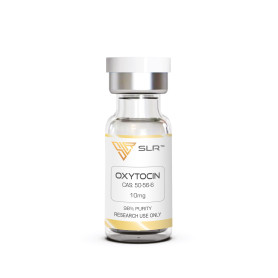
OXYTOCIN - 10mg
€34.00



Vesugen is a short synthetic bioregulatory peptide investigated for its role in vascular and neurovascular regulation. It belongs to a class of organ-specific peptides studied for their potential capacity to modulate gene expression patterns associated with endothelial stability, metabolic regulation, and cellular stress resistance.
Experimental models have explored its interaction with genes such as p16 and p21 (cell cycle regulation), as well as pathways linked to SIRT1 activity, which is widely associated with metabolic control, stress adaptation, and longevity-related signaling mechanisms.
Within neurovascular research contexts, Vesugen has been examined for its potential role in maintaining microvascular integrity and supporting oxidative balance in neural tissues.
Additional research has evaluated Vesugen in the context of endothelial gene expression, nitric oxide signaling balance, and vascular membrane stability. Modulation of endothelin-1 expression and reduction of oxidative vascular markers have been reported in controlled laboratory studies.
Overall, Vesugen is characterized in scientific literature as a vascular bioregulatory peptide investigated for its potential epigenetic modulation of gene expression related to endothelial function, neurovascular stability, metabolic balance, and cellular aging pathways.
SPECIFICATIONS
Product Code: VES100
Sequence: Lys-Glu-Asp
Molecular Formula: C15H26N4O8
Molecular Weight: 390.39 g/mol
CAS: 204271-66-9
Purity: Technical / Research Grade ≥98%
Other Details: No TFA Salt
Form: Solid
Appearance: White
Storage: -20°C
Source: Synthetic
Safety Classification: Standard laboratory handling
DESCRIPTION
Vesugen belongs to the class of short bioregulatory peptides investigated for their role in vascular and neuroendocrine regulation. It is categorized among organ-specific peptides originally studied for their potential to influence gene expression patterns within targeted tissues under controlled experimental conditions. Unlike conventional pharmacological compounds that act primarily through receptor agonism or inhibition, bioregulatory peptides are generally described in the literature as epigenetic modulators capable of interacting with chromatin-associated regulatory regions. Preclinical data suggest that short peptides of this category may bind selectively to DNA promoter regions and influence transcriptional activity in a tissue-specific manner. This mechanism differs from classical pharmacodynamics because it does not rely on acute pathway overstimulation but rather on gradual normalization of gene expression patterns.
Neurovascular interface and central nervous system support
The central nervous system is highly dependent on stable vascular integrity. Neurons require continuous oxygen delivery, regulated glucose metabolism, and tightly controlled redox balance. Experimental models investigating Vesugen have explored its potential role in maintaining endothelial homeostasis and microvascular stability within neural tissues. Oxidative stress is widely recognized as a contributing factor in age-associated cognitive decline. Reactive oxygen species can disrupt mitochondrial function, damage lipid membranes, and impair synaptic signaling. Laboratory observations suggest that Vesugen may influence endogenous antioxidant defense systems, including pathways associated with superoxide dismutase and catalase activity. By modulating oxidative markers under experimental conditions, the peptide may contribute to improved cellular resilience.
Synaptic plasticity has also been evaluated in relation to short regulatory peptides. Proteins such as GAP43 and nestin, associated with neuronal growth and cytoskeletal remodeling, have been examined in laboratory studies involving peptide exposure. These proteins play roles in neurite extension and synaptic restructuring. Vesugen has been reported in experimental settings to influence gene expression related to neuronal differentiation markers, although these findings remain within research frameworks.
Apoptosis and cell cycle regulation
Aging tissues often exhibit altered expression of genes regulating apoptosis and cellular senescence. Among these are p16 and p21, both involved in cell cycle control. Dysregulation of these pathways may contribute to functional decline in slowly regenerating tissues. Experimental investigations suggest that Vesugen may modulate the transcriptional balance of such genes under laboratory conditions, potentially contributing to improved cellular equilibrium.
Additional pathways examined in research contexts include those associated with APOE and IGF1 signaling. APOE participates in lipid transport and neuronal membrane repair, while IGF1 is involved in growth and survival cascades. Modulation of these pathways has been observed in controlled models, suggesting a broader influence on neurovascular homeostasis.
Sirtuin-1 and longevity-associated mechanisms
Sirtuin 1 (SIRT1) is a NAD+-dependent deacetylase extensively studied for its role in metabolic regulation, stress resistance, and longevity-associated signaling. Caloric restriction has been shown to increase SIRT1 activity across multiple tissues. Experimental data indicate that Vesugen administration may be associated with modulation of SIRT1 expression in certain models. SIRT1 interacts with the p53 protein, a regulator of apoptosis. Deacetylation of p53 through SIRT1-related pathways may influence apoptosis signaling intensity. In tissues characterized by limited regenerative capacity, balanced apoptosis regulation is essential for structural preservation.
Autophagy, another process linked to SIRT1 activity, plays a crucial role in cellular maintenance. Through autophagic recycling, cells eliminate damaged organelles and misfolded proteins. Experimental studies suggest that Vesugen-associated modulation of SIRT1 pathways may influence autophagic processes, contributing to improved cellular housekeeping mechanisms.
Metabolic regulation and insulin sensitivity
SIRT1 also interacts with metabolic regulators such as PGC1-alpha and the ERR-alpha complex. These proteins coordinate mitochondrial biogenesis and fatty acid oxidation. In experimental metabolic models, modulation of SIRT1 pathways has been associated with improved insulin sensitivity and metabolic flexibility. Studies conducted in animal models have explored the relationship between short bioregulatory peptides and insulin response under high-fat dietary conditions. Activation of SIRT1-related pathways has been linked to reduced insulin resistance markers in controlled research settings. These findings remain preclinical but suggest potential systemic metabolic implications.
Vascular health and endothelial gene expression
Endothelial cells form the inner lining of blood vessels and regulate vascular tone, permeability, and inflammatory signaling. Age-associated endothelial dysfunction contributes to vascular stiffness and reduced perfusion efficiency. Experimental data suggest that Vesugen may influence gene expression patterns involved in endothelial stability. Normalization of endothelin-1 expression and modulation of nitric oxide–related pathways have been observed in laboratory studies involving short vascular peptides. Nitric oxide is a critical regulator of vasodilation and vascular elasticity. Balanced expression of these factors contributes to optimized blood flow dynamics. Research models examining atherosclerotic development have also investigated peptide-mediated gene regulation. Findings suggest potential normalization of lipid metabolism markers and reduction of oxidative damage in vascular tissues under controlled conditions.
Lipid peroxidation and membrane stability
Lipid peroxidation represents a process distinct from general oxidation but equally significant for membrane integrity. Damage to erythrocyte membranes can impair oxygen delivery efficiency. Experimental observations indicate that Vesugen may reduce markers of lipid peroxidation in laboratory settings, supporting membrane stability. Maintenance of vascular membrane integrity indirectly supports cerebral perfusion and nutrient delivery. Efficient removal of metabolic byproducts is particularly relevant for neural tissues, which produce substantial amounts of metabolic waste.
Cell proliferation and regenerative signaling
Ki-67 is a marker associated with cellular proliferation. In vascular research contexts, modulation of Ki-67 expression has been evaluated in relation to endothelial regeneration. Laboratory studies suggest that short regulatory peptides may influence proliferative markers under specific experimental conditions. It is important to note that physiological proliferation differs from uncontrolled cellular growth. Regulatory peptides are generally studied for their potential to normalize expression rather than stimulate excessive proliferation.
Age-associated decline and peptide levels
Endogenous production of regulatory peptides tends to decline with age. Some researchers have hypothesized that reduced levels of such peptides may contribute to increased susceptibility to vascular and neurodegenerative changes. Experimental supplementation models have therefore explored whether restoring peptide signaling may re-establish balanced gene expression profiles.
Comparison with other bioregulatory peptides
In experimental frameworks, Vesugen has been evaluated alongside other short peptides such as Epitalon, Pinealon, and Violon. Comparative studies suggest overlapping but tissue-specific regulatory profiles. Some research indicates potential synergistic interactions when peptides are studied in combination, although such findings remain within preclinical contexts.
Hypoxia and antioxidant defense
Oxygen deprivation (hypoxia) can induce cellular stress responses in neural tissues. Experimental research suggests that Vesugen may influence antioxidant enzyme expression under hypoxic laboratory conditions. Increased activity of endogenous antioxidant systems may mitigate oxidative burden in controlled models.
Dopaminergic regulation and addiction-related pathways
SIRT1 is involved in regulatory complexes affecting dopaminergic neurons, particularly D1 receptor–associated pathways. These neurons participate in motivation and reward circuitry. Experimental research has explored how modulation of SIRT1-related pathways may influence dopaminergic signaling balance. While such findings are preliminary and derived from laboratory studies, they suggest that bioregulatory peptides may indirectly interact with neurochemical systems through transcriptional regulation mechanisms rather than receptor-level pharmacology.
Anti-aging context
Caloric restriction remains one of the most extensively studied interventions associated with lifespan extension in experimental organisms. Its mechanisms include increased SIRT1 activity, improved mitochondrial function, and enhanced autophagy. Some researchers have proposed that certain bioregulatory peptides may mimic aspects of caloric restriction–associated gene expression patterns under laboratory conditions. Vesugen has been investigated for its potential to influence aging biomarkers in controlled settings. Observed changes include modulation of oxidative markers, normalization of endothelial gene expression, and stabilization of apoptosis-related transcriptional profiles. It is important to emphasize that such findings are derived from experimental research and do not constitute claims of disease treatment or prevention.
Conclusion
Vesugen is characterized in the scientific literature as a short vascular bioregulatory peptide investigated for its potential influence on endothelial stability, neurovascular integrity, metabolic regulation, and longevity-associated pathways. Its proposed mechanisms involve epigenetic modulation of gene expression, antioxidant defense enhancement, apoptosis balance, SIRT1-related signaling, and vascular membrane stabilization.
REFERENCES
V.N Meshchaninov et al., "Effect of synthetic peptides on aging of pazient eith chronic polymorbidity and organic brain syndrome of the central nervous system in remission" [PubMed]
N.S. Linkova et al., "Peptidegic stimulation of differentiation of pineal immune cells" [PubMed]
V. Khavinson et al., "Neuroprotective Effects of Tripeptides—Epigenetic Regulators in Mouse Model of Alzheimer’s Disease" [PubMed]
L.S. Kozine "Investigation of antihypoxic properties of short peptides" [PubMed]
V. Khavinson et al., "Epigenetic aspects of peptidergic regulation of vascular endothelial cell proliferation in aging" [Springer Link]
L.S. Kozina et al., "Biological activity of regulatory peptides in model experiments in vitro" [PubMed]
DISCLAIMER
This product is intendend for lab research and development use only. These studies are performed outside of the body. This product is not medicines or drugs and has not been approved by the FDA or EMA to prevent, treat or cure any medical condition, ailment or disease. Bodily introduction of any kind into humans or animals is strictly forbidden by law. This product should only be handled by licensed, qualified professionals.
All product information provided on this website is for informational and educational purposes only.
| Image | Ref. | Unit price | Weight | Avail. | Buy |
|---|---|---|---|---|---|
| VES100 | €185.00 Discount by quantity 10+ €151.70 –18% 20+ €133.20 –28% 50+ €114.70 –38% 100+ €101.75 –45% 200+ €92.50 –50% | 0.000000 kg |  | |
| Total: 0,0 All prices with tax included. | |||||
Product is available Product is no longer in stock
 Product is no in stock, but is allowed to be back-ordered