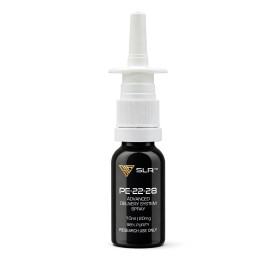
PE-22-28 - 10ml/20mg - Spray
€185.00

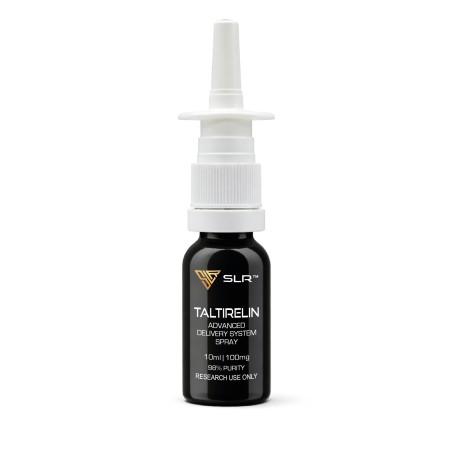

Taltirelin is a synthetic TRH analogue studied primarily for its effects in spinocerebellar degeneration and related motor coordination disorders. Acting as a biased superagonist at TRH-R1, it influences central neurotransmission and has been investigated for neuroprotective, anti-ataxic, and pro-cognitive effects. Research suggests taltirelin may modulate multiple neurotransmitter systems, including acetylcholine, dopamine, serotonin, and noradrenaline, contributing to interest in its potential relevance for memory impairment, depressive-like conditions, arousal regulation, and fatigue-related disorders. Additional studies have explored its antinociceptive properties and possible effects on neurite outgrowth and spinal cord-related neural recovery, making it a notable peptide in experimental research involving neurodegeneration, cognition, and neurological resilience.
FRESHLY PREPARED SOLUTION
ADVANCED DELIVERY SYSTEM - CELL PENETRATING PEPTIDE TECHNOLOGY
This product utilizes advanced delivery technology incorporating calibrated cell-penetrating peptide (CPP) systems. The formulation is engineered to support efficient and targeted intracellular delivery of active ingredients, contributing to enhanced transport performance and bioavailability.
SPECIFICATIONS
Product Code: TAL100S
Sequence: (1-methyl-4,5-dihydroorotyl)- His-Pro-NH2
Molecular Formula: C17H23N7O5
Molecular Weight: 405.4091g/mol
CAS: 103300-74-9
Purity: Technical / Research Grade ≥98%
Other details: No TFA Salt
Form: Liquid Solution
Color: Clear / Slightly opalescent
Total Content: 10 mL / 100 mg
Concentration: 10 mg/mL
Approximate Sprays per Bottle: ~82
Approximate Peptide per Spray: ~1.22 mg
Vehicle / Carrier System: Proprietary carrier system
Storage Temperature: 4°C (Do not freeze)
Source: Synthetic
Safety classification: Standard handling
DESCRIPTION
Taltirelin is a synthetic analogue of thyrotropin-releasing hormone (TRH), developed to provide enhanced stability and stronger central nervous system activity compared to endogenous TRH. While TRH is traditionally known for its endocrine function in stimulating thyroid-stimulating hormone (TSH) release, it also plays an important neuromodulatory role within the brain.
Taltirelin has been extensively studied in neuroscience research, particularly in relation to motor dysfunction, neurodegeneration, cognitive modulation, and neurotransmitter regulation. It has attracted attention due to its prolonged activity and distinct receptor signaling profile.
TRH Pathway and Neurological Relevance
TRH receptors, particularly TRH-R1, are widely expressed in the central nervous system and are involved in regulation of arousal, coordination, neuronal excitability, and neurotransmitter balance. Due to the short half-life of natural TRH, analogues such as taltirelin were developed to achieve longer-lasting and more potent receptor activation.
Taltirelin has been described as a biased superagonist at TRH-R1, meaning it activates the receptor with high potency while potentially favoring specific intracellular signaling cascades. This selective pathway activation may contribute to its distinct neurological profile compared to native TRH.
Mechanism of Action
Taltirelin acts primarily through TRH-R1 activation, a G-protein coupled receptor involved in neuroendocrine and central neurotransmission processes. Activation of TRH-R1 influences neuronal excitability, synaptic signaling, and neurotransmitter release.
Research indicates that taltirelin may modulate multiple neurotransmitter systems, including dopaminergic, cholinergic, serotonergic, and noradrenergic pathways. Because many neurological disorders involve dysregulation across multiple systems, this broad neuromodulatory profile has been a focus of scientific investigation.
Taltirelin has also been studied for potential effects on neuronal metabolism and cerebral blood flow, factors relevant in models of ischemia and neurodegenerative stress.
Neuroprotection and Ischemia Research
Experimental studies have examined taltirelin in models of neuronal stress, including ischemic injury and neurotoxicity. Ischemic damage involves oxidative stress, inflammation, excitotoxicity, and energy failure. In preclinical settings, taltirelin has demonstrated protective effects on neuronal function under such conditions, suggesting a stabilizing influence on neural networks exposed to metabolic stress.
Spinocerebellar Degeneration and Motor Function
Taltirelin has been widely associated with research in spinocerebellar degeneration (SCD), a group of disorders characterized by progressive cerebellar dysfunction and impaired motor coordination. Because TRH signaling contributes to motor pathway regulation, TRH analogues have been explored for their potential influence on ataxic symptoms.
Studies have described anti-ataxic activity in experimental and clinical contexts, potentially involving modulation of glutamatergic signaling and NMDA-associated pathways. The cerebellum’s sensitivity to neurotransmitter imbalance and metabolic stress makes it a key target in this line of research.
Cognitive and Memory-Related Research
Taltirelin has also been explored for pro-cognitive effects. Research has suggested possible improvements in memory parameters and consciousness-related measures across experimental models.
The hippocampus, central to learning and memory, appears to be a significant site of action. Modulation of cholinergic neurotransmission within the hippocampus may contribute to observed cognitive-related findings. Because acetylcholine dysregulation is strongly linked to cognitive decline, this pathway has been of particular research interest.
Neurotransmitter Modulation Profile
Studies suggest that taltirelin influences several neurochemical systems:
This multi-system modulation has led to research interest in fatigue models, motivational impairment, mood-related pathways, and neurocognitive decline.
Depression and Mood-Related Research
Taltirelin has been investigated in experimental models related to mood regulation. Dopamine, serotonin, and noradrenaline pathways are central to emotional processing and motivational behavior, and compounds influencing these systems are frequently studied in neuropsychiatric research contexts.
Pain Modulation
Research has examined potential antinociceptive activity of taltirelin. Pain processing involves complex monoaminergic interactions, and experimental findings suggest possible modulation of descending monoaminergic pathways.
Neural Regeneration and Spinal Research
Some experimental reports suggest that taltirelin may influence neurite outgrowth and neurotrophic signaling pathways. Neurite extension is essential for synaptic remodeling and neural repair processes. These findings have contributed to its investigation in spinal cord and motor neuron research models.
Broader Research Applications
Due to its combined influence on arousal, cognition, neurotransmission, and motor coordination, taltirelin has been discussed in research contexts involving neurodegenerative disorders, cognitive decline, circadian rhythm disruption, excessive sleepiness, fatigue-like states, attention-related models, and motor neuron dysfunction.
Research Perspective
Taltirelin represents a well-characterized TRH analogue with enhanced stability and potent central activity. Its biased activation of TRH-R1 and broad neurotransmitter modulation profile continue to make it a compound of interest in experimental neurobiology.
REFERENCES
All information presented above derives from in vitro and animal-based experimental research and does not imply therapeutic or clinical claims.
T. Nakamura et al., “Taltirelin improves motor ataxia in spinocerebellar atrophy model” [PubMed]
K. Eto et al., “Taltirelin alleviates mechanical allodynia via monoaminergic activation” [PubMed]
A. Urayama et al., “Neuroprotective effect of taltirelin in transient forebrain ischemia” [PubMed]
M. Yamamura et al., “Synthesis and pharmacological action of Taltirelin” [PubMed]
I. Fukuchi et al., “Effects of taltirelin on dopamine release in rat brain” [PubMed]
C. Zheng et al., “TRH Analog Taltirelin Protects Dopaminergic Neurons” [PubMed]
DISCLAIMER
This product is intended for laboratory research use only. It is not a medicine or drug and has not been approved by the FDA or EMA to prevent, treat, or cure any medical condition. Bodily introduction into humans or animals is strictly prohibited. This product should be handled only by qualified professionals.
All product information is provided for informational and educational purposes only.
| Image | Ref. | Unit price | Weight | Avail. | Buy |
|---|---|---|---|---|---|
| TAL100S | €420.00 Discount by quantity 10+ €336.00 –20% 20+ €294.00 –30% 50+ €260.40 –38% 100+ €235.20 –44% 200+ €210.00 –50% | 0.100000 kg |  | |
| Total: 0,0 All prices with tax included. | |||||
Product is available Product is no longer in stock
 Product is no in stock, but is allowed to be back-ordered