VILON - 50 mg
€120.00

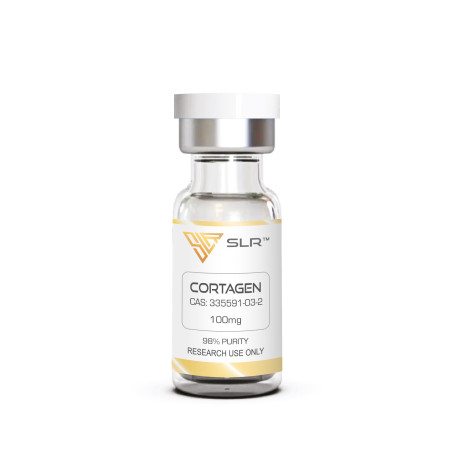

Cortagen has been investigated in preclinical and exploratory research settings for its potential involvement in brain reparative processes, cerebroprotective responses, and nootropic-like activity, within experimental models of cerebral stress and degeneration. Research literature has explored Cortagen in relation to the following neurobiological contexts:
Cerebral lesion and injury models
Neurodegenerative and dementing process models, including protein-aggregation and vascular-associated degeneration
Extrapyramidal and movement-disorder research models
Spinal and cerebellar system dysfunction models
Central nervous system involvement in immune-mediated and inflammatory conditions
Motor impairment and hemiplegia-related models
Paralytic and neuromuscular dysfunction models
Cerebral involvement in bacterial meningeal inflammation models
Hemorrhagic cerebral stress models
Transient and persistent cerebral ischemia models
SPECIFICATIONS
Product Code: COR100
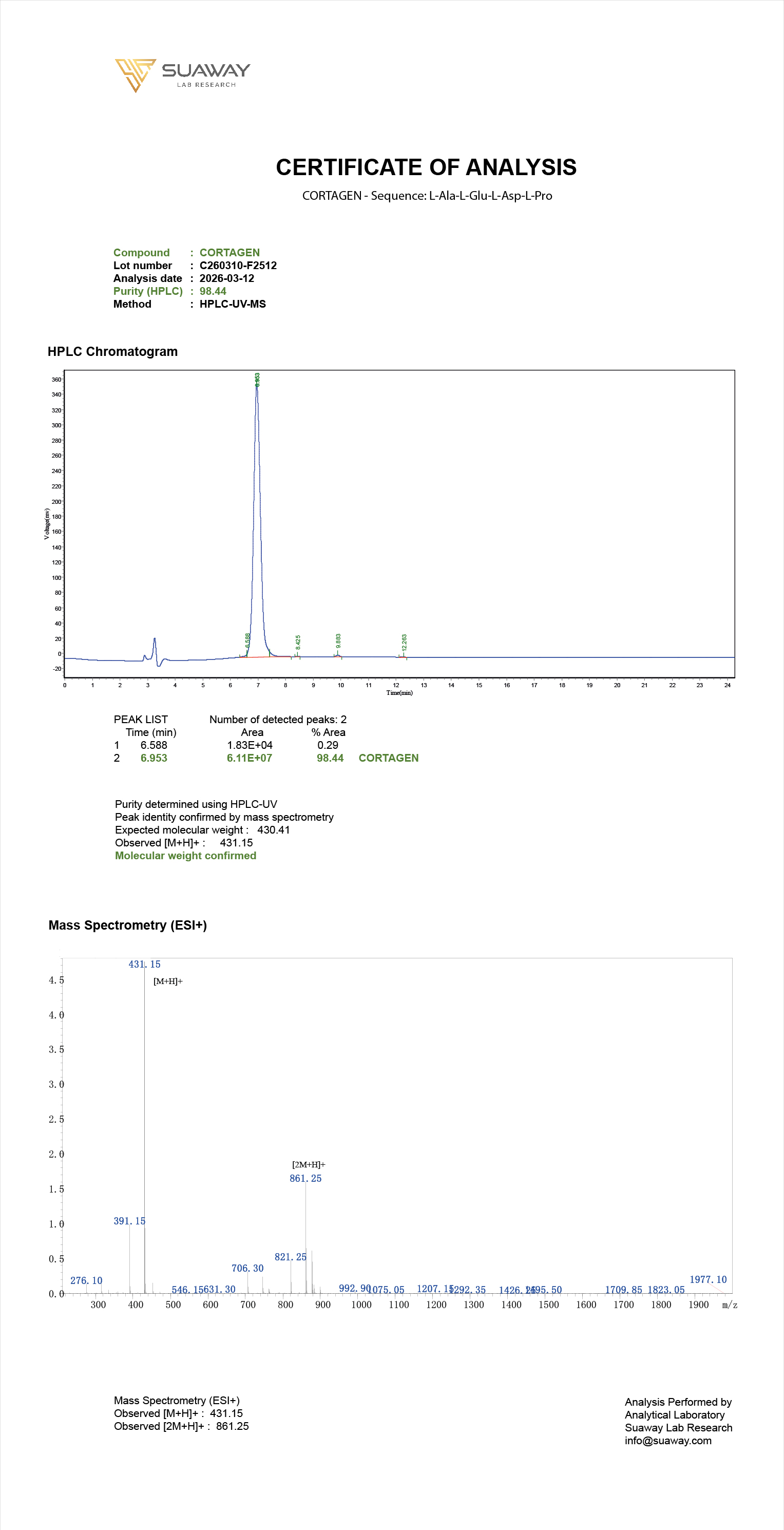
Sequence: L-Ala-L-Glu-L-Asp-L-Pro
Molecular Formula: C17H26N4O9
Molecular Weight: 430.41 g/mol
CAS: 335591-03-2
Purity: Technical / Research Grade 98%
Other details: No TFA Salt
Form: Lyophilized powder
Color: White
Storage temperature: -20°C
Source: Synthetic
Safety classification: Standard handling
DESCRIPTION
The naturally occurring cortical peptide preparation Cortexin was analyzed for its amino-acid composition, allowing a guided synthetic approach that led to the development of the synthetic tetrapeptide Cortagen (Ala-Glu-Asp-Pro). Comparative experimental observations indicate that, relative to Cortexin, Cortagen exhibits a more selective behavioral profile, characterized by reduced influence on anxiety-related parameters while supporting locomotor activity in both acute and sub-chronic experimental settings.
Experimental administration of Cortagen in research models has been associated with behavioral patterns comparable to anxiolytic-like profiles, while acute and repeated exposure resulted in motor stimulation without detectable alterations in emotional or affective parameters under controlled experimental conditions.
Aging is known to be accompanied by substantial changes in gene expression across multiple organs and tissues. Due to the growing interest in peptide bioregulators as tools for investigating age-associated molecular alterations, the identification of their cellular and genetic targets has become a relevant topic in contemporary gerontological research.
Cortagen has been investigated in experimental and observational research contexts for its involvement in structural and functional recovery processes following peripheral nerve injury. Additional observations have described associated changes in cardiovascular and cerebrovascular parameters under study conditions. Based on these findings, Cortagen has been characterized as a biologically active compound with the potential to influence neuronal functional activity. Experimental delivery routes explored in research settings have included parenteral, intranasal, and oral administration.
Within experimental protocols aimed at studying neuronal functional modulation, Cortagen has been administered across a broad microgram-per-kilogram range, with dosing frequency adjusted according to the specific research design and observation period.
Cerebrolysin represents another class of non-protein cerebral hydrolysates composed of free amino acids and low-molecular-weight peptides. In experimental studies, such compounds have been associated with modulation of aerobic energy metabolism, intracellular protein synthesis, and neurotropic activity. However, comparative observations suggest that their neurotropic effects differ from those of endogenous neuropeptide systems, with limited restoration of neuronal structure and function in certain central nervous system injury models. Additionally, specific experimental limitations and contraindications have been reported in the literature.
Endogenous peptide compounds within the central nervous system function as signaling molecules involved in information transfer between interneurons and neuroeffectors. These neuropeptides may act as neurohormones, neurotransmitters, or neuromodulators and participate in integrated regulation of central nervous system processes, including repair mechanisms, memory, emotional regulation, and sensory perception.
Cortagen has demonstrated biological activity in experimental systems, particularly through modulation of neuronal functional activity in both central and peripheral nervous tissues. These effects have been associated with normalization of metabolic processes, enhancement of antioxidant defense parameters, and improvement of electrophysiological indices. The peptide has been studied as a modulator of metabolic restoration and structural development in damaged nerve tissues.
Effect of Cortagen on Lipid Peroxidation Processes in the Cerebral Cortex
Experimental observations indicate that Cortagen exerts a suppressive effect on lipid peroxide oxidation processes within cortical tissue. Administration of the L-Ala-L-Glu-L-Asp-L-Pro tetrapeptide was associated with reduced formation of lipid and protein peroxidation products in the cerebral cortex under oxidative stress conditions.
Effect of Cortagen on Brain Repair Processes Following Craniocerebral Injury
In experimental models of severe craniocerebral injury, the influence of the L-Ala-L-Glu-L-Asp-L-Pro tetrapeptide on brain repair mechanisms was evaluated. Functional recovery of the central nervous system was assessed through behavioral learning paradigms, motor coordination tests, and muscle tone measurements. In these models, Cortagen administration was associated with earlier recovery of motor coordination and learning performance compared to control groups, with observable differences emerging during the early post-injury period.
Effect of Cortagen on Regeneration of Compressed Peripheral Nerves
In controlled experimental studies involving peripheral nerve compression models, Cortagen administration was associated with accelerated restoration of electrophysiological parameters in regenerating nerves. Measurements indicated improvements in excitability thresholds and strength-duration characteristics, suggesting enhanced functional recovery of neuromuscular units. These findings support the classification of the tetrapeptide as non-toxic and biologically active in nerve regeneration research models.
Exploratory Observations in Vascular-Related Cognitive Impairment
Exploratory observational studies have examined Cortagen in the context of vascular-associated cognitive impairment. Reported observations included changes in memory performance, attention parameters, emotional stability, and psychophysiological indices over defined observation periods. Neuropsychological assessments indicated improvements in short-term memory, concentration, and sensorimotor response parameters within the scope of the studies conducted.
Overall, experimental and observational data suggest that the L-Ala-L-Glu-L-Asp-L-Pro tetrapeptide exhibits neurotropic and cerebroprotective properties in research settings, supporting its investigation as a peptide regulator of neuronal metabolism, plasticity, and adaptive recovery processes under various forms of neural stress. duct
Additional Research Contexts Explored
Based on experimental, observational, and exploratory studies, Cortagen has been investigated for its involvement in brain reparative mechanisms, cerebroprotective responses, and neuroadaptive activity across a broad range of neural stress and degeneration models. Research interest has focused on the peptide’s interaction with neuronal metabolism, plasticity, and recovery processes under the following experimental contexts:
Collectively, these research domains support the continued investigation of Cortagen as a neurotropic peptide regulator within laboratory and experimental frameworks focused on neuronal recovery, metabolic resilience, and functional adaptation.
REFERENCES
All information presented above is derived from in vitro experiments, animal studies, and other preclinical research models. These data are intended solely for basic scientific investigation of biological mechanisms and do not imply any therapeutic, diagnostic, preventive, or clinical use in humans or animals.
S. Korsching "The neurotrophic factor concept: a reexamination" [The Journal of Neuroscience]
V. Khavinson et al., "Tetrapeptide stimulating functional activity of neurones, pharmacological agent based thereon and method of use thereof" [USP]
L.N. Turchaninova et al., "Effect of tetrapeptide cortagen on regeneration of sciatic nerve" [PubMed]
D.V. Kurkin et al., "Neuroprotective action of Cortexin, Cerebrolysin and Actovegin in acute or chronic brain ischemia in rats" [PubMed]
Shabanov, Vislobokov "Neuronoprotective action of cortexin and cortagen" [Reviews on Clinical Pharmacology and Drug Therapy]
DISCLAIMER
This product is intendend for lab research and development use only. These studies are performed outside of the body. This product is not medicines or drugs and has not been approved by the FDA or EMA to prevent, treat or cure any medical condition, ailment or disease. Bodily introduction of any kind into humans or animals is strictly forbidden by law. This product should only be handled by licensed, qualified professionals.
All product information provided on this website is for informational and educational purposes only.
| Image | Ref. | Unit price | Weight | Avail. | Buy |
|---|---|---|---|---|---|
| COR100 | €189.00 Discount by quantity 10+ €151.20 –20% 20+ €136.08 –28% 50+ €117.18 –38% 100+ €103.95 –45% 200+ €94.50 –50% | 0.000000 kg |  | |
| Total: 0,0 All prices with tax included. | |||||
Product is available Product is no longer in stock
 Product is no in stock, but is allowed to be back-ordered