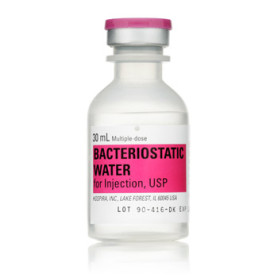
BACTERIOSTATIC WATER - 30ml
€19.50

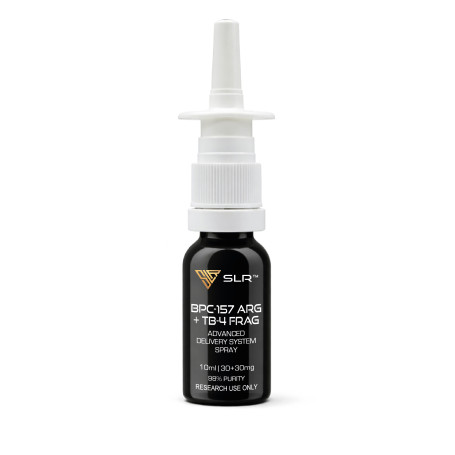

BPC-157 is a 15-amino-acid synthetic peptide used in preclinical research models to investigate cellular repair mechanisms, extracellular matrix dynamics, vascular signaling, and tissue stress responses. In in vitro systems and animal studies, BPC-157 has been explored for its involvement in pathways related to fibroblast activity, angiogenesis, nitric oxide-associated signaling, coagulation-related processes, immune modulation, and gene expression regulation under experimental conditions.
Thymosin Beta-4 Fragment is a short peptide derived from the active region of Thymosin Beta-4, commonly employed in preclinical research to investigate actin-regulated cell migration, angiogenesis, inflammatory modulation, and tissue remodeling mechanisms. In experimental models, it has been studied for its involvement in wound-related cellular dynamics, oxidative stress responses, and regeneration-associated signaling pathways.
FRESHLY PREPARED SOLUTION
ADVANCED DELIVERY SYSTEM - CELL PENETRATING PEPTIDE TECHNOLOGY
This product utilizes advanced delivery technology incorporating calibrated cell-penetrating peptide (CPP) systems. The formulation is engineered to support efficient and targeted intracellular delivery of active ingredients, contributing to enhanced transport performance and bioavailability.
SPECIFICATIONS
Product Code: BPTB10S
BPC-157 ARGINATE FORM – 30 mg
Sequence: Gly-Glu-Pro-Pro-Pro-Gly-Lys-Pro-Ala-Asp-Asp-Ala-Gly-Leu-Val × 2 × L-Arg
Molecular Formula: C62H98N16O22
Molecular Weight (peptide base): 1418.70 g/mol
CAS: 137525-51-0
Purity: Technical / Research Grade ≥98%
THYMOSIN BETA-4 FRAGMENT - 30 mg
Sequence: Ac-Leu-Lys-Lys-Thr-Glu-Thr-Gln
Molecular Formula: C38H68N10O14
Molecular Weight: 889.018 g/mol
CAS number: 885340-08-9
Purity: Technical / Research Grade ≥98%
General Properties
Other details: No TFA Salt
Form: Liquid Solution
Color: Clear / Slightly opalescent
Total Content: 60 mg in 10 mL (6 mg/mL total peptide concentration)
Per mL:
BPC-157 Arginate – 3 mg
Thymosin Beta-4 Fragment – 3 mg
Approximate Sprays per Bottle: ~82
Approximate Peptide per Spray: BPC-157 Arginate ~365 mcg; Thymosin Beta-4 (43AA) ~365 mcg
Vehicle / Carrier System: Proprietary carrier system
Storage Temperature: 4°C (Do not freeze)
Source: Synthetic
Safety classification: Standard laboratory handling
DESCRIPTION
BPC-157 ARGINATE FORM
BPC-157 is a synthetic peptide derived from a sequence naturally present in gastric juice, where endogenous BPC peptides are involved in maintaining gastrointestinal mucosal integrity. In preclinical research models, BPC-157 has been used to investigate mechanisms related to epithelial barrier stability, extracellular matrix organization, and tissue repair signaling under experimental conditions.
Fibroblast Activity and Extracellular Matrix Research
In cell culture systems and animal models, BPC-157 has been studied for its influence on fibroblast proliferation and migration, two key cellular processes involved in wound healing and connective tissue remodeling.
Angiogenesis and Ischemia-Related Models
BPC-157 has been investigated in preclinical angiogenesis assays to explore its effects on endothelial cell behavior and collateral vessel formation in gastrointestinal, cardiovascular, neural, and musculoskeletal research contexts.
Musculoskeletal and Connective Tissue Research
In in vitro and in vivo models of tendon, ligament, and bone injury, BPC-157 has been examined for its role in cell recruitment, vascular density, and connective tissue organization under laboratory conditions.
Oxidative Stress and Inflammatory Signaling Models
In rodent models, BPC-157 has been studied for its interaction with oxidative stress markers, including pathways involving nitric oxide signaling and lipid peroxidation indices.
Neurobiology and Brain–Gut Axis Research
Experimental studies have examined BPC-157 in neurobiological models to explore interactions between peripheral tissues and central signaling pathways, including serotonergic and dopaminergic systems.
THYMOSIN BETA-4 FRAGMENT
Thymosin Beta-4 Fragment, also referred to as TB-500 in research contexts, is a peptide widely used in preclinical research models to study cell migration, cytoskeletal dynamics, and tissue repair mechanisms.
Actin Regulation and Cell Migration
Tβ4 interacts with G-actin, influencing cytoskeletal organization and cell motility in keratinocytes, endothelial cells, and fibroblasts.
Angiogenesis and Tissue Repair Models
Tβ4 has been extensively studied in angiogenesis assays and wound-healing models involving cutaneous, corneal, muscular, and cardiac experimental systems.
Inflammatory Signaling Research
In animal models, Tβ4 has been investigated for modulation of cytokine-associated signaling pathways, including NF-κB activity and matrix metalloproteinase expression.
Cardiovascular and Neurological Research Models
Tβ4 has been included in preclinical myocardial injury and neurological models to explore cell survival, migration, and tissue remodeling pathways.
REFERENCES
All information presented above is derived from in vitro experiments, animal studies, and other preclinical research models. These data are intended solely for basic scientific investigation and do not imply therapeutic, diagnostic, or preventive applications in humans or animals.
A. Goldstein et al., "Thymosin β4: a multi-functional regenerative peptide. Basic properties and clinical applications" [PubMed]
A. Goldstein et al., "Advances in the basic and clinical applications of thymosin β4" [PubMed]
D. Crockford et al., "Thymosin beta4: structure, function, and biological properties supporting current and future clinical applications" [PubMed]
G. Sosne et al., "Biological activities of thymosin beta4 defined by active sites in short peptide sequences" [PubMed]
E.G. Yarmola et al., "Thymosin beta4: actin regulation and more" [PubMed]
M. Badamchian et al., "Thymosin beta(4) reduces lethality and down-regulates inflammatory mediators in endotoxin-induced septic shock" [PubMed]
A. Gonzales-Franquesa et al., "Discovery of thymosin β4 as a human exerkine and growth factor" [PubMed]
J.D. Young et al., "Thymosin beta 4 sulfoxide is an anti-inflammatory agent generated by monocytes in the presence of glucocorticoids" [PubMed]
M.R. Bubb, "Thymosin beta 4 interactions" [PubMed]
Y. Xing et al., "Progress on the Function and Application of Thymosin β4" [PubMed]
DISCLAIMER
This product is intended for laboratory research and development use only. It is not a medicine or drug and has not been approved by the FDA or EMA to prevent, treat, or cure any disease. Bodily introduction into humans or animals is strictly prohibited. This product must be handled by qualified research professionals.
All product information provided is for informational and educational purposes only.
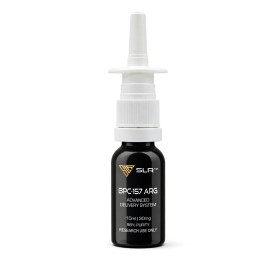
| Image | Ref. | Unit price | Weight | Avail. | Buy |
|---|---|---|---|---|---|
| BPTB10S | €149.00 Discount by quantity 10+ €119.20 –20% 20+ €104.30 –30% 50+ €92.38 –38% 100+ €83.44 –44% 200+ €74.50 –50% | 0.000000 kg |  | |
| Total: 0,0 All prices with tax included. | |||||
Product is available Product is no longer in stock
 Product is no in stock, but is allowed to be back-ordered