Metabolic Dysregulation

Active filters

5-AMINO-1MQ - 3g
€145.00
Tax excluded
Temporarily unavailable
favorite_border favorite
5-amino-1MQ is a synthetic small-molecule compound investigated for its ability to modulate the activity of nicotinamide N-methyltransferase (NNMT), an enzyme involved in cellular metabolic regulation and energy balance. NNMT plays a role in nicotinamide metabolism and influences the availability of nicotinamide adenine dinucleotide (NAD⁺), a central cofactor in mitochondrial function and cellular energy production. By inhibiting NNMT activity in experimental models, 5-amino-1MQ has been associated with increased NAD⁺ availability and modulation of metabolic signaling pathways, including those linked to sirtuin-1 (SIRT1). Preclinical research has explored its effects on energy utilization, adipose tissue metabolism, and metabolic efficiency without changes in caloric intake. This compound is primarily used as a research tool to investigate NNMT-related pathways and their role in metabolic regulation.
AICAR - 100mg
€79.00
Tax excluded
IN-STOCK
favorite_border favorite
Adenosine monophosphate (AMP) has a well-known experimental analog in the molecule AICAR. In preclinical research models, AICAR has been extensively used to investigate AMPK-mediated cellular energy regulation, metabolic stress responses, and redox balance. In in vitro systems and animal studies, AICAR has been evaluated in experimental contexts related to cardiac ischemia models, where AMPK activation has been associated with modulation of cellular survival pathways under ischemic stress. Due to its role in regulating oxidative stress and energy metabolism, AICAR has also been studied in experimental ageing-related models, as well as in preclinical models of metabolic and inflammatory dysregulation, including those used to investigate mechanisms relevant to insulin signaling, immune activation, and chronic inflammation. These findings are limited to controlled laboratory and animal research settings and are used to explore underlying biological mechanisms rather than clinical applications.
AICAR - 10ml/100mg - Spray
€99.00
Tax excluded
IN-STOCK
favorite_border favorite
Adenosine monophosphate (AMP) has a well-known experimental analog in the molecule AICAR. In preclinical research models, AICAR has been extensively used to investigate AMPK-mediated cellular energy regulation, metabolic stress responses, and redox balance. In in vitro systems and animal studies, AICAR has been evaluated in experimental contexts related to cardiac ischemia models, where AMPK activation has been associated with modulation of cellular survival pathways under ischemic stress. Due to its role in regulating oxidative stress and energy metabolism, AICAR has also been studied in experimental ageing-related models, as well as in preclinical models of metabolic and inflammatory dysregulation, including those used to investigate mechanisms relevant to insulin signaling, immune activation, and chronic inflammation. These findings are limited to controlled laboratory and animal research settings and are used to explore underlying biological mechanisms rather than clinical applications.   FRESHLY PREPARED SOLUTION 
AOD9604 - 5mg
€34.00
Tax excluded
IN-STOCK
favorite_border favorite
AOD9604 is a synthetic peptide derived from the C-terminal fragment (176–191) of human growth hormone (hGH), incorporating a disulfide bridge for structural stability. It is used in preclinical research models to investigate lipid metabolism, adipose tissue regulation, and related metabolic pathways, including experimental effects on lipolysis and lipogenesis. In animal and in vitro studies, AOD9604 has also been explored in research contexts involving metabolic, cardiometabolic, and musculoskeletal biology, including experimental models of bone and cartilage tissue remodeling, alone or in combination with other research peptides.  
ARA-290 - 10ml/40mg - Spray
€138.00
Tax excluded
IN-STOCK
favorite_border favorite
ARA-290 has been investigated in preclinical and experimental research models designed to study inflammatory, metabolic, vascular, and neurobiological mechanisms relevant to the following disease-related research contexts: Cardiovascular-related experimental modelsRetinal ischemia and microvascular injury models Peripheral nerve injury and neuropathy models Small fiber nerve degeneration models Chronic inflammatory joint disease models Renal inflammation and metabolic stress models Hepatic lipid accumulation and inflammatory liver models Intestinal inflammation models Systemic autoimmune and immune dysregulation models Wound healing and tissue repair models  FRESHLY PREPARED SOLUTION 
ARA-290 - 40mg
€115.00
Tax excluded
IN-STOCK
favorite_border favorite
Reconstitution Note ARA-290 is supplied in a PBS-buffered formulation (Phosphate Buffered Saline). Due to its amphipathic nature, the peptide may exhibit self-association, leading to increased viscosity or gel-like behavior during or after reconstitution. To reduce gelification risk: use adequate solvent volume (avoid high concentrations), mix gently, allow equilibration at room temperature, and apply slight warming if needed. Check solvent pH and adjust with buffer (e.g., PBS) if required. Prepare fresh solutions and avoid prolonged storage. These behaviors are not uncommon for amphipathic peptides and do not necessarily indicate product instability or degradation.ARA-290 has been investigated in preclinical and experimental research models designed to study inflammatory, metabolic, vascular, and neurobiological mechanisms relevant to the following disease-related research contexts: Cardiovascular-related experimental modelsRetinal ischemia and microvascular injury models Peripheral nerve injury and neuropathy models Small fiber nerve degeneration models Chronic inflammatory joint disease models Renal inflammation and metabolic stress models Hepatic lipid accumulation and inflammatory liver models Intestinal inflammation models Systemic autoimmune and immune dysregulation models Wound healing and tissue repair models 
B7-33 - 10mg
€115.00
Tax excluded
IN-STOCK
favorite_border favorite
B7-33 has been investigated in preclinical research models related to: Fibrotic tissue remodeling models Vascular protection and endothelial signaling models Cardiac injury and post-ischemic remodeling models Pulmonary inflammation and fibrosis-related models 
B7-33 - 10ml/20mg - Spray
€238.00
Tax excluded
IN-STOCK
favorite_border favorite
B7-33 has been investigated in preclinical research models related to: Fibrotic tissue remodeling models Vascular protection and endothelial signaling models Cardiac injury and post-ischemic remodeling models Pulmonary inflammation and fibrosis-related models  FRESHLY PREPARED SOLUTION 
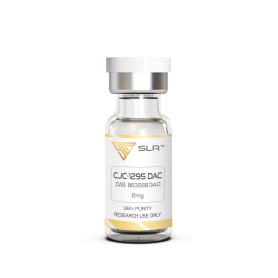
CJC-1295 + DAC - 2mg
€27.00
Tax excluded
IN-STOCK
favorite_border favorite
CJC-1295 is a synthetic analogue of growth hormone–releasing hormone (GHRH) investigated in preclinical research for its involvement in growth hormone– and insulin-like growth factor 1 (IGF-1)–associated signaling pathways. Experimental studies have examined how incorporation of a Drug Affinity Complex (DAC) may extend the peptide’s plasma persistence, allowing prolonged observation of GH–IGF axis dynamics under controlled laboratory conditions. In preclinical experimental settings, CJC-1295 has been explored in relation to: – protein synthesis–associated anabolic signaling– lipid metabolism and body composition–related biochemical pathways
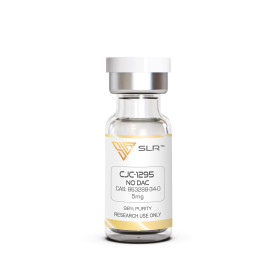
CJC-1295 NO DAC - Mod GRF (1-29) - 5mg
€25.00
Tax excluded
IN-STOCK
favorite_border favorite
Modified GRF is a truncated peptide analogue of growth hormone–releasing hormone (GHRH) investigated in preclinical research for its involvement in GHRH-mediated signaling pathways. In experimental settings, Modified GRF has been explored in relation to: – muscle repair– and growth-associated cellular signaling – wound-associated tissue remodeling processes – bone metabolism and structural signaling pathways – lipid metabolism and fat-oxidation–related biochemical pathways – metabolic regulation–associated signaling networks – glucose homeostasis– and immune-related regulatory pathways
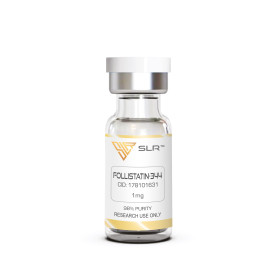
FOLLISTATIN-344 - 1mg
€120.00
Tax excluded
IN-STOCK
favorite_border favorite
Follistatin-344 is a synthetic analogue of the naturally occurring follistatin protein. In preclinical and experimental research, it has been investigated for its interactions with signaling pathways involving myostatin, activins, and follicle-stimulating hormone (FSH). Findings from in vitro and animal studies suggest that modulation of these pathways may be associated with changes in cellular differentiation processes, tissue remodeling dynamics, and selected regulatory signaling mechanisms. These observations position Follistatin-344 as a molecule of interest in research contexts focused on tissue biology, regenerative signaling, and growth-regulatory pathways.
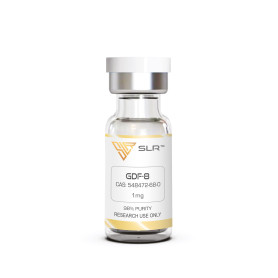
GDF-8 – 1mg
€90.00
Tax excluded
IN-STOCK
favorite_border favorite
GDF-8 is involved in the regulation of myostatin activity, a key biological factor that normally limits muscle growth and regeneration. Experimental and preclinical research indicates that modulation of this pathway influences muscle and tissue dynamics associated with repair and adaptation. According to research-based observations, GDF-8 has been associated with the following effects: Enhancement of muscular regeneration and recovery processes following injury Support of the body’s regenerative capacity at the tissue level Increase in myofiber hypertrophy in experimental models
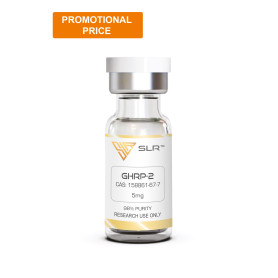
GHRP-2 - 5mg
€21.00
Tax excluded
Promotional price while stocks last
favorite_border favorite
GHRP-2 is a synthetic hexapeptide classified as a growth hormone secretagogue and a selective agonist of the ghrelin receptor (GHS-R1a). It is studied in research contexts for its interaction with receptor-mediated signaling pathways involved in endocrine regulation and pituitary-associated communication processes. Due to its targeted receptor activity, GHRP-2 remains a compound of interest in experimental models investigating signaling mechanisms related to growth hormone regulatory pathways and systemic endocrine coordination.
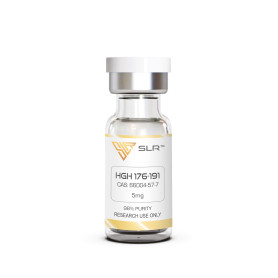
HGH FRAGMENT 176-191 - 5mg
€49.00
Tax excluded
IN-STOCK
favorite_border favorite
HGH Fragment (176–191) is a synthetic peptide derived from the C-terminal region of human growth hormone. It is studied in research contexts for its selective interaction with signaling pathways associated with lipid metabolism and energy regulation. Unlike full-length HGH, this fragment demonstrates a more targeted activity profile, making it a subject of investigation in experimental models focused on metabolic signaling and pathway-specific regulatory mechanisms.
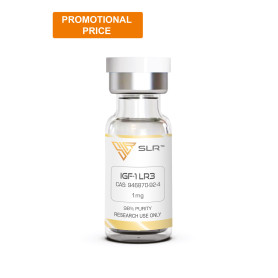
IGF-1 LR3 - 1mg
€57.00
Tax excluded
Promotional price while stocks last
favorite_border favorite
IGF-1 LR3 is a synthetic analog of insulin-like growth factor-1, designed to exhibit modified binding characteristics and extended activity in research environments. It is studied for its interaction with cellular signaling pathways involved in growth factor regulation, intercellular communication, and system-wide biological coordination. Due to its structural modifications and prolonged activity profile, IGF-1 LR3 remains a key compound in experimental models investigating complex signaling dynamics and regulatory mechanisms at the cellular level.
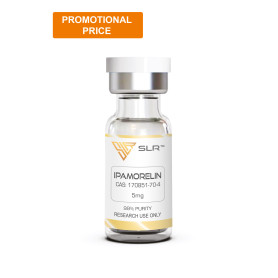
IPAMORELIN - 5mg
€22.00
Tax excluded
Promotional price while stocks last
favorite_border favorite
Ipamorelin is a synthetic pentapeptide classified as a selective growth hormone secretagogue and a ghrelin receptor (GHS-R1a) agonist. It is studied in research contexts for its interaction with receptor-mediated signaling pathways involved in endocrine regulation and pituitary-associated communication processes. Due to its selective receptor activity profile, ipamorelin remains a compound of interest in experimental models investigating growth hormone–related signaling and neuroendocrine regulatory mechanisms.
ITPP (MYO-INOSITOL TRISPYROPHOSPHATE) - 1gr/5gr
€40.00
Tax excluded
IN-STOCK
favorite_border favorite
Myo-Inositol Trispyrophosphate Hexasodium Salt (ITPP) is a compound studied for its ability to influence oxygen delivery dynamics by modulating hemoglobin’s affinity for oxygen. This mechanism has been associated, in experimental settings, with changes in tissue oxygen availability and cellular metabolic processes. In preclinical and laboratory research, ITPP has been explored for its potential impact on metabolic efficiency, oxidative balance, and inflammatory pathways. Its interaction with oxygen-dependent systems has generated scientific interest in areas related to cellular energy metabolism, mitochondrial function, and tissue-level physiology. Additionally, ongoing research has investigated the broader implications of oxygen modulation in contexts such as aging processes, cellular stress response, and complex biological environments including those associated with neurodegenerative and proliferative conditions.
L-GLUTATHIONE - 10ml/500mg - Spray
€65.00
Tax excluded
IN-STOCK
favorite_border favorite
L-Glutathione is a naturally occurring tripeptide that has been extensively studied for its central role in cellular protection and metabolic balance. Research and experimental data indicate that L-Glutathione is associated with the following biological processes: Regulation of intracellular redox balance and antioxidant defenses Protection of cells from oxidative stress and reactive oxygen species Support of detoxification and cellular clearance pathways Modulation of immune and inflammatory signaling mechanisms Maintenance of mitochondrial function and cellular energy metabolism Preservation of protein structure and prevention of oxidative damage Involvement in cellular stress adaptation and aging-related processes FRESHLY PREPARED SOLUTION 
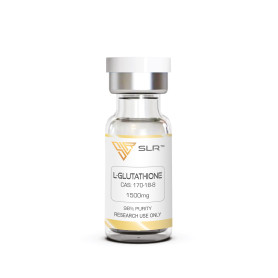
L-GLUTATHIONE - 1500mg
€38.00
Tax excluded
IN-STOCK
favorite_border favorite
L-Glutathione is a naturally occurring tripeptide that has been extensively studied for its central role in cellular protection and metabolic balance. Research and experimental data indicate that L-Glutathione is associated with the following biological processes: Regulation of intracellular redox balance and antioxidant defenses Protection of cells from oxidative stress and reactive oxygen species Support of detoxification and cellular clearance pathways Modulation of immune and inflammatory signaling mechanisms Maintenance of mitochondrial function and cellular energy metabolism Preservation of protein structure and prevention of oxidative damage Involvement in cellular stress adaptation and aging-related processes
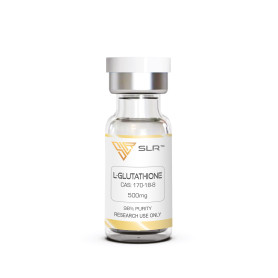
L-GLUTATHIONE - 500mg
€29.00
Tax excluded
IN-STOCK
favorite_border favorite
L-Glutathione is a naturally occurring tripeptide that has been extensively studied for its central role in cellular protection and metabolic balance. Research and experimental data indicate that L-Glutathione is associated with the following biological processes: Regulation of intracellular redox balance and antioxidant defenses Protection of cells from oxidative stress and reactive oxygen species Support of detoxification and cellular clearance pathways Modulation of immune and inflammatory signaling mechanisms Maintenance of mitochondrial function and cellular energy metabolism Preservation of protein structure and prevention of oxidative damage Involvement in cellular stress adaptation and aging-related processes
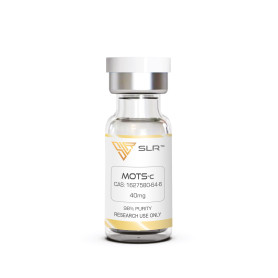
MOTS-c - 40mg
€139.00
Tax excluded
IN-STOCK
favorite_border favorite
MOTS-c is a mitochondria-derived peptide that has been widely investigated in experimental and preclinical research for its role in metabolic regulation and cellular energy balance. Scientific studies have examined MOTS-c in relation to biological pathways associated with physical performance, metabolic homeostasis, age-related processes, and systemic cellular signaling. Research has primarily focused on MOTS-c in the context of the following areas: Muscle Metabolism: Studied for its association with glucose utilization, energy handling, and metabolic adaptation in skeletal muscle. Fat Metabolism: Investigated for its involvement in adipose tissue regulation, lipid utilization, and pathways related to energy expenditure. Insulin Sensitivity: Examined in research models addressing early metabolic changes and glucose regulation mechanisms. Bone Metabolism (Osteoporosis Research): Explored for its role in pathways related to osteoblast activity, collagen production, and bone integrity. Longevity Research: Studied in relation to mitochondrial signaling, aging-associated pathways, and lifespan-related genetic variants. Heart Health: Investigated for its association with endothelial function, vascular signaling, and cardiovascular stress responses.
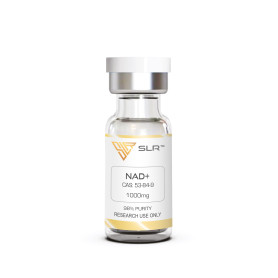
NAD+ - 1000mg
€64.90
Tax excluded
IN-STOCK
favorite_border favorite
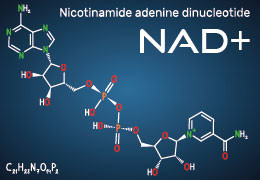
NAD⁺ (Nicotinamide Adenine Dinucleotide) is a central cellular coenzyme essential for mitochondrial energy production and redox balance. It plays a critical role in oxidative phosphorylation, ATP synthesis, and metabolic regulation. NAD⁺ also functions as a substrate for sirtuins and PARP enzymes, contributing to DNA repair, cellular stress resistance, and longevity-associated pathways. Due to its involvement in bioenergetics and cellular resilience, NAD⁺ is widely studied in mitochondrial function, metabolic regulation, and age-related biological processes